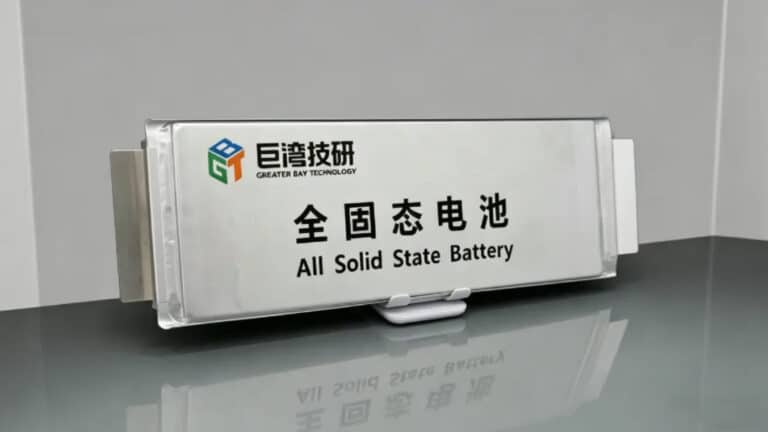
- Ganfeng said the battery cell is the world's first 10 Ah solid-state product to reach a 500 Wh/kg energy density.
- The cycle life of its 400 Wh/kg solid-state cell has successfully exceeded 1,100 cycles.
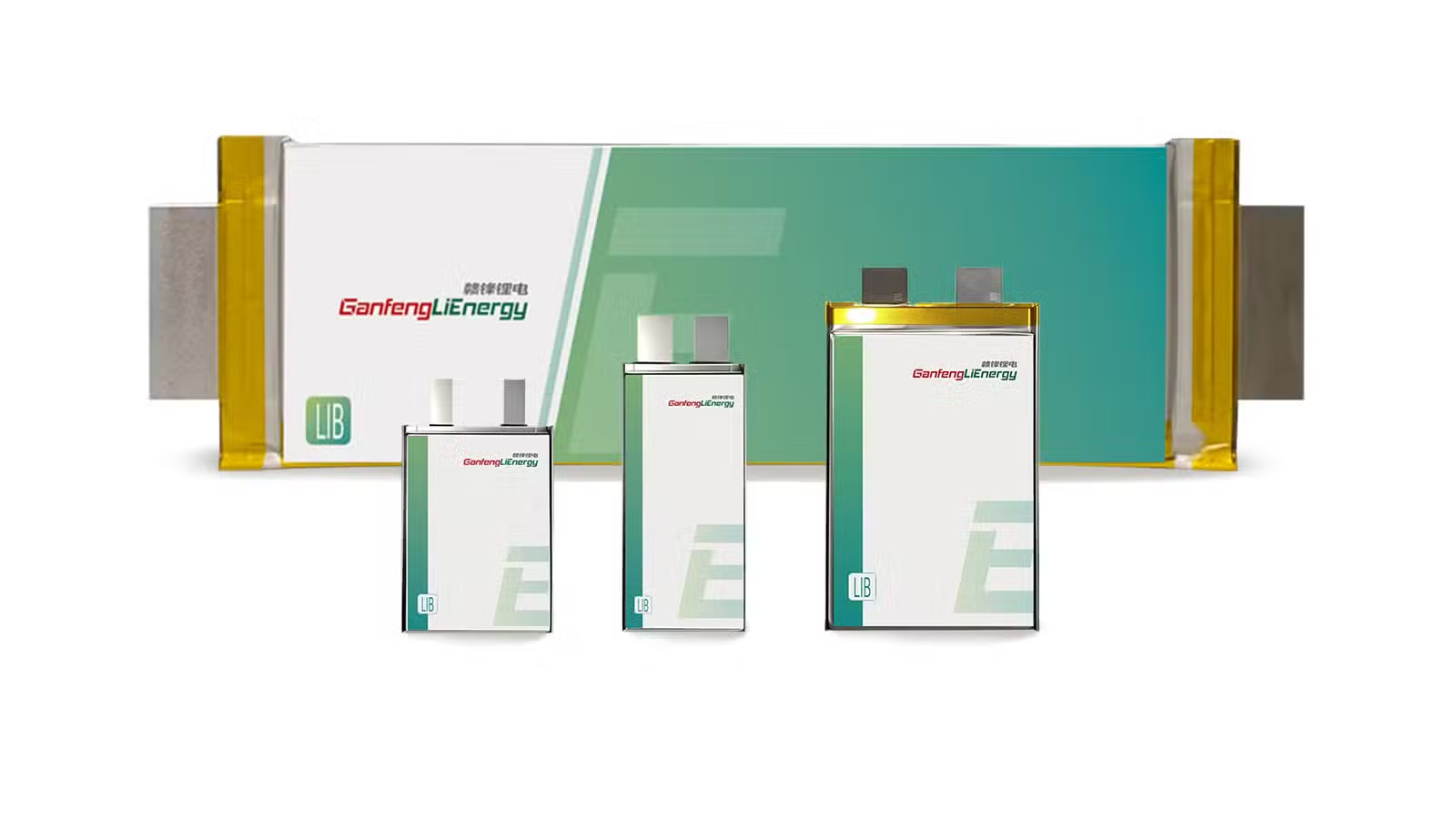
Chinese lithium giant Ganfeng Lithium has started small-scale production of solid-state batteries with an energy density of 500 watt-hours per kilogram (Wh/kg), according to minutes from an investor relations meeting released by the company on Wednesday.
The battery is the world's first 10 ampere-hour (Ah) solid-state product to achieve the 500 Wh/kg energy density mark, setting an industry benchmark for the future commercialization of lithium-metal batteries, the company said.
In addition to the ultra-high-density solid-state battery, Ganfeng reported significant progress in recent tests of its 400 Wh/kg solid-state cell.
The cycle life of this high energy density battery has successfully surpassed 1,100 cycles and has completed engineering validation, demonstrating potential for large-scale application, it said.
In the solid-state battery sector, Ganfeng is simultaneously advancing dual technological routes utilizing silicon-carbon and lithium-metal anodes, according to the meeting minutes.
With lithium-metal anode technology at its core, the company is accelerating the mass production of high-specific-energy batteries, it said.
In 2025, Ganfeng's overall research and development spending accounted for 4.51% of its total operating revenue.
Ganfeng's next-generation solid-state battery products are primarily targeted at high-end EVs, the growing low-altitude economy, robotics, and consumer electronics.
Notably, the company's high-density batteries have already been equipped on the AE200-100 developed by Aerofugia Technology, the electric vertical takeoff and landing (eVTOL) aircraft unit of Geely.
Ganfeng also noted during the exchange that it expects global lithium resources to maintain a tight supply-demand balance in 2026 and 2027.
Following a prolonged slump in lithium prices over the past few years that led to a lack of large-scale capital expenditure across the industry, the release of new supply in the future will be restrained, according to the company.