- Li Auto tumbles 13% in Hong Kong on a muted market response to its newly updated Li L9 model.
- Citi said the new model is not a game changer, while Morgan Stanley sees its potential to boost sales.
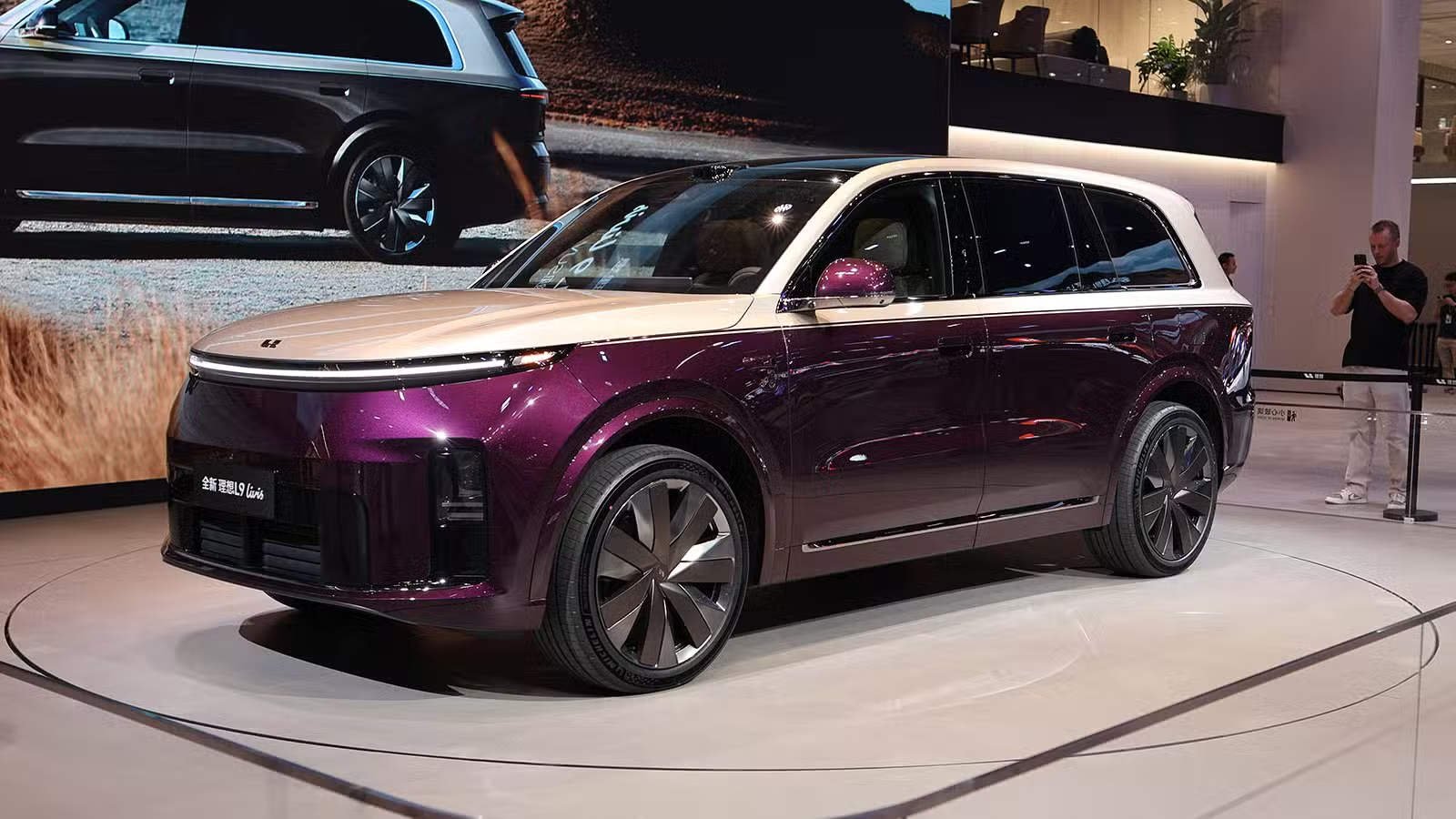
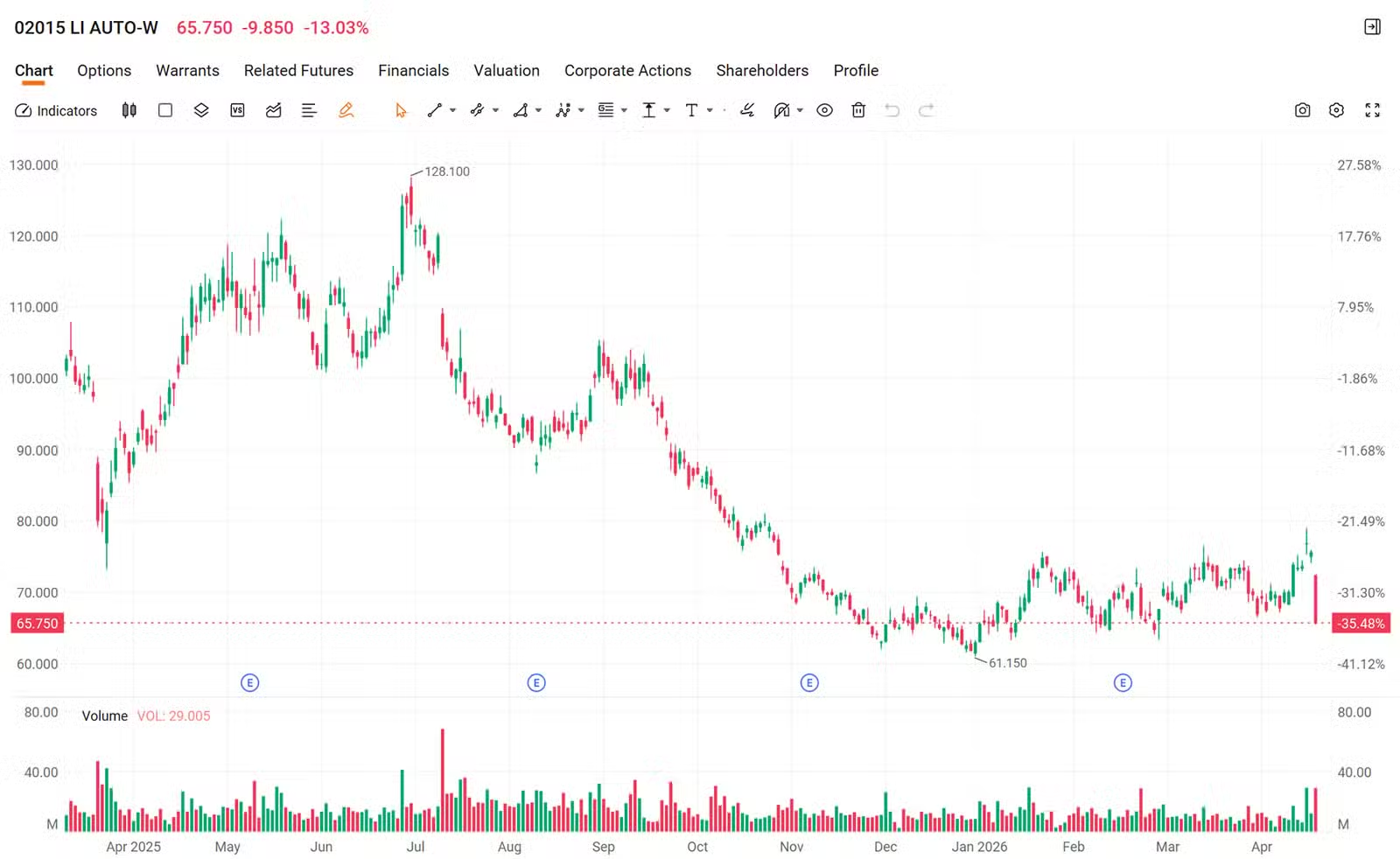
Shares of Li Auto (HKEX: 2015) plunged following the launch of its updated Li L9 flagship SUV (sport utility vehicle), as investors appeared unconvinced by the new model aimed at reviving sales momentum.
Li Auto shares in Hong Kong have tumbled 13% to HK$65.75 apiece so far, marking one of its steepest intraday drops in recent months.
The automaker officially rolled out the updated Li L9 on May 15, adding a higher-end Livis version with a starting price of 509,800 yuan ($74,862).
The final pricing for the Li L9 Livis is 50,000 yuan lower than its pre-sales price. The upgraded Ultra version starts at 459,800 yuan.
Citi analysts noted in a report that the upgraded L9 is not a game changer. They believe its actual value-for-money merely aligns with that of its peers.
Citi expects monthly sales of 1,000 units for the Li L9 Livis and 4,000 units for the Ultra version. The bank maintained its "Neutral" rating on the company.
Morgan Stanley held a more positive view on the model by contrast. The bank believes the updated Li L9 is crucial for Li Auto to regain sales momentum.
Morgan Stanley expects monthly sales of the new Li L9 to surpass last year's average. However, the bank warned of fierce competition in the six-seat SUV market, leaving almost no room for execution missteps.
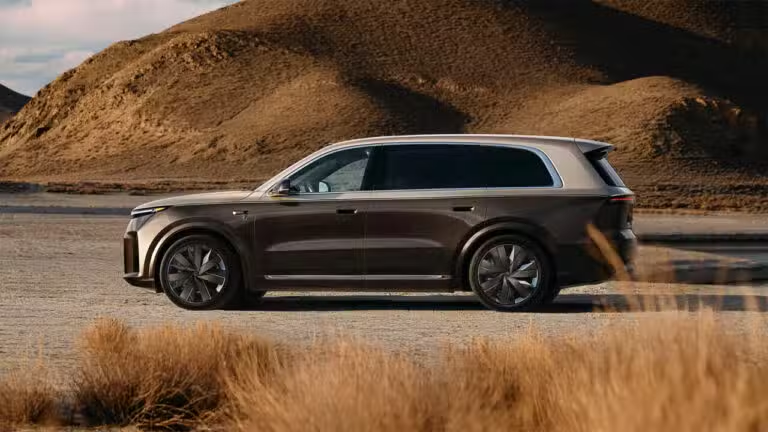
The Li L9 Livis is equipped with two smart driving chips developed in-house by Li Auto. This provides the vehicle with powerful computing capabilities for complex road conditions.
The new vehicle features Li Auto's third-generation range extender and a 72.7 kWh battery pack. Its combined range can reach up to 1,650 kilometers on a full charge and a full tank.
Li Auto plans to launch an international version of the Li L9 in the third quarter of 2026, with the first batch landing in overseas markets including Central Asia and the Middle East.
The Li L9 was initially launched in 2022 and was once one of the most expensive models from a domestic automaker. As rival products increased, the model's deliveries slumped by nearly half year-on-year last year.
($1 = 6.8099 yuan)