Robots & AI
+ Follow-
Nio Capital leads new funding round for Chinese robotics firm Linkhou
This marks Nio Capital's second recent investment in a robotics company.
-
Xpeng elevates AI expert to bigger role in latest restructuring
The vision for AI is reshaping automotive companies' organizational structures, with Xpeng being the latest example.
-
Chinese humanoid robot maker LimX secures $200 million in Series B funding, with Nio Capital participating
LimX Dynamics was founded in January 2022, with its co-founder coming from WeRide.
-
Tesla says its production-ready 3rd-gen humanoid robot to debut soon
Tesla announced on China's Weibo that its third-generation humanoid robot is set to debut soon, which will be the company's first mass-produced humanoid robot.
-
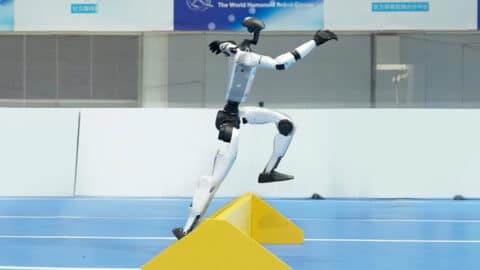
Unitree showcases humanoid robot's reliability in -47.4°C extreme cold by traversing snowfield
Unitree G1 humanoid robot walked over 130,000 steps on a -47.4°C snowfield, marking the first autonomous walking by a humanoid robot in extreme cold conditions.
-
Tesla's biggest competitor in humanoid robots will be from China, Musk says
China is good at both AI and manufacturing, and will definitely be the toughest competition for Tesla, Musk said.
-
Li Auto's head of autonomous driving shifts to robotics R&D, report says
Li Auto's autonomous driving chief will become head of hardware operations, primarily overseeing robotics development.
-
Demand for solid-state batteries in humanoid robots could reach 74 GWh by 2035, TrendForce says
TrendForce forecasts that demand for solid-state batteries in humanoid robots could grow thousands of times over the next decade.
-
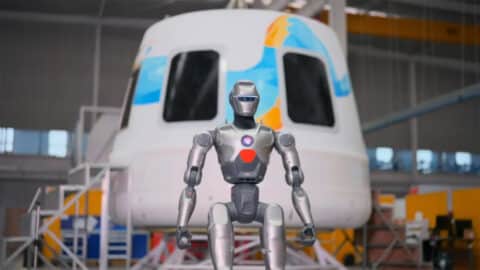
Chinese firm launches effort to send humanoid robot into space
Engine AI aims to make its PM01 robot the first humanoid astronaut.
-
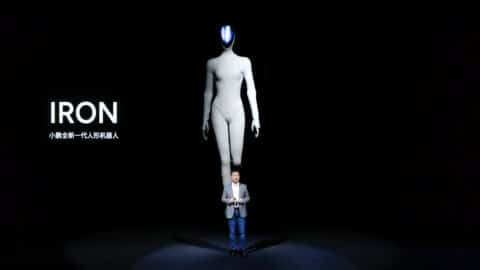
Xpeng produces 1st robot prototype developed to automotive standards
Xpeng has completed its first robot prototype developed to automotive standards, marking a crucial step toward mass-producing humanoid robots this year.