- RoboSense's robotics LiDAR sales reached 185,500 units in the first quarter, accounting for more than half of its total shipments for the first time.
- The company's gross margin dropped to 21.7% in the first quarter, driven by a decline in average selling price due to a higher proportion of lower-priced products.
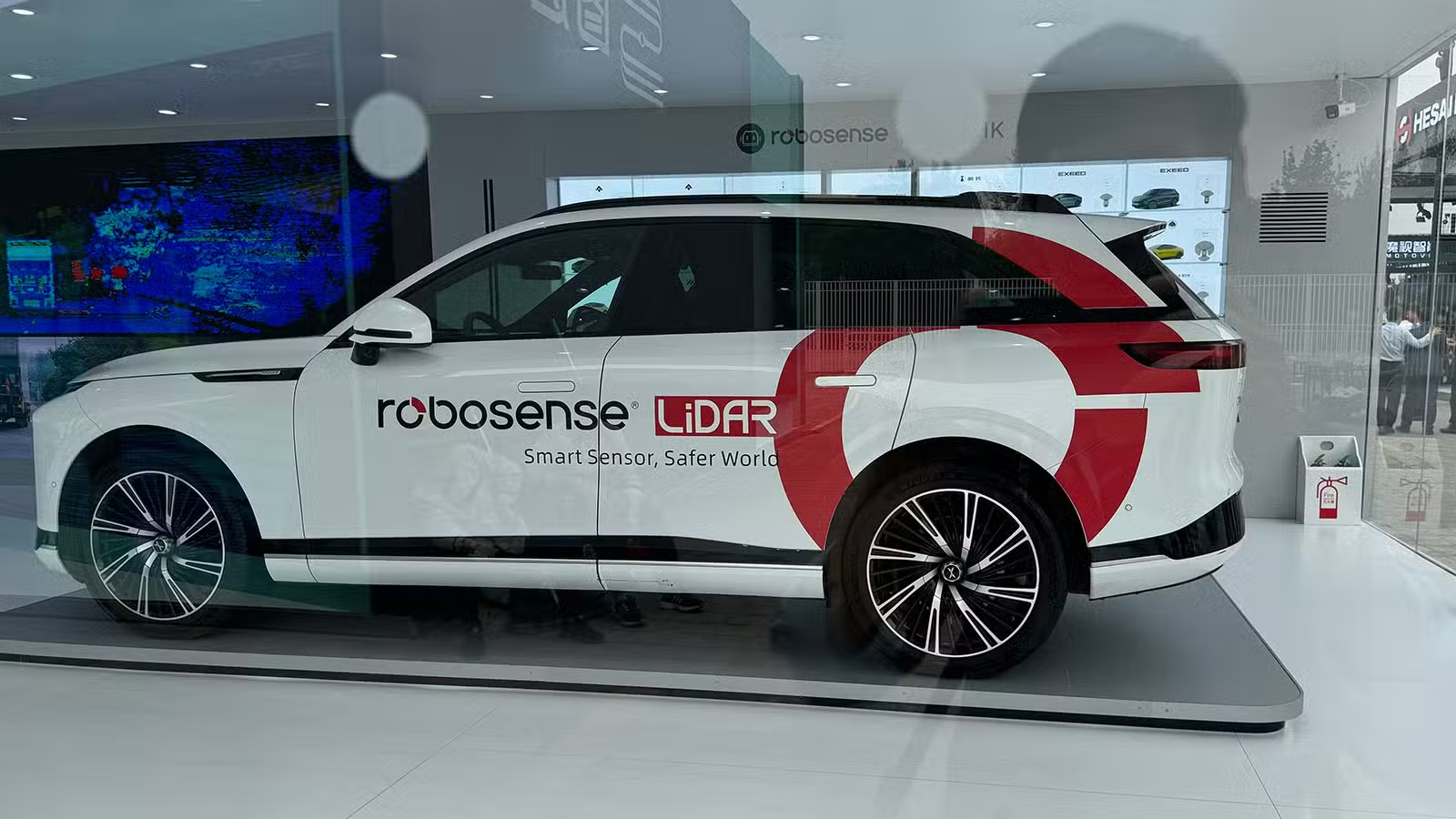
Chinese LiDAR maker RoboSense (HKEX: 2498) reported a 1,458.8% surge in sensor shipments for robotics in the first quarter of 2026, surpassing its automotive business for the first time.
The staggering growth propelled the company's total sales to a record high and underscored its dominant position in the intelligent robotics sector.
The Shenzhen-based company generated total revenue of 458.8 million yuan ($67.7 million) in the first quarter, up 39.9% from a year earlier, according to its earnings report released Wednesday.
Its first-quarter net loss narrowed by 36% year-on-year to 64 million yuan, though its operating loss widened after excluding one-off investment gains.
RoboSense's total LiDAR shipments reached 330,300 units in the first quarter, representing a massive 204.1% increase compared to the same period last year.
Among them, sales of LiDAR for robotics reached 185,500 units, accounting for more than 56% of total shipments.
This historic shift marks that the robotics business has overtaken ADAS (Advanced Driver Assistance System) to become the company's primary volume growth engine.
In the rapidly expanding robotics segment, the company has established exclusive supply partnerships with leading players such as Roborock and Navimow.
In the unmanned delivery sector, its products have also been widely adopted by leading autonomous logistics companies like Neolix, cementing its status as the industry's perception standard.
This aggressive expansion in the robotics field has further intensified RoboSense's battle for market share with its major domestic rivals.
Despite the surge in shipments, the company's gross margin fell to 21.7%, down 6.7 percentage points from the previous quarter.
Deutsche Bank analysts noted that the gross margin decline was primarily driven by a 52% year-on-year drop in the blended average selling price to 1,336 yuan, the lowest level since the company's inception.
This price drop was mainly attributed to a significant shift in product mix, as lower-priced blind spot sensors and robotic lawn mower LiDARs contributed to about half of the quarterly volume.
Nevertheless, the company expects its full-year gross margin for robotics LiDAR to maintain a healthy level of 30% to 40%.
Looking ahead to the full year of 2026, RoboSense projects its total LiDAR deliveries to reach 2 million to 2.7 million units, two to three times the 2025 level.
Within this, full-year shipments of robotics LiDAR are expected to triple, reaching 800,000 to 1 million units.
To further reduce costs and enhance product performance, the company launched its self-developed SPAD-SoC chip architecture named Eocene in April.
The Phoenix chip, based on this architecture, supports a native 2,160-channel resolution and is expected to cut in-house production costs by half, thereby improving overall profit margins in the future.
In the automotive market, RoboSense's ADAS business has an order backlog exceeding 9 million units, covering 177 design-win vehicle models.
The company is deepening its collaboration with major automakers like BYD, leveraging its various LiDAR products to penetrate both the high-end and low-end EV markets.
($1 = 6.7791 yuan)