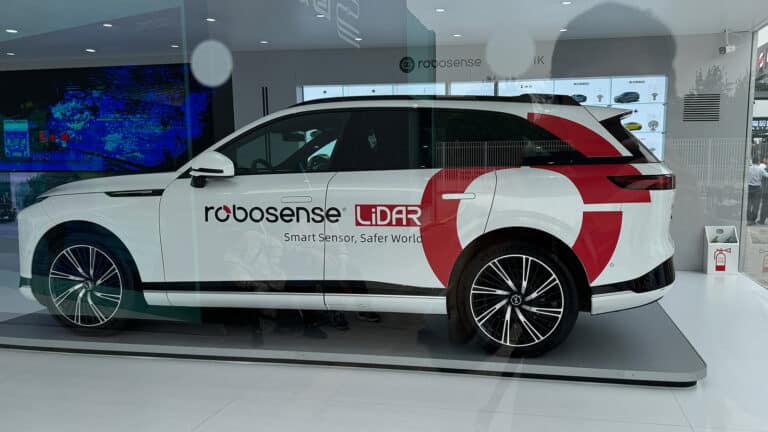
- RoboSense launched the Eocene architecture and two flagship chips, attempting to consolidate its dominant position through chip-level technological advantages.
- The new Phoenix chip has secured design wins from top global automakers, which will intensify competition with rivals like Hesai in the autonomous driving sector.
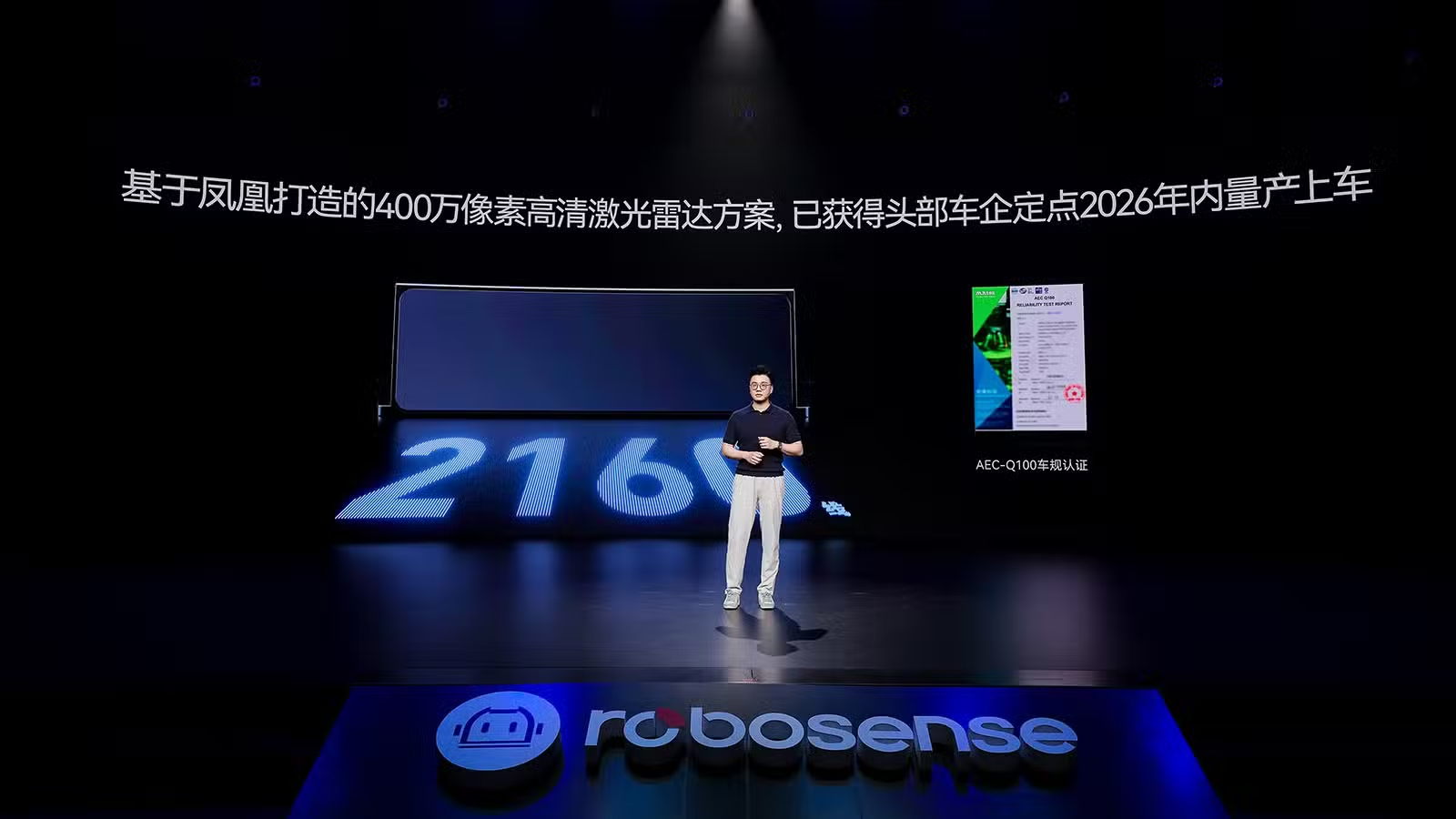
Chinese LiDAR maker RoboSense (HKEX: 2498) unveiled new products at a Tech Day event on the eve of the Beijing Auto Show, officially launching the Eocene digital architecture and two flagship chips.
This marks a significant upgrade in 3D perception technology for autonomous driving and robotics, closely following the release of new technologies by its rival Hesai Technology.
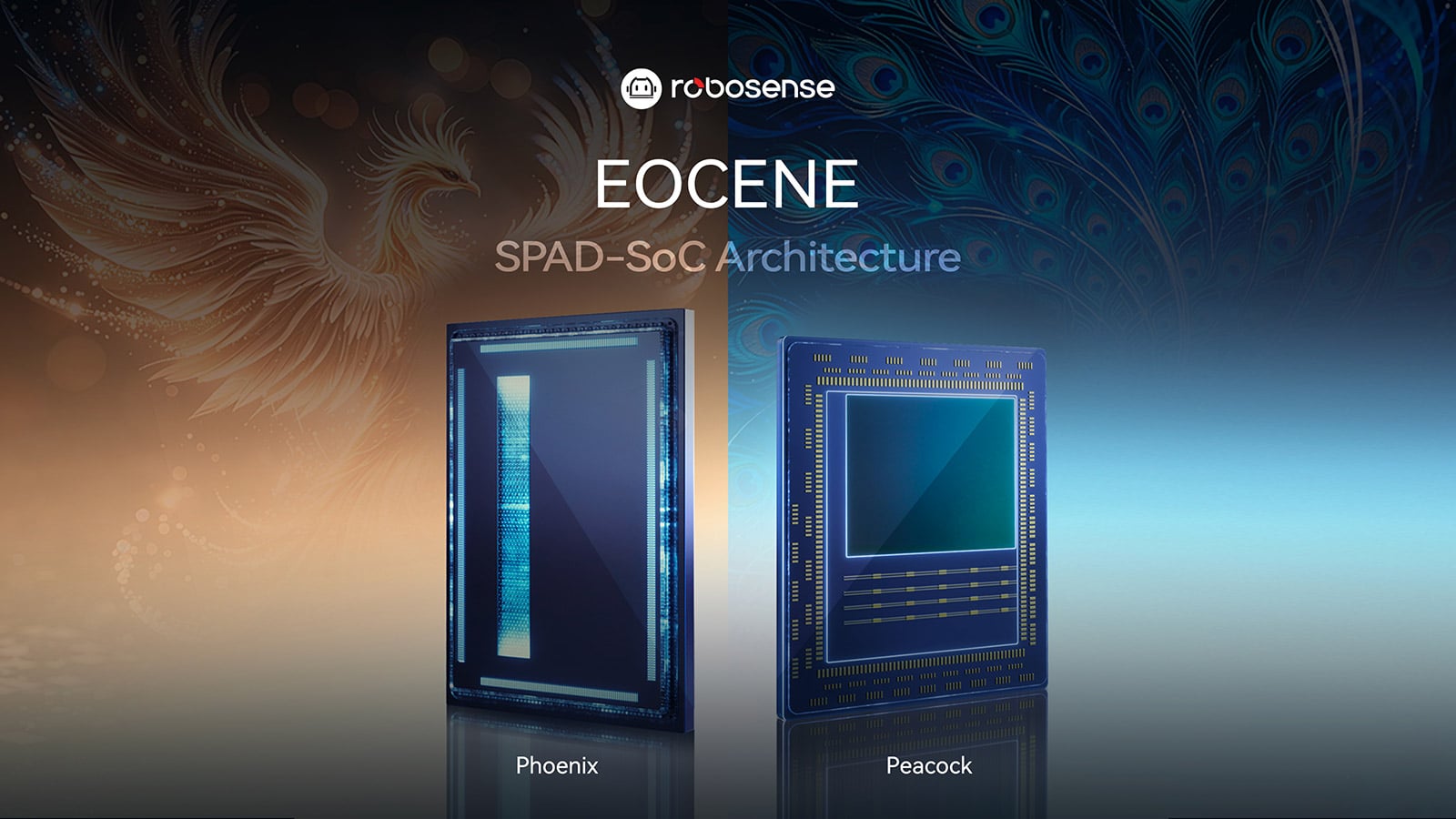
The Eocene architecture is a rapidly iterable chip-level solution platform. Based on the architecture, the Phoenix chip is the world's first automotive-grade monolithic SPAD-SoC, delivering 2,160-beam image-grade output, RoboSense said at the event on Tuesday.
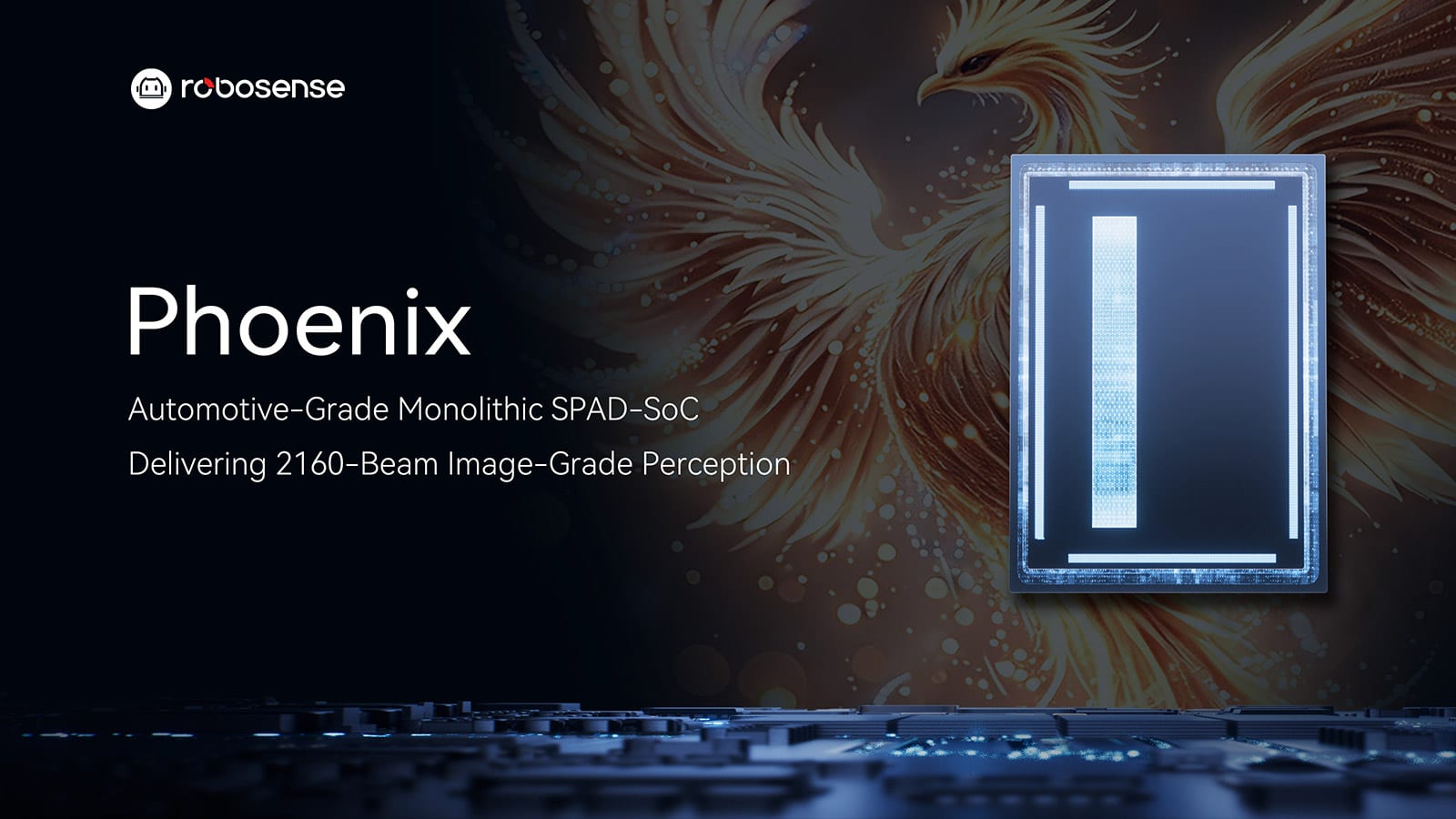
The "Phoenix" chip integrates up to 2,160 laser receiving channels. Through scanning, it can obtain an ultra-high resolution point cloud of 2,160×1,900, with point cloud details surpassing the level of a 4-megapixel camera, the company said.
It achieves ultra-high resolution and a detection range of 600 meters, capable of seeing a 13×17 cm cardboard box within 150 meters.
The Phoenix series will offer five different models ranging from 240-beam to 2,160-beam. This automotive-grade chip has already secured design wins from leading automakers and is scheduled for mass production and vehicle integration within 2026.
The Peacock chip, unveiled simultaneously, is an all-solid-state product with a resolution of 640×480. It can output VGA-level images with a minimum detection distance of less than 5 centimeters, and is set for mass production in the third quarter.
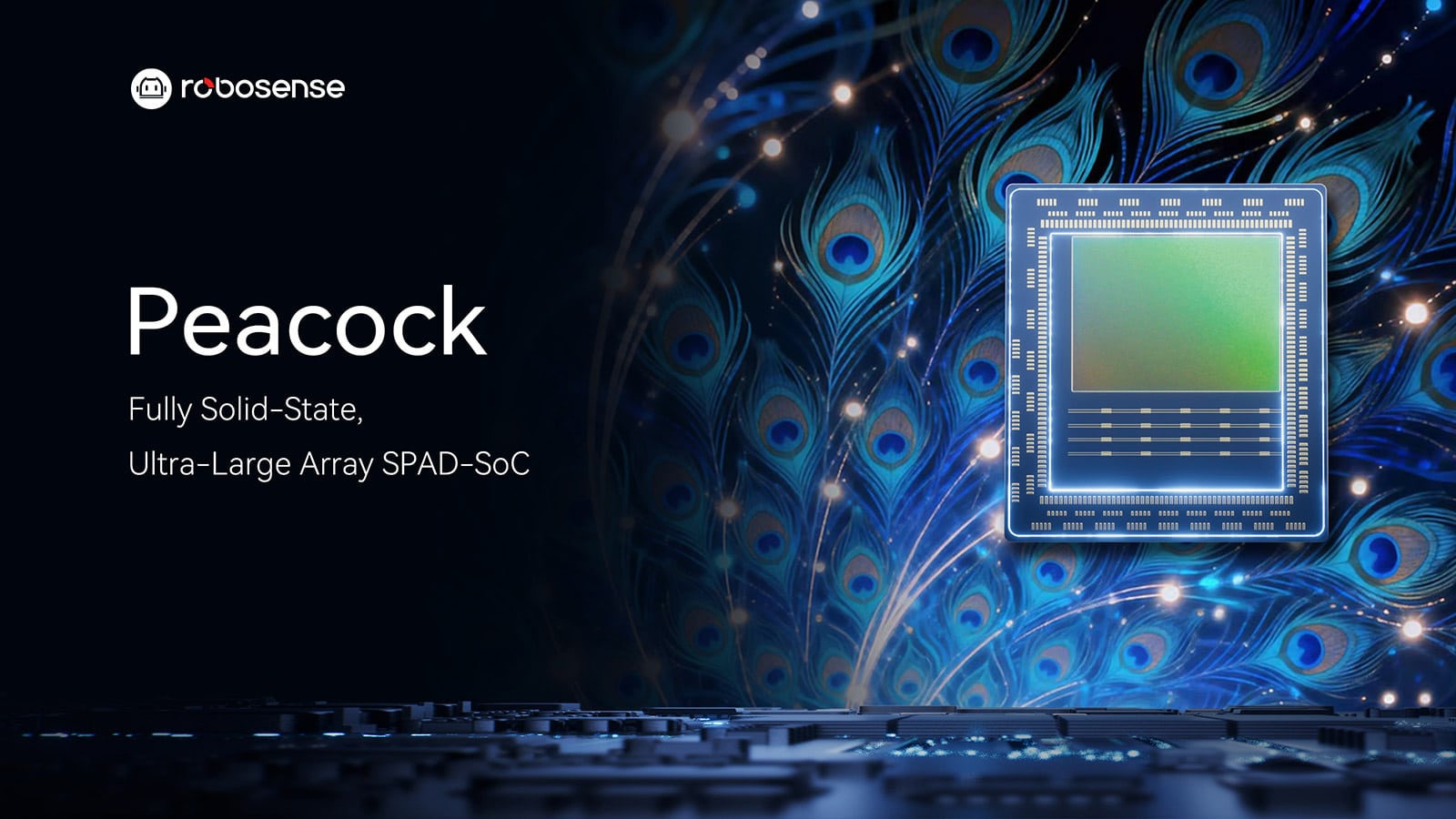
RoboSense also plans to release a in-house developed RGBD (Red, Green, Blue + Depth) fusion sensor by the end of 2027. This product will combine the high-density spatial data of the Peacock chip with color filter array technology.
The LiDAR industry is undergoing a fundamental technological transition from analog architectures to digital imaging architectures. RoboSense hopes to redefine the industry's competitive landscape through its chip R&D capabilities.
A research note released on Tuesday by a Deutsche Bank analyst team led by Bin Wang said that these breakthroughs mark a paradigm shift in 3D perception technology, solidifying RoboSense's position as the architect of the industry's next technological cycle.
The new product launch closely follows the Tech Day event of its main competitor Hesai, which recently released a full-color LiDAR platform supporting up to 4320 lines.
As costs decrease, LiDAR is accelerating its penetration into the mass consumer market. Leading players are attempting to consolidate their dominant positions through generational technological advantages at the chip level.