- Hesai released a new chip named Picasso, which achieves the fusion of color perception and distance measurement at the underlying hardware level.
- Hesai's next-generation ETX series LiDAR will be equipped with the new chip, which is expected to enter mass production in the second half of this year.
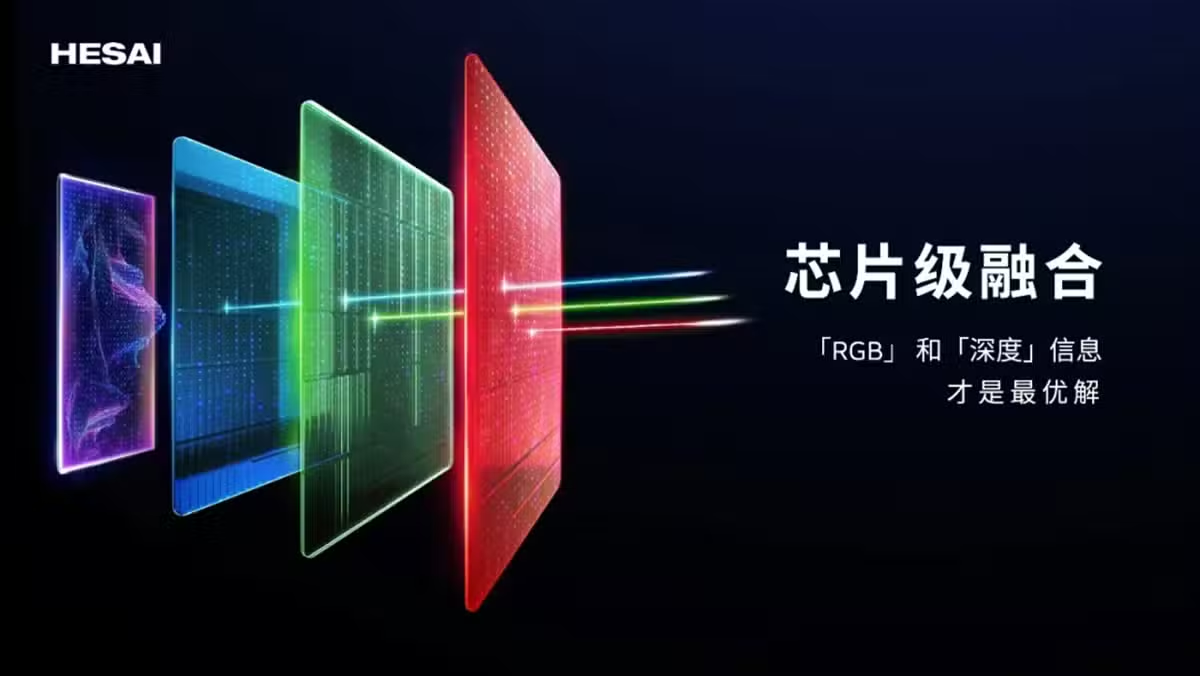
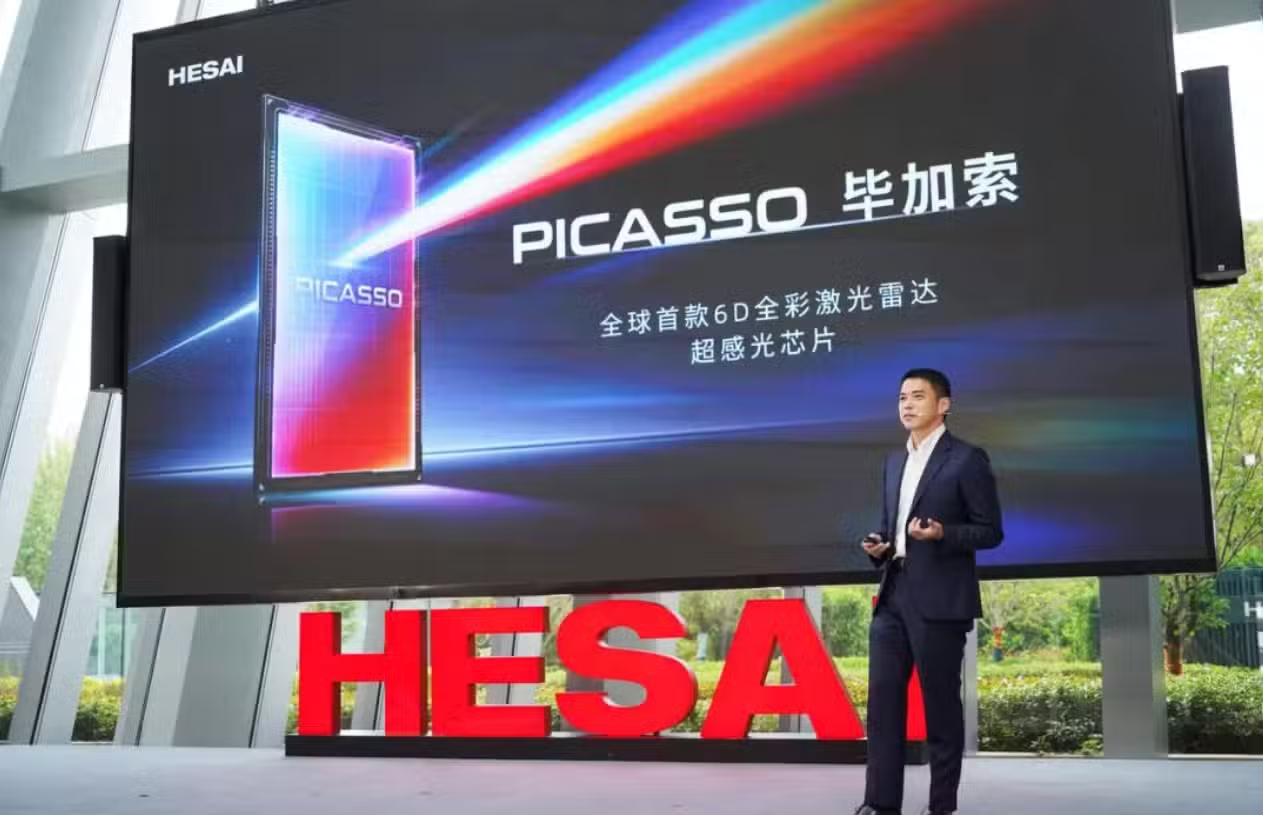
Chinese LiDAR manufacturer Hesai has released the world's first full-color LiDAR chip, marking a major breakthrough in 3D perception technology for autonomous vehicles.
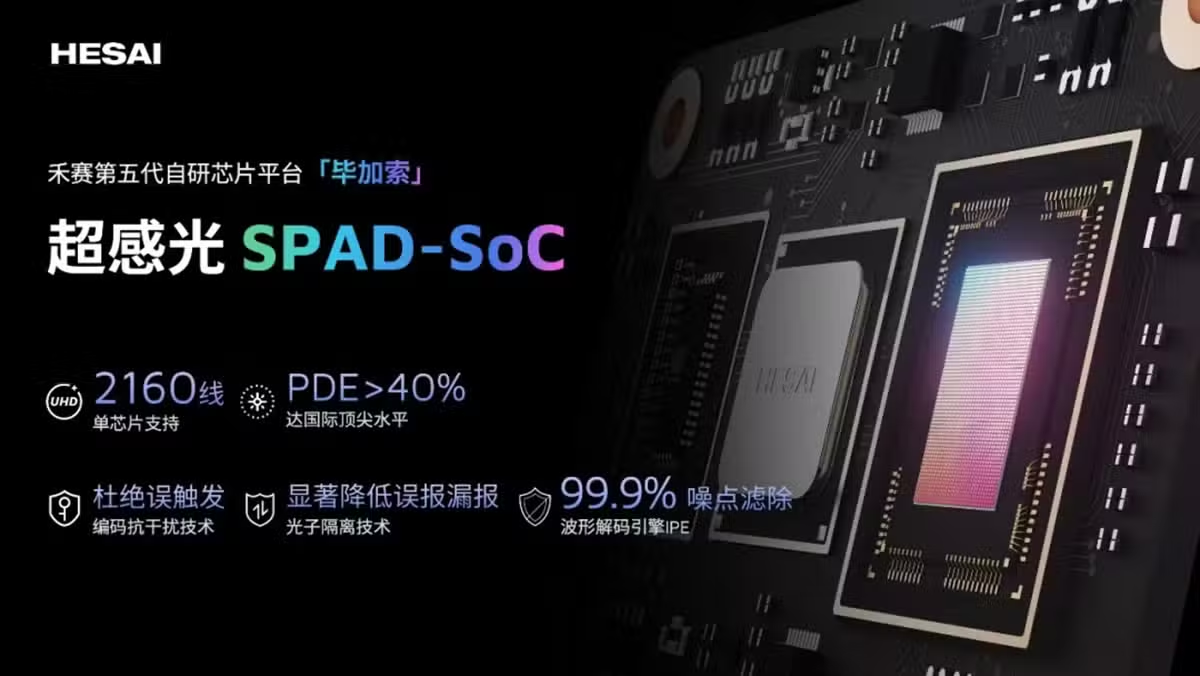
Hesai unveiled this ultra-sensitive chip named Picasso at its tech open day on Friday. It supports up to 4,320 laser channels and 4K ultra-high-definition perception.
Traditional LiDAR sensors can typically only perceive the 3D spatial position and physical shape of objects. They are like high-precision black-and-white cameras, unable to directly identify the specific color information of target objects.
This causes autonomous driving systems to sometimes consume computing power to "guess" the complex road conditions ahead, Hesai said.
Hesai's new chip achieves a pixel-level native fusion of color perception and distance measurement at the underlying hardware level. This technology does not require complex post-stitching of independent camera images and LiDAR data; the sensor can directly generate a color 3D point cloud model with native color information.
The photon detection efficiency (PDE) of the Picasso chip has exceeded 40%, reaching a top international level. This means that under the same laser power, the sensor can see further and more clearly, Hesai said.
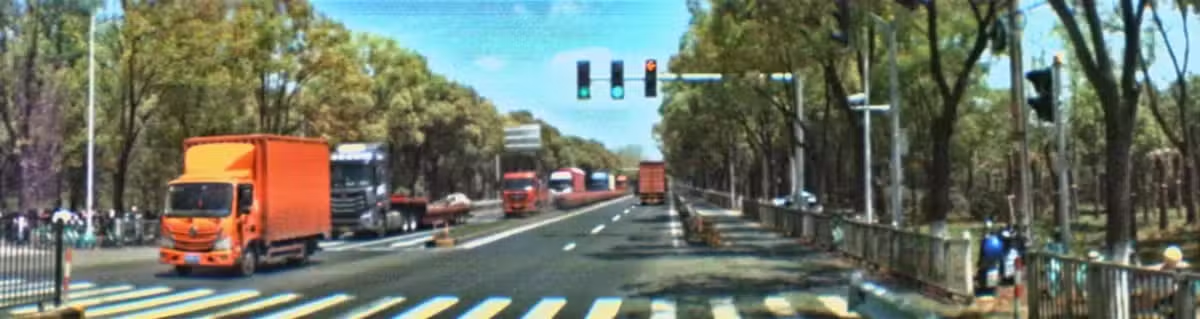
This enables autonomous driving systems to now recognize traffic lights, lane markings, and construction signs at a glance, just like humans.
Hesai announced that its next-generation ETX series LiDAR will be equipped with this brand-new ultra-sensitive chip. The upgraded sensor platform will offer flexible configurations and support various solutions such as 1,080, 2,160, and 4,320 laser channels.
This series of products is expected to enter mass production and begin deliveries to automakers in the second half of this year.
This major technology launch follows a significant financial milestone for the Chinese sensor maker.
Hesai achieved a net profit of 435.9 million yuan ($63.9 million) in 2025, marking the company's first full-year profitability.
The strong financial performance was mainly driven by a significant increase in its sensor shipments over the past year. The company's total LiDAR shipments surged by 222.9% in 2025, reaching 1,620,406 units.
With the substantial decline in manufacturing costs, LiDAR is beginning to penetrate into new mass-market segments.
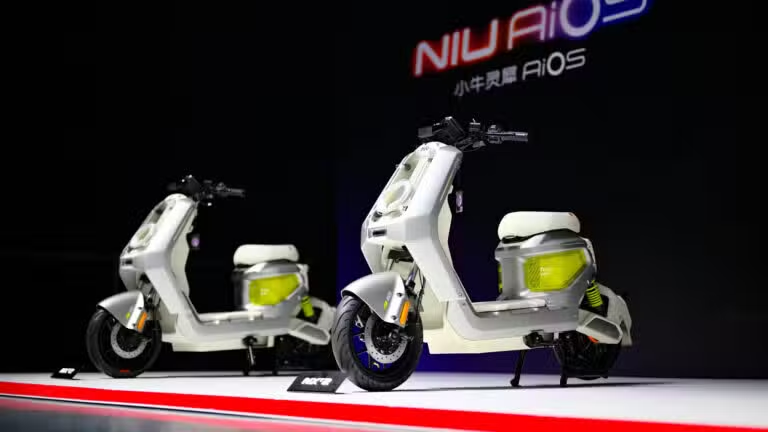
Hesai is actively expanding into vehicle models priced below 100,000 yuan, and has even started providing pure solid-state LiDAR for Niu Technologies' electric two-wheelers.
In addition to its core automotive business, Hesai also showcased a piece of spatial intelligence hardware named Kosmo on Friday.
Positioned as the "eye of physical AI," this product is expected to be priced at around 100,000 yuan and will primarily be used to capture high-quality 3D spatial data to support the training of AI world models.
The company also announced its expansion into the entirely new field of robot power modules, viewing it as the core infrastructure of the physical AI era.
Hesai has delved into the underlying architecture of power modules, independently researching and mastering the core technologies in this field, it said.
Hesai expects its strong growth momentum to continue this year, planning to expand its annual production capacity to over 4 million units in 2026 to meet surging market demand.
($1 = 6.8177 yuan)