- Xiaomi EV launched Xiaomi Auto World Model, becoming another automaker after Nio to embrace AI world models.
- The new framework has been implemented in Xiaomi's synthetic data generation, closed-loop simulation testing, and smart cabin systems.
Xiaomi EV, the electric vehicle (EV) arm of Xiaomi (HKEX: 1810), officially released Xiaomi Auto World Model, a new framework for its autonomous driving world model, on Tuesday, becoming another automaker after Nio Inc (NYSE: NIO) to adopt the technology.
The move aims to accelerate the transition of AI (artificial intelligence) from virtual space to the physical world, providing a new development path for the industry's advanced assisted driving technology, Xiaomi said in a statement.
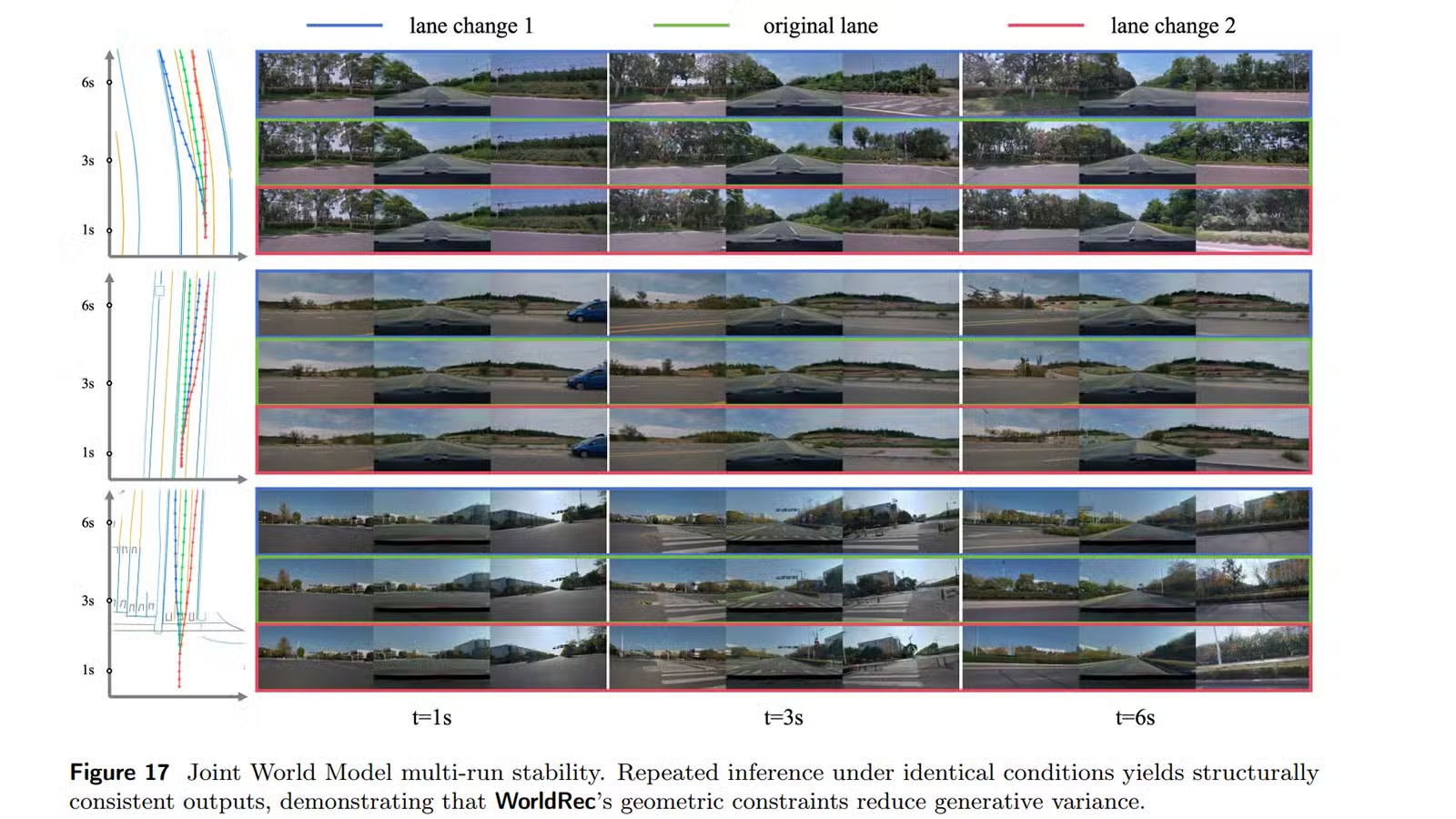
Xiaomi Auto World Model deeply couples 3D reconstruction with video generation, breaking the industry's traditional technical route that has long separated reconstruction and generation.
The model has achieved SOTA (state-of-the-art) results in mainstream benchmark tests such as Waymo and nuScenes, the company said.
Xiaomi has already applied this new technology to three core business scenarios, including synthetic data generation, closed-loop simulation testing, and smart cabin applications.
The company has delivered over 100,000 clips of high-quality synthetic data to improve the training effectiveness of perception models.
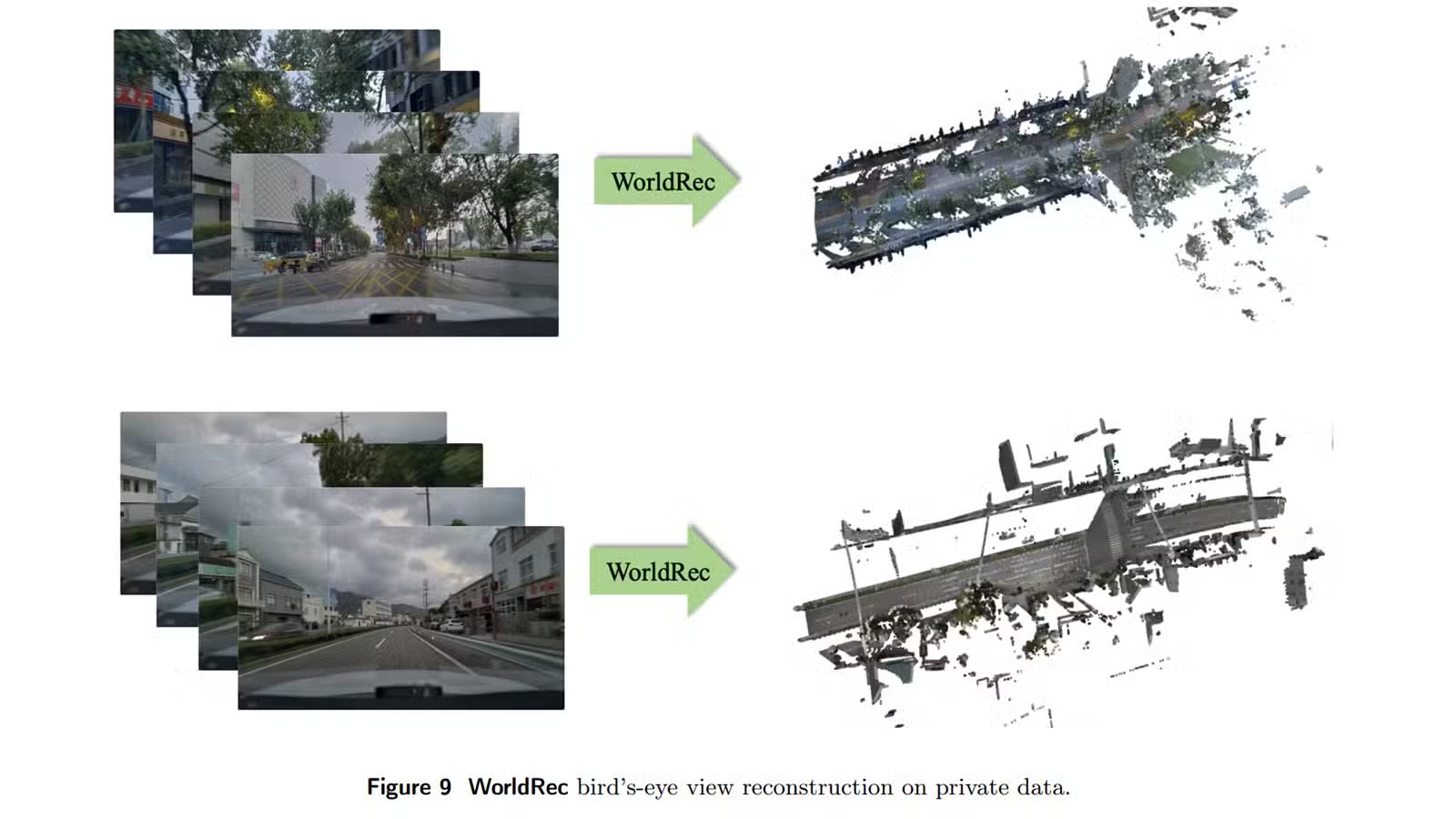
The new framework consists of two mutually constraining core modules -- the reconstruction module WorldRec and the generation module WorldGen.
WorldRec uses sparse 3D anchors to replace traditional dense pixels. It takes only about 10 seconds to complete the scene reconstruction of a 10-second video, significantly improving processing efficiency, Xiaomi said.
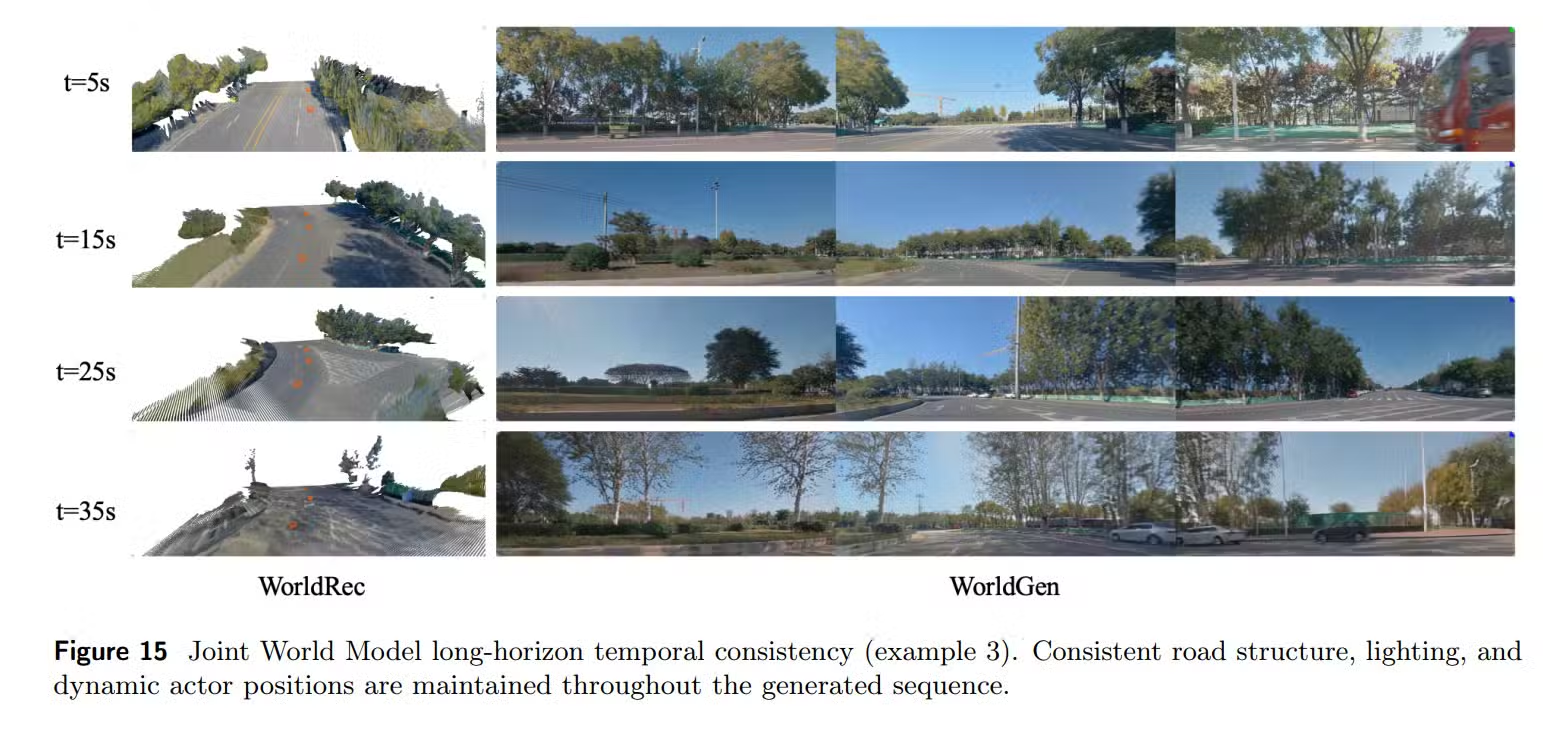
WorldGen acts as an engine to fill in unobserved spatiotemporal regions. It requires only four denoising steps to generate a frame at a speed of 0.19 seconds. The system currently supports generating continuous high-quality videos of up to one minute.
By tightly integrating these two modules, Xiaomi said it aims to suppress error accumulation and content drift during long-horizon generation.
The reconstruction module provides deterministic geometric constraints, while the generation module expands the boundaries of model prediction. This effectively addresses the key challenge of handling rare long-tail scenarios such as extreme weather or animal intrusions, the company said.
This release is a continuation of Xiaomi's ongoing technical upgrades to its smart driving capabilities.
In March this year, the company launched the updated SU7 electric sedan, equipped with an assisted driving system driven by the new XLA cognitive large model.
In the field of smart driving, Xiaomi is facing fierce competition from domestic rivals in China. The impending introduction of Tesla's (NASDAQ: TSLA) FSD (Full Self-Driving) also brings potential pressure.
Nio (NYSE: NIO) began pushing the first version of its world model, Nio World Model, to vehicles as early as May 2025. Nio's mass-market sub-brand Onvo also equipped its 2026 L90 SUV (sport utility vehicle) model, launched last month, with the world model.
Looking ahead, Xiaomi EV plans to continue exploring new paradigms of pre-training and closed-loop training. The company expects this integrated world model framework to drive a major leap in the cognitive capabilities of its end-to-end models.
The original text of Xiaomi's paper can be found here: https://arxiv.org/pdf/2605.18137

($1 = 6.7981 yuan)