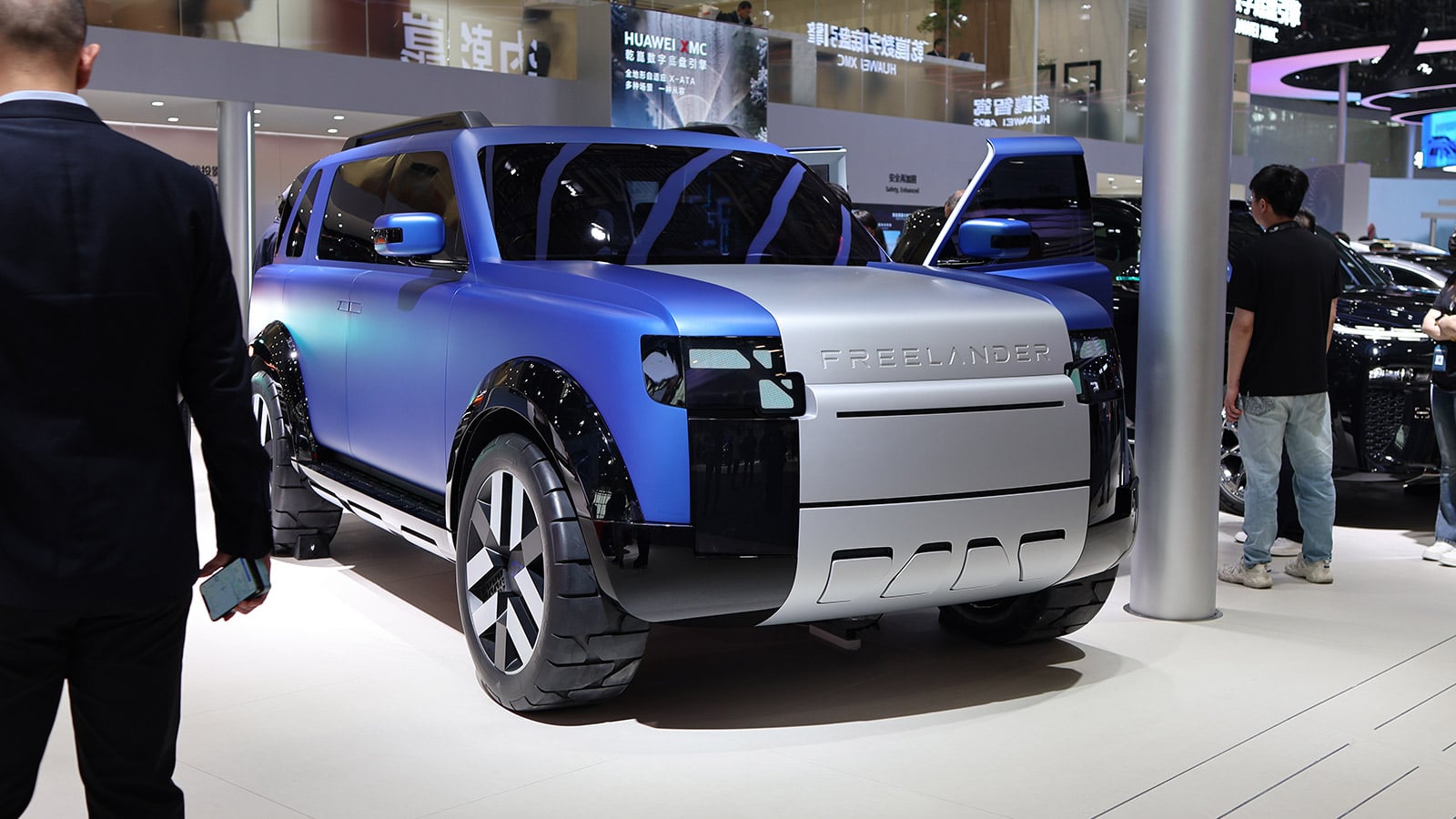
- Tata will leverage the Freelander platform between Chery and Jaguar Land Rover, to revive its delayed premium Avinya EV series.
- The first Avinya model based on Chery's platform is set to debut in 2027, which will be shipped from China as a kit and assembled in India.
India's Tata Motors plans to license an automaking platform from Chinese auto giant Chery (HKEX: 9973), as it seeks to get its delayed premium electric vehicle (EV) project back on track, Reuters reported on Wednesday, citing four people familiar with the matter.
Tata will utilize the Freelander platform produced by a joint venture between Chery and Jaguar Land Rover (JLR) in China, and the cars will be manufactured at Tata's newly opened factory in the southern Indian state of Tamil Nadu, the Indian automaker told Reuters in a statement.
While Chinese automakers remain largely shut out of the Indian auto market, their technology is quietly becoming hard to avoid, and local Indian manufacturers are leaning on it to stay competitive in the global EV race, Reuters noted in its report.
Tata, India's largest EV maker, will rely on Chery's platform to locally produce EVs under its premium Avinya brand.
The brand has planned at least two models, with the first new car scheduled to launch in 2027, the report said, citing three people familiar with the matter.
This strategy marks a pivot from Tata's original plan. The company had intended to use JLR's electrified modular architecture for the Avinya models targeted for 2025.
That roadmap was forced to adjust last year when JLR shelved plans to build EVs based on that architecture in India.
The platform deal with Chery is expected to make up for Tata's lost time, granting the company access to advanced features and technology that would otherwise take more time and capital to develop, Reuters cited the people as saying.
The first Avinya model based on Chery's platform is due in 2027, two of the people said. The vehicle will be shipped from China as a kit and assembled in India, while efforts to source localized components are already underway.
A second EV is expected to be launched in 2029, one of the people added. Beyond that, the brand could potentially introduce two more new models to further enrich its premium EV lineup.
Chery said in a statement that its agreement with Tata builds on the success of its collaboration with JLR. The Chinese automaker said that it will act as a supplier to Tata' passenger vehicle division, according to Reuters.
JLR and Chery are longtime partners. In March this year, the Chery-JLR joint venture announced the rebirth of the Freelander brand, targeting China's luxury EV market.
Cars under the resurrected Freelander brand will be produced at its factory in Changshu, Jiangsu province, where the joint venture will add an investment of 3 billion yuan ($443.6 million), primarily for the upgrade and transformation of production lines.
The first model of the Freelander brand has been officially named the Freelander 8. This extended-range sport utility vehicle (SUV) entered a filing catalog of China's Ministry of Industry and Information Technology last month, paving the way for its launch in China.
The new vehicle is developed based on the new iMax platform architecture and will be equipped with a 1.5-liter engine produced by Chery.
Filing documents show that the model will use ternary lithium batteries provided by CATL (HKEX: 3750), with a peak charging rate reaching 6C.
In terms of intelligence, the all-terrain SUV will come standard with Huawei's Qiankun smart driving system across the lineup, and will be equipped with an 896-channel LiDAR.
It will also be one of the first mass-produced models globally to be powered by Qualcomm Snapdragon's latest generation 8397 automotive-grade chip.
Chery is China's largest auto exporter, and its monthly overseas sales now far exceed its domestic sales in China.
In May, Chery sold 231,944 vehicles, with overseas sales reaching a record 177,666 units, while domestic sales were only 54,278 units, according to data compiled by CnEVPost.

($1 = 6.7626 yuan)