- CATL has launched a new lookup tool allowing Chinese car buyers to directly verify if their vehicles are equipped with its batteries.
- CATL is trying to reinforce the perception that the company's batteries are more premium.
CATL has launched an online lookup feature that allows Chinese consumers to directly see which car models are powered by its batteries, as it seeks to reinforce the perception that the company's batteries are more premium.
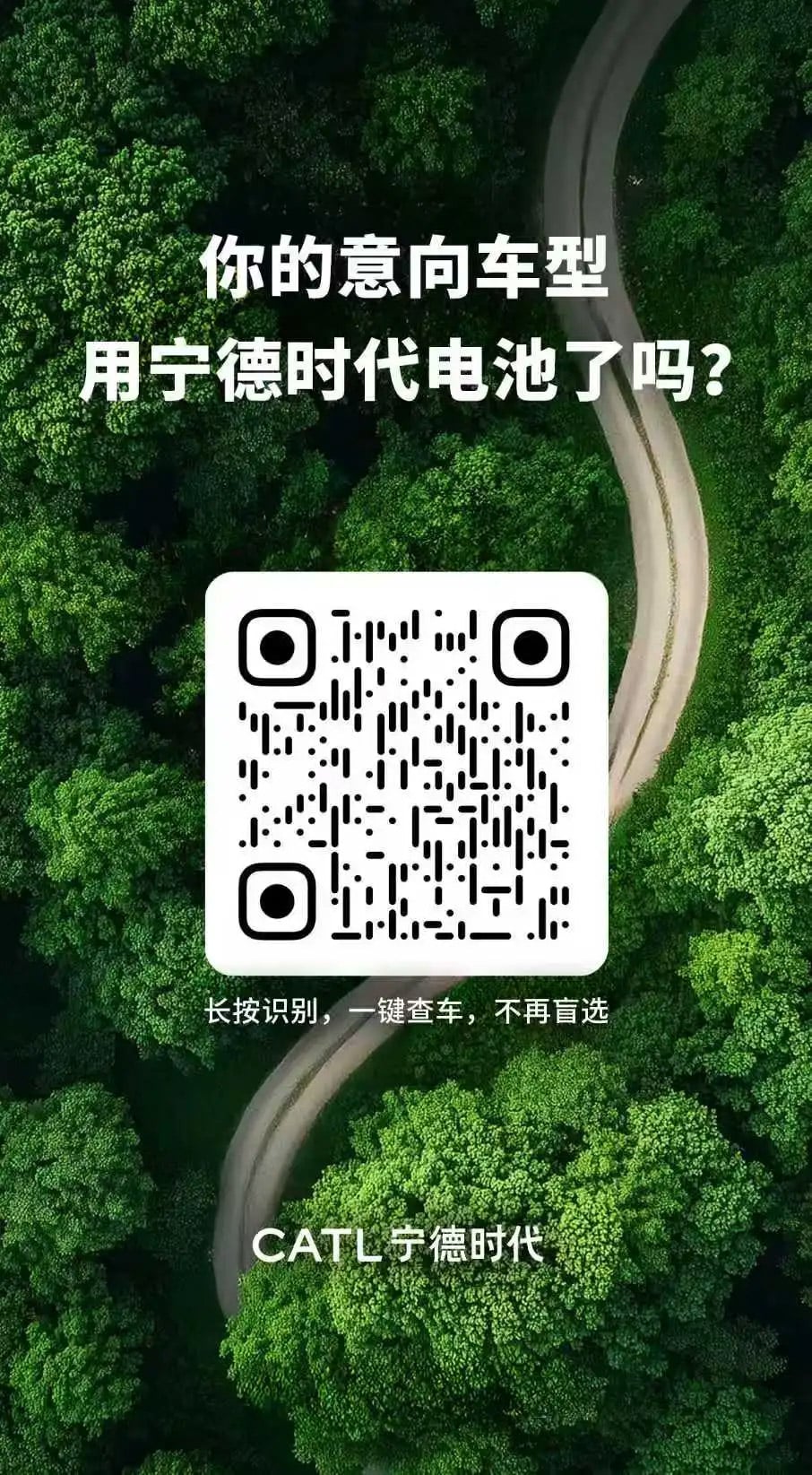
The battery giant introduced the tool on Friday, writing in a poster published on WeChat: "Does your intended model use CATL batteries?"
Consumers can now access a dedicated online inquiry system, which carefully organizes complex supply information in alphabetical order by car brand.
Car buyers can also simply enter specific brand or model keywords in the search bar to quickly retrieve information about the vehicle's battery supply source.
The vast majority of models in the database are exclusively supplied with batteries by CATL, such as most models under the Nio main brand, as well as Onvo's L60 and L80.
The lookup tool also clearly indicates to potential buyers that some models adopt a supply strategy mixing batteries from different suppliers, such as the Xiaomi SU7 Pro.
With the roll-out of the tool, CATL is trying to impress upon potential EV buyers that the company's batteries represent a more premium choice.
Equipping models priced above 250,000 yuan ($36,610) with lithium iron phosphate (LFP) batteries is essentially a disguised downgrade, CATL chief technology officer Gao Huan said publicly at a tech day event last month.
For premium EV models, ternary lithium batteries with higher energy density are the true optimal engineering solution, Gao said.
Gao noted that the cell energy density of current mainstream ternary lithium batteries can reach 200 to 250 watt-hours per kilogram (Wh/kg), with premium models even exceeding 280 Wh/kg.
In contrast, the energy density of LFP batteries generally ranges from 140 to 180 Wh/kg, and they face severe capacity degradation challenges in extremely cold winter environments, he said.
To achieve the same driving range, models equipped with LFP batteries require heavier battery packs, which violates the core principle of lightweight design in modern vehicles, Gao said.
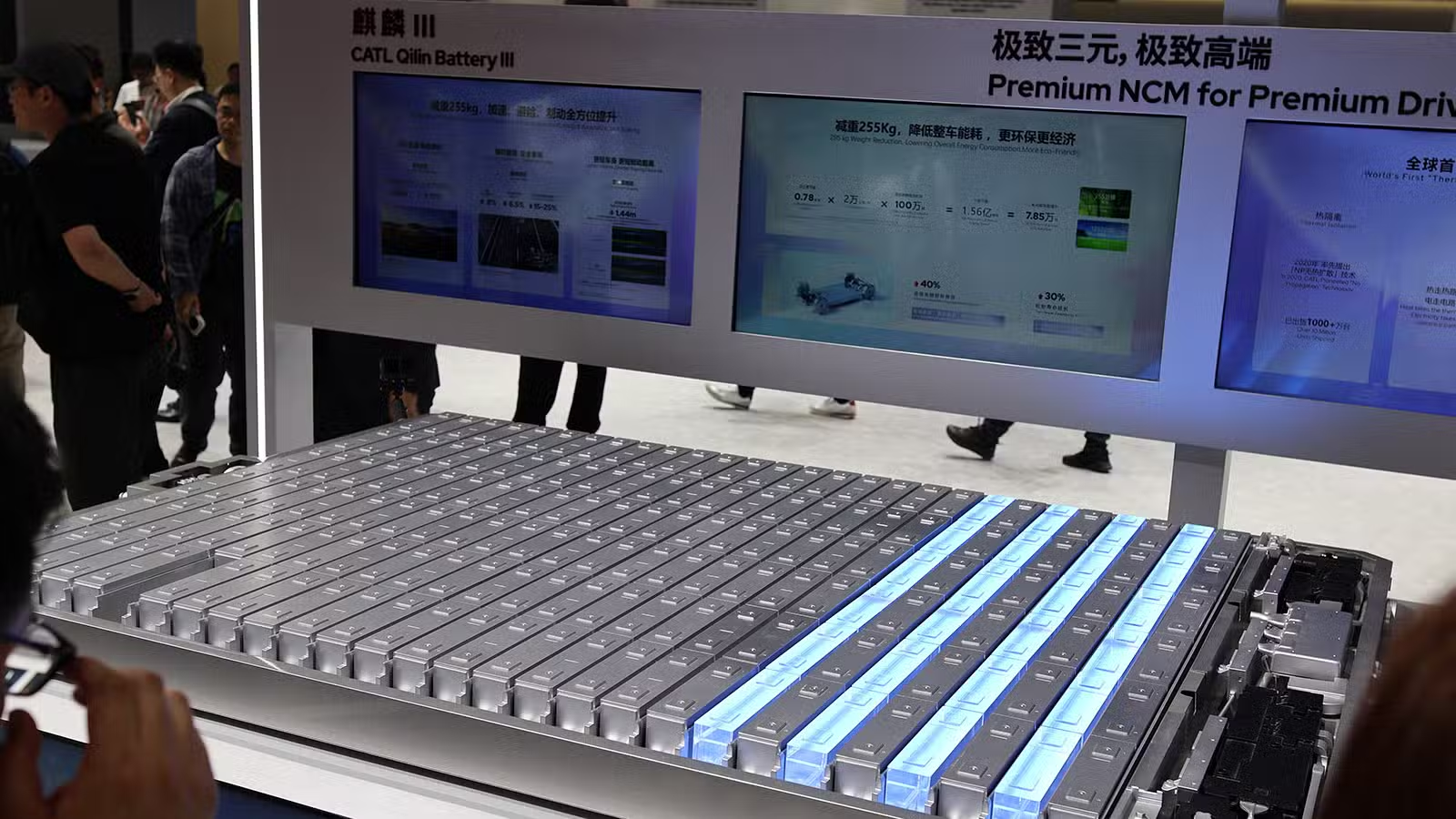
To demonstrate its technological edge in the premium market, CATL officially launched the third-generation Qilin Battery at the tech day event on April 21. The ternary lithium battery features an industry-leading energy density of 280 Wh/kg.
The new battery can support an ultra-long range of over 1,000 kilometers and is capable of ultra-fast charging in just six minutes.
CATL, the world's largest battery maker, saw its installed volume in China's overall battery market reach 25.71 GWh in March, continuing to rank first with a 45.54% market share.
In China's ternary power battery market, CATL's installed volume in March was 7.6 GWh, ranking first with a massive 70.83% share.
In China's LFP battery market, CATL's installed volume in March was 18.11 GWh, also ranking first with a 39.6% share.

($1 = 6.8282 yuan)