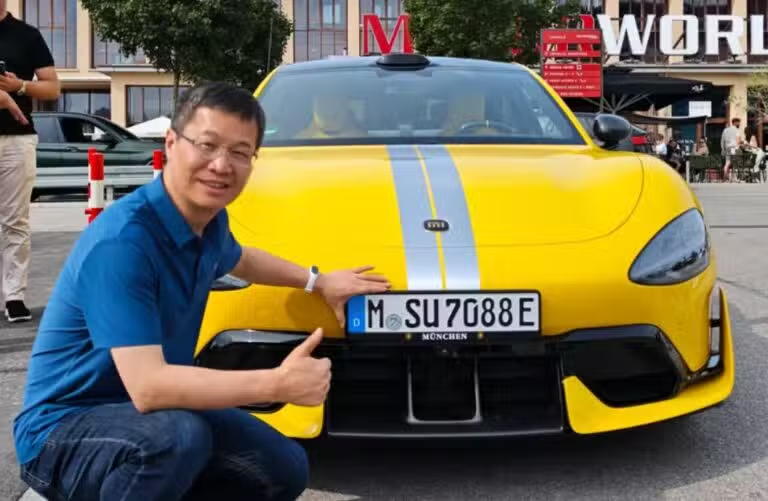
- Over the past five years, China's EVs have perhaps been the most surprising development in the world, Huang said.
- AI powers Xiaomi's autonomous driving and smartphones, the Nvidia CEO said.
Nvidia's Jensen Huang praised Xiaomi's cars and the broader Chinese electric vehicle (EV) industry during his visit to China for an important event.
The CEO of the US chip giant said he would love to buy a Xiaomi car, according to a report by local media outlet National Business Daily today.
Nvidia has collaborated closely with Xiaomi in many areas, he said after attending the opening ceremony of China's third China International Supply Chain Expo.
Over the past five years, China's EVs have been one of the most surprising developments in the world, Huang said.
Earlier today, Huang delivered a speech in Chinese at the expo's opening ceremony, calling China's supply chain a miracle.
AI powers China's iconic platforms such as Tencent's WeChat, Alibaba's Taobao, and ByteDance's Douyin, he said.
AI also powers Xiaomi's autonomous driving and smartphones, the Nvidia CEO noted.
Xiaomi is a latecomer to China's EV industry but has achieved tremendous success.
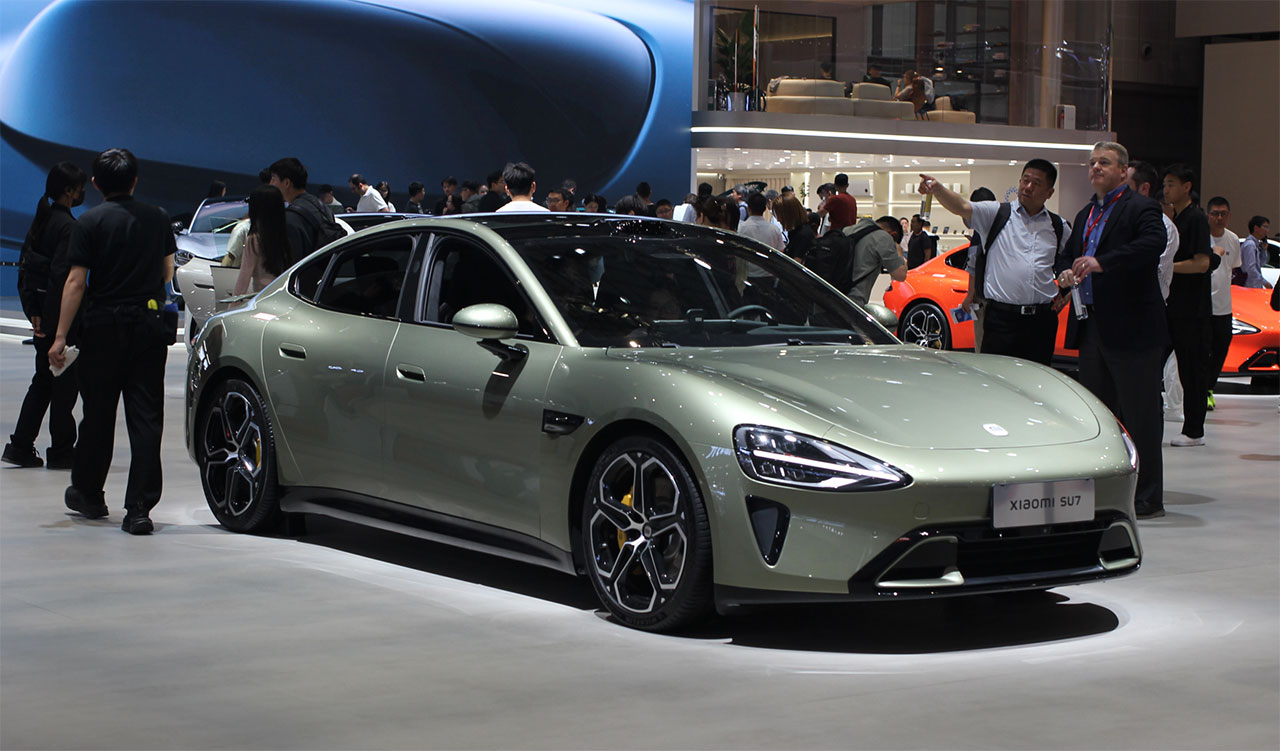
The smartphone giant has launched the SU7 series, with monthly deliveries exceeding 20,000 units for nine consecutive months.
At the end of last month, Xiaomi's first SUV model, the YU7, was launched and received 200,000 firm orders within the first three minutes.
The SU7 series uses Nvidia's Orin chip to power its smart driving system, while the YU7 uses the latest Thor chip.
It is worth noting that most Chinese EV makers currently choose Nvidia's chips to power their smart driving systems, but some players are gradually transitioning to in-house solutions.
EV manufacturers such as Nio (NYSE: NIO) and Xpeng (NYSE: XPEV) initially relied solely on Nvidia's autonomous driving chips but have begun incorporating their own chips into mass-produced vehicles.
Xiaomi has already launched its in-house developed Xring O1 chip, which is used in some smartphones and tablets but has not yet been applied to its EV models.