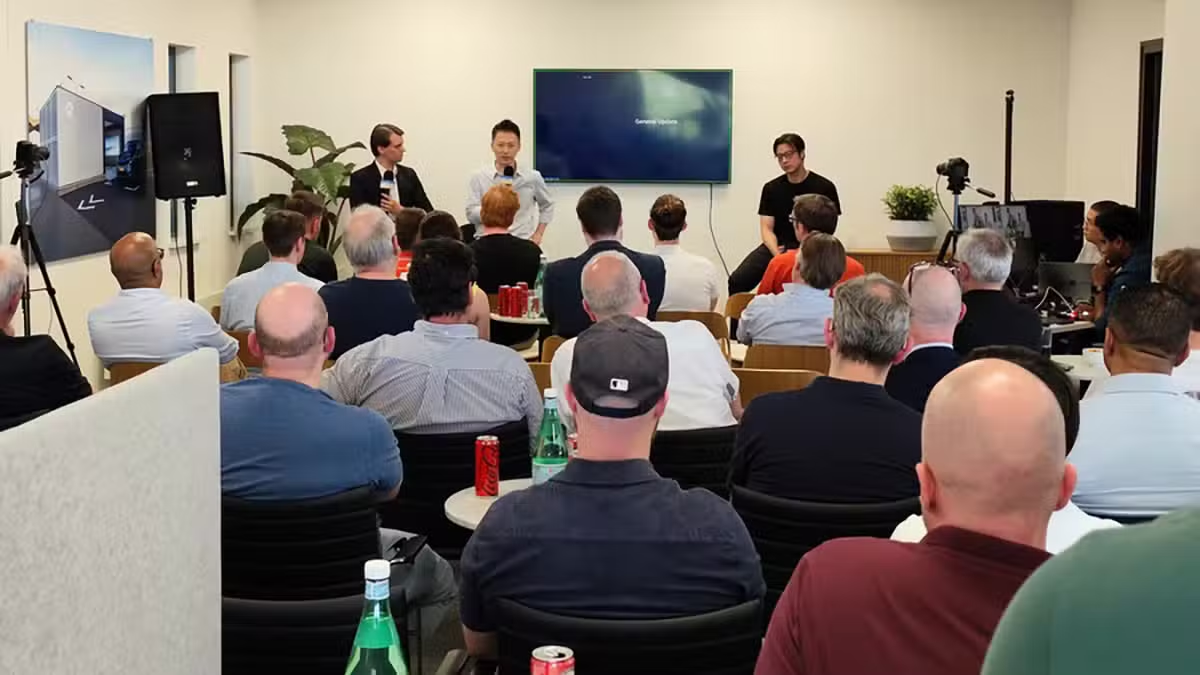
- Nio reaffirmed its long-term commitment to serving the European market and its users, and will arrange more face-to-face meetings.
- Nio executives communicated with users in Europe, facing sharp questions such as software delays head-on, continuing its communication tradition in China.
Nio Inc (NYSE: NIO) is stepping up efforts to bring its signature user-centric strategy to Europe, despite potential backlash from dissatisfied users.
The Chinese electric vehicle (EV) maker held a face-to-face event at the Nio Hub Utrecht in the Netherlands on May 26 to address the frustrations of some European users regarding slow software updates and after-sales service.
In China, Nio has frequently held similar face-to-face user meetings over the years. During these events, executives often have to face sharp questions from car owners.
Executives including Chris Chen, Nio's vice president and head of global business, attended the live-streamed meeting, where they discussed product strategy, software priorities, and marketing challenges, according to a statement published on the Nio App on Friday.
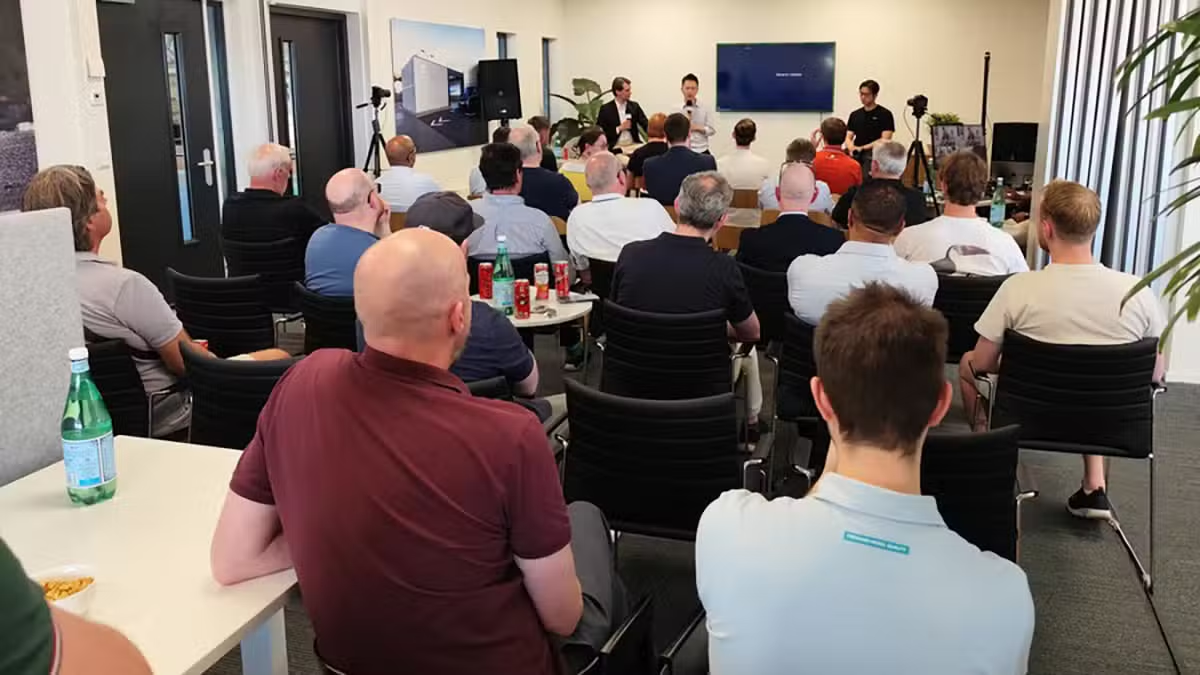
The event comes as Nio's European business faces headwinds. On May 26, CnEVPost received an anonymous email from a user claiming to have attended the event, expressing his dissatisfaction with Nio's slow new model introductions and lagging software updates.
On May 28, during a media communication meeting held in Beijing the day after the launch of the ES9 SUV (sport utility vehicle), Nio co-founder and president Qin Lihong said he had noticed the criticism, but it represented less than 10% of the full picture of the communication, which was generally harmonious and constructive.
During the face-to-face user meeting in Europe, Nio management said they realized the need to strengthen communication to improve transparency on feature delivery and known issues to meet user expectations.
The company reiterated its long-term commitment to serving the European market and its users, hoping to continue the dialogue and arrange more face-to-face meetings.
They acknowledged the urgent need for software progress in the European market and frankly told users that there are currently no plans in Europe to release the Banyan 3.0.0 system, which is available in China.
In addition, enhancements to the voice assistant NOMI have been deprioritized for the fourth quarter as resources are allocated to higher-impact features.
Despite these setbacks, Nio promised to roll out Firmware-over-the-air (FOTA) updates in the fourth quarter. These updates will include improvements to the navigation system, autonomous driving assistance, and media applications.
This dialogue comes as Nio undergoes a major restructuring of its European operations, with the company gradually moving away from its capital-intensive direct sales model in the region.
In Germany, the Netherlands, and Sweden, Nio's operations are shifting to a distributor model. Currently, only Norway, which has an extremely high EV penetration rate, retains the direct sales model.
Nio founder, chairman, and CEO William Li said at a recent communication meeting in China that Nio will slow down its overseas expansion to carefully evaluate the return on investment.
The company is shifting its focus back to the massive domestic Chinese market. Li said that the domestic regional market still holds huge growth potential for the automaker.
This strategic adjustment aligns with the improvement in Nio's financial situation. The company recorded an adjusted operating profit of 66.8 million yuan ($9.85 million) in the first quarter of 2026, marking its second consecutive quarter of profitability.
While slowing down the overseas pace of its main brand, Nio clarified its multi-brand strategy. Li expects the long-term sales ratio of the three brands — Nio, Onvo, and Firefly — to remain at around 3:6:1.
The Firefly brand, which focuses on the high-end boutique compact car market, is more active in Europe. The brand has already started deliveries in Austria and plans to enter the UK market in 2026.
The mass-market brand Onvo is currently still actively evaluating the European market, and future decisions will depend on market conditions and product fit.

($1 = 6.7799 yuan)