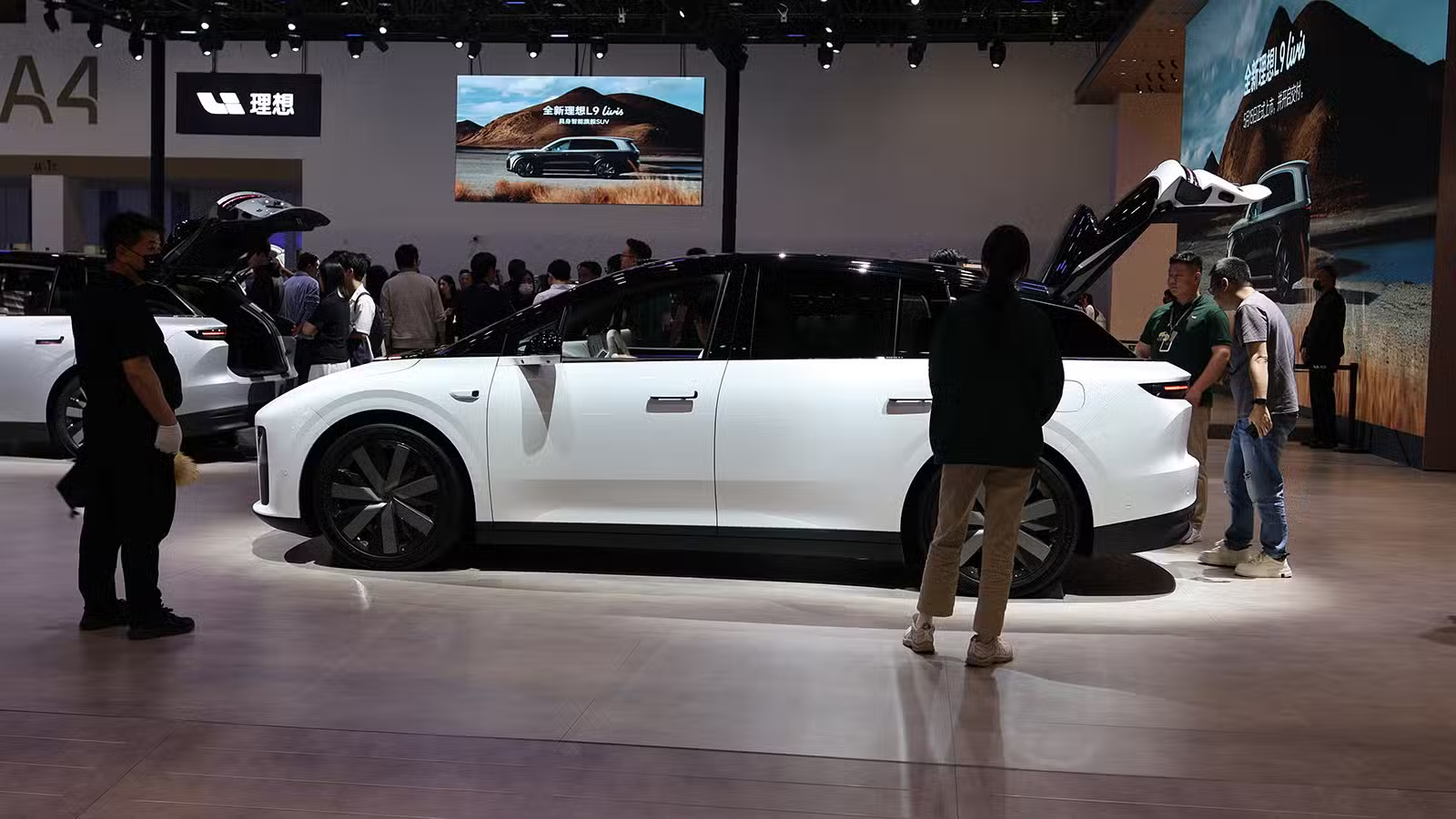
- Li Auto set up three new embodied AI departments to accelerate its transition into an AI and robotics company.
- Li Auto's autonomous driving business is spun off into an independent tier-two department in the latest reshuffle.
Li Auto (NASDAQ: LI) is accelerating its transition into an AI (artificial intelligence) company, completing a new round of organizational restructuring for its foundation model department on May 29.
The adjustment adds three new tier-two departments related to embodied AI: embodied engineering, embodied interaction, and embodied behavior, according to a Friday report by local media outlet LatePost.
Meanwhile, the autonomous driving business has been separated into an independent tier-two department. The three newly established embodied AI units will operate parallel to the autonomous driving department.
They will be directly managed by Zhan Kun, head of the foundation model team, who reports to chief technology officer Xie Yan, the report said.
This marks Li Auto's second restructuring this year targeting the smart driving and embodied AI sectors. Earlier in February, the company reorganized its smart intelligence department and set up a humanoid robot team.
Li Auto's robotics project, internally codenamed Nexus, already has a preliminary prototype for its first wheeled robot product, LatePost noted.
Li Xiang, the company's founder, chairman, and CEO, has repeatedly mentioned the strategic importance of transitioning into an AI company. In an interview earlier this month, he said that autonomous driving is the first half of the robotics competition, while humanoid robots represent the second half.
However, he also admitted that the large-scale commercialization of general-purpose humanoid robots will take at least another three years.
Such sustained investment in the AI sector requires strong cash flow support from its core automotive business. However, Li Auto posted an unexpected net loss of 2.3 billion yuan ($339 million) in the first quarter of 2026.
This weak financial performance ended the company's profitability streak of the past few quarters. During the same period, the company's total revenue fell 11.4% year-on-year to 23 billion yuan.
The deterioration in profitability was primarily attributed to a sharp contraction in vehicle margins during the first quarter. Li Auto's gross margin plunged to 7.9% from 20.5% in the same period last year.
The margin squeeze reflects an intense market price war and a decline in average selling prices driven by changes in the product mix.
Furthermore, the company's free cash flow turned negative in the first quarter, highlighting liquidity pressures.
Li Auto's guidance for the second quarter also appeared relatively conservative and lagged behind its peers. The company expects second-quarter vehicle deliveries to be between 95,000 and 100,000 units, standing in contrast to the robust forecasts of its local rivals.

($1 = 6.7799 yuan)