- The 3 billion yuan ($440 million) facility will reduce investment risks for large-scale energy storage projects through full-scenario, real-world testing.
- As global energy storage installations surge, the testbed is expected to help developers shorten grid-connection cycles and boost asset bankability.
CATL (HKEX: 3750) has launched a massive energy storage testbed to help developers shorten grid-connection cycles.
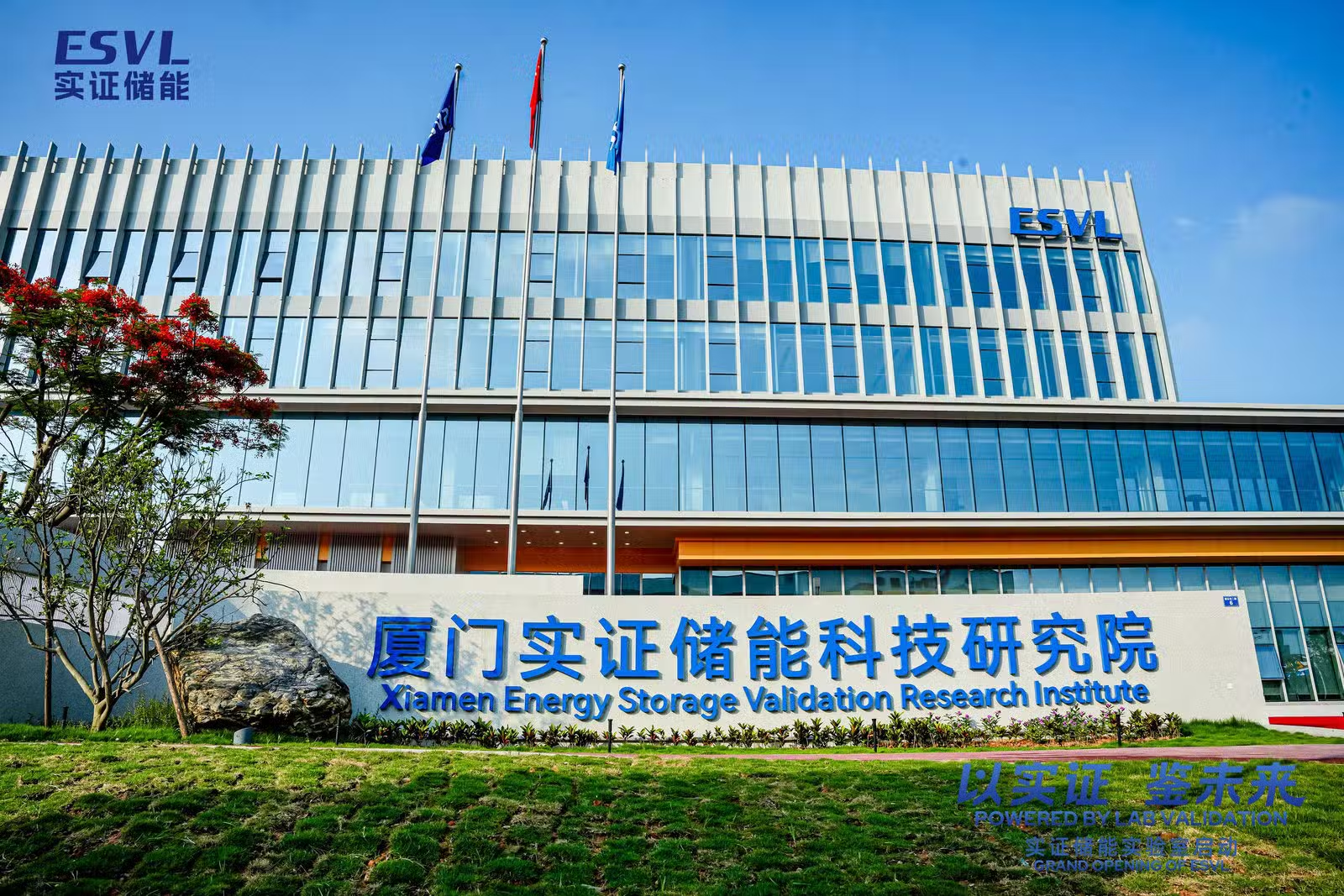
The Chinese battery giant officially opened the facility — the Xiamen Energy Storage Validation Research Institute (ESVL) — on Thursday. It is the world's largest and most comprehensive one-stop testing and validation platform for energy storage.
As the global energy transition accelerates, the rapid expansion of the energy storage industry faces a severe challenge where equipment performance disconnects from real-world operation. The testbed aims to address this systemic risk.
Spanning 10 hectares with a total investment of about 3 billion yuan ($440 million), the facility provides an open and shared infrastructure for the global energy storage sector.
The rapid growth of the energy storage industry has exposed significant structural issues. Nearly one-fifth of large-scale energy storage power stations worldwide are underperforming, while 46.5% of energy storage systems face grid-connection delays of more than two months, according to CATL.
These delays and underperformance affect the bankability of energy storage projects. If the actual operating life cannot be reliably proven, it will be difficult for investors to build dependable financial models.
Meanwhile, insurers cannot accurately price risks, and customers are unable to assess long-term value.
To tackle these challenges, CATL's ESVL platform elevates testing standards from a single component level to the station level.
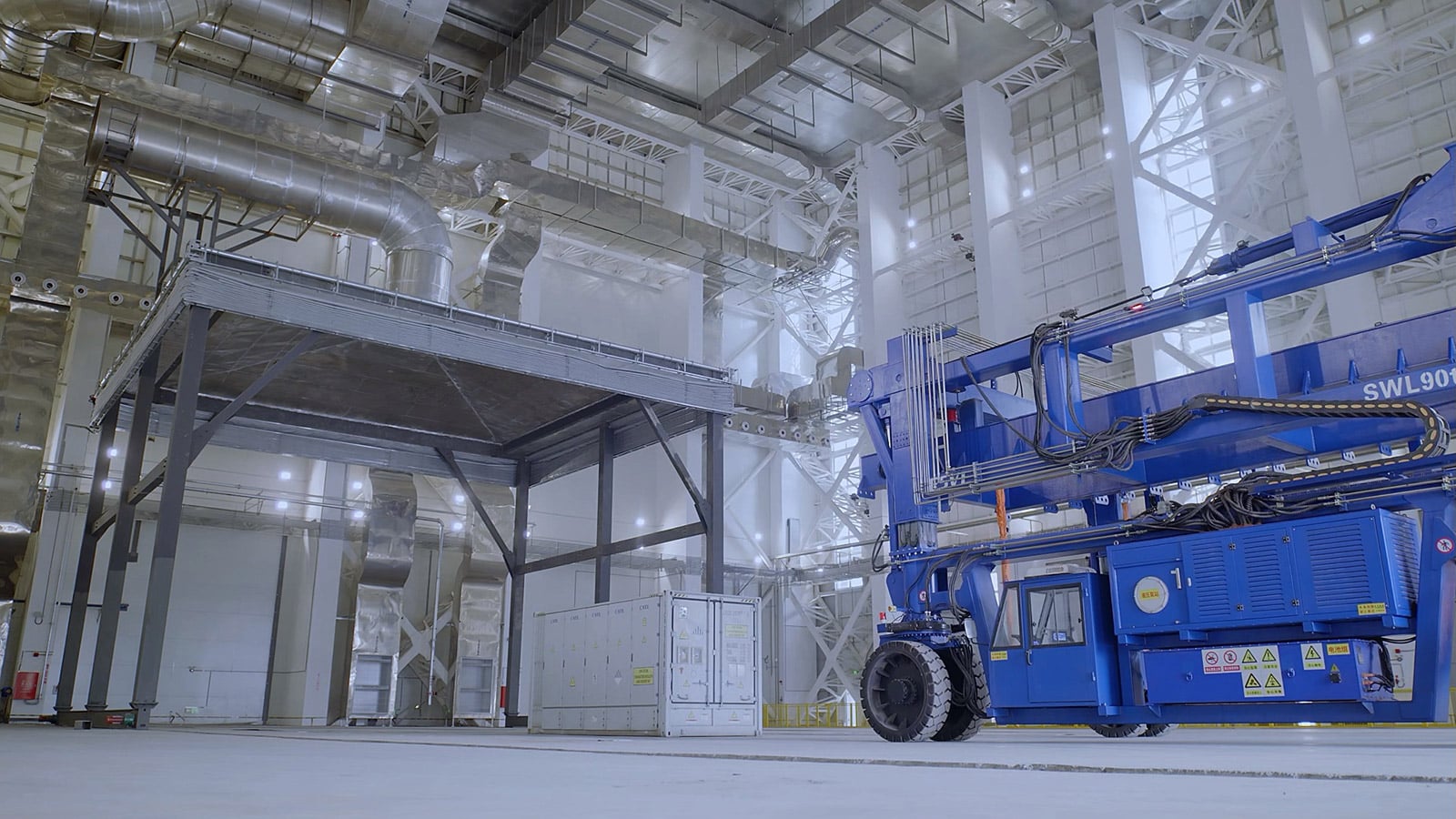
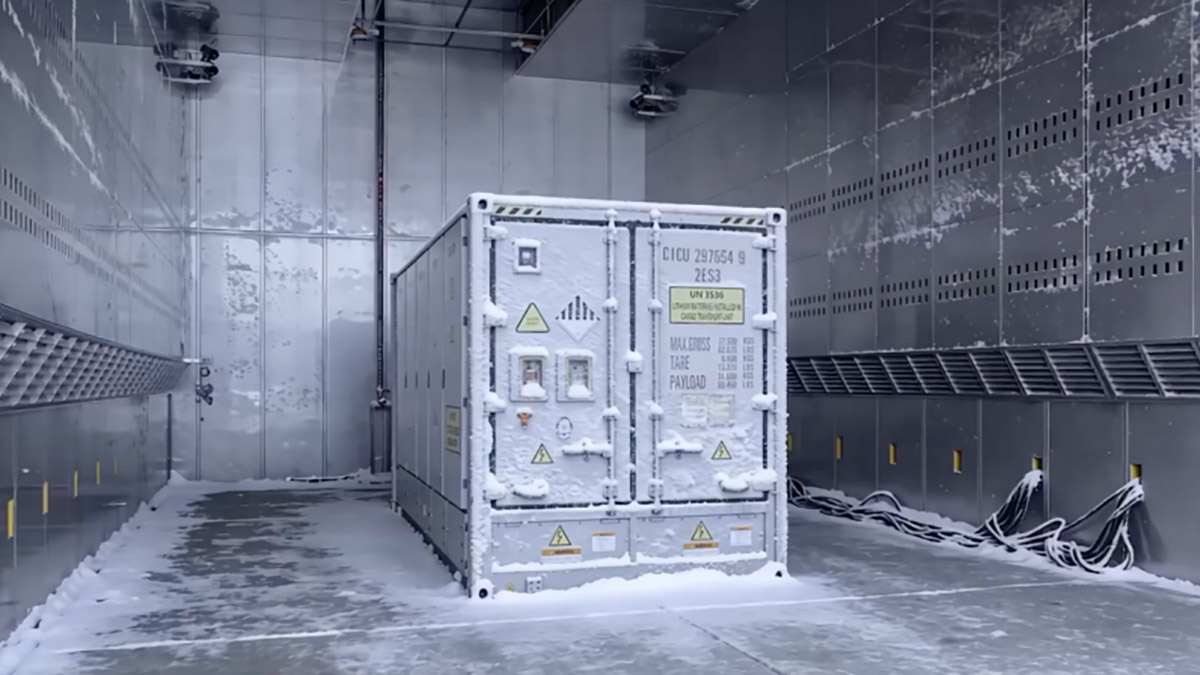
The facility features five core laboratories capable of simulating real grid conditions, extreme climates, high-voltage failures, and large-scale combustion scenarios.
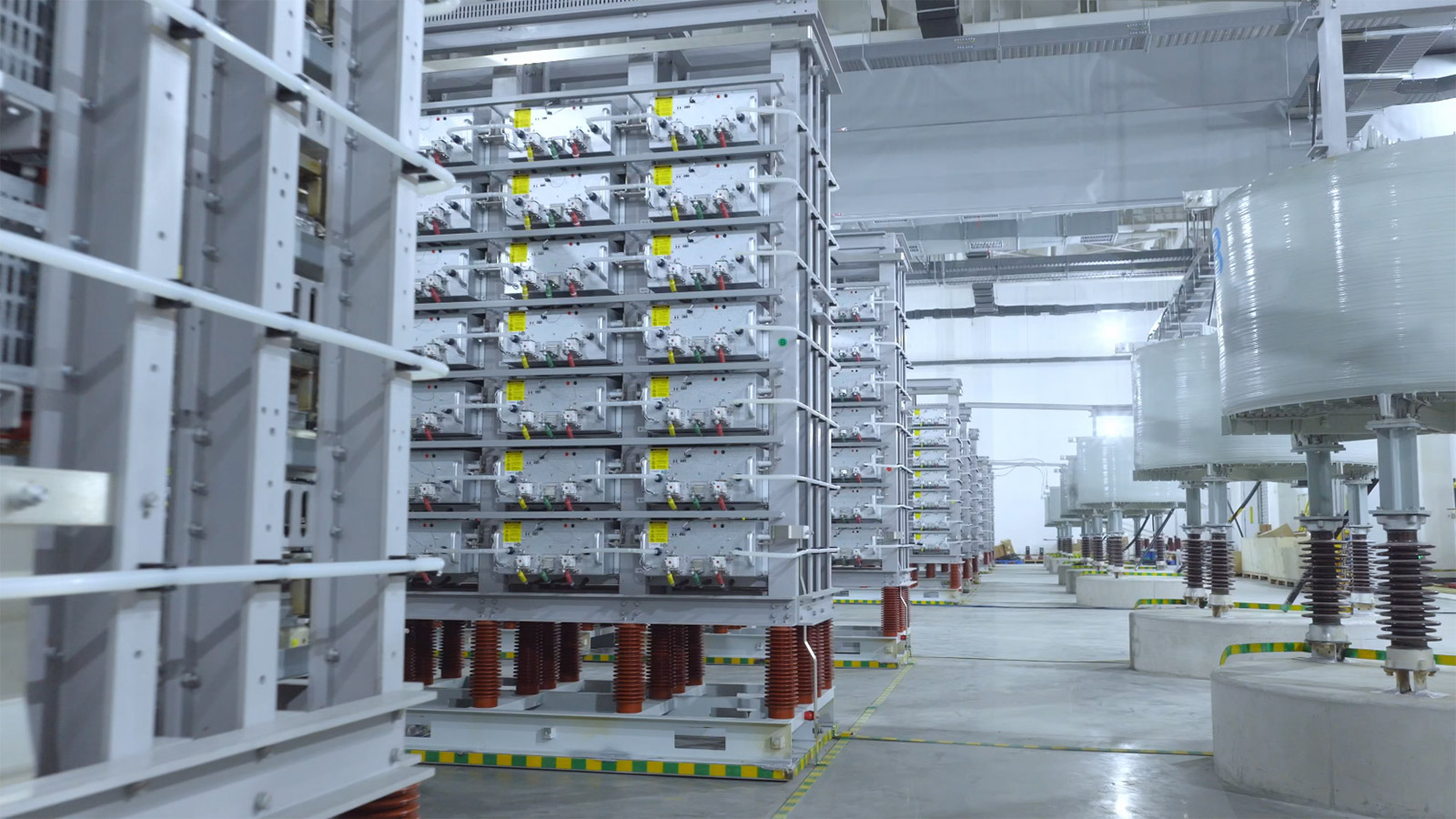
Among them, the world's first station-level grid integration laboratory is equipped with a 100 MVA grid simulator.
The equipment is 14 times larger than a similar platform at the US National Renewable Energy Laboratory. It can simultaneously test more than 10 large-scale energy storage containers, thereby significantly shortening on-site commissioning cycles.
In addition, its thermal safety and combustion laboratory has 100,000 cubic meters of indoor testing space. This allows testers to conduct real-fire and explosion-proof testing on nine large energy storage containers at the same time, providing reliable data support for equipment iteration and safety spacing design.
Scientific rigor is more critical than ever as the energy storage industry enters the gigawatt era, said Wu Kai, chief scientist of CATL.
The industry must raise quality standards to the station level and bring the validation process forward to the pre-delivery stage, Wu said.
The platform is open to the global energy storage industry, added Chen Xiaobo, head of ESVL. It is currently collaborating with leading certification bodies such as TÜV SÜD and TÜV Rheinland to provide globally recognized testing services.
As an industry leader, CATL's energy storage battery sales reached 121 GWh in 2025. The company ranked first globally for five consecutive years with a 30.4% market share.
By launching ESVL, CATL is attempting to build a new trust framework for global energy storage assets.
This validation method, based on real-world data, is expected to transform energy storage from a technology based on assumptions into a long-term infrastructure asset based on solid evidence.
($1 = 6.7791 yuan)