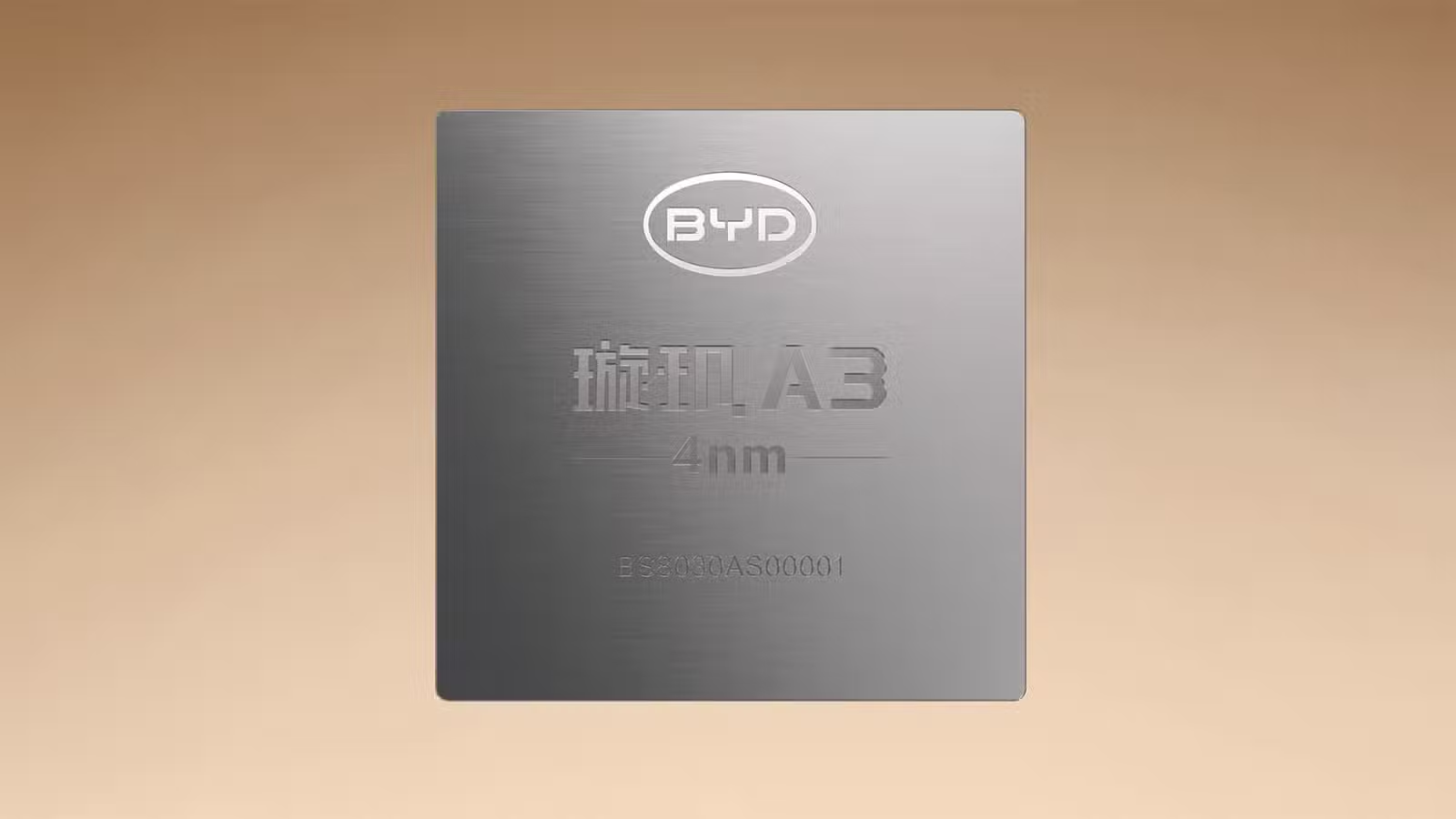
- The Xuanji A3 chip supports L3 and L4 autonomous driving, marking BYD's full-chain control over assisted driving.
- As peers like Nio roll out in-house chips, Chinese automakers are accelerating the deep integration of software and hardware.
BYD (HKEX: 1211) has launched its in-house developed smart driving chip, officially joining the custom silicon race among Chinese EV makers.
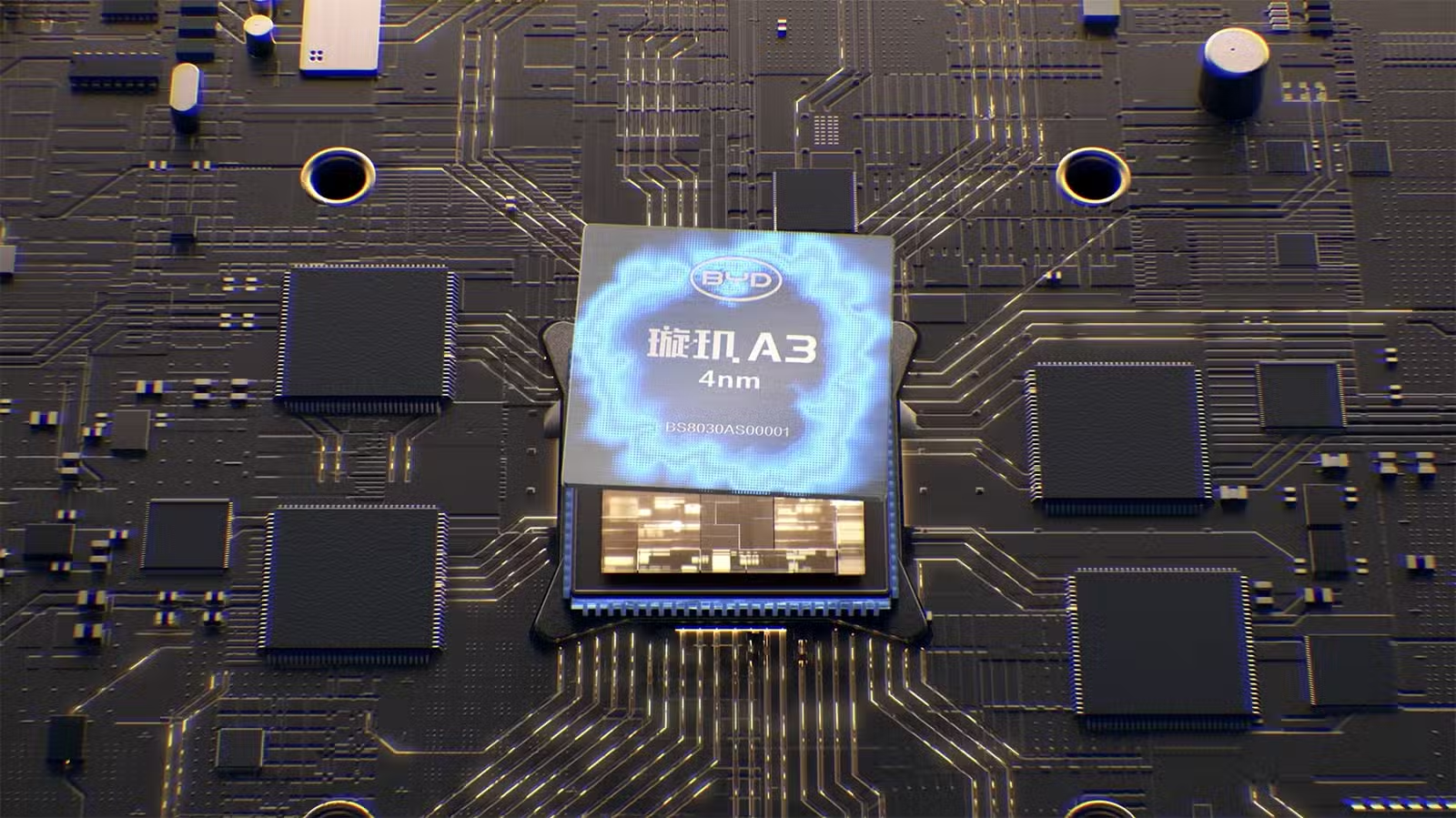
The company officially unveiled the new product, named Xuanji A3, at its intelligence strategy launch event on Tuesday evening, making it China's first 4nm-based smart driving chip.
It supports L3 and L4 autonomous driving functions. This represents a major milestone for the Shenzhen-based automaker.
The Xuanji A3 chip has already entered large-scale mass production, according to the company. A cluster of three chips can deliver a total computing power of over 2,100 TOPS.
By combining deep optimization with BYD's in-house algorithms, the chip's computing power utilization rate has increased by 100 percent.
The new energy vehicle (NEV) giant has invested heavily in its semiconductor ambitions, with related research and development spending exceeding 100 billion yuan ($14.75 billion).
The company currently has a chip R&D team of more than 7,000 people, distributed across its four major chip R&D bases.
BYD chairman and president Wang Chuanfu said the company set up an integrated circuit design department as early as 2002, which was the predecessor to BYD's semiconductor business.
To date, BYD has launched more than 2,000 chip products covering areas such as smart vehicles and consumer electronics. The company now operates five wafer fabs.
BYD is currently the only automaker globally with full-process chip manufacturing capabilities, mastering seven core steps from product definition and architecture design to wafer manufacturing and testing, according to the company.
The launch of the Xuanji A3 means BYD has achieved full-chain control over assisted driving, which helps the company realize the deep integration of software and hardware.

The move intensifies the technological competition among leading Chinese EV makers. Developing proprietary chips has become a key strategy for automakers to build a moat in the AI (artificial intelligence) era.
Nio Inc (NYSE: NIO) is one of the pioneers leading this trend. Its 5 nm Shenji NX9031 chip has been widely applied in models under its main brand and sub-brand Onvo.
Similarly, Xpeng (NYSE: XPEV) is transitioning to its in-house developed Turing AI chip. The chip is designed to power the smart cockpit and autonomous driving systems across all its models.
Earlier this month, Li Auto (NASDAQ: LI) officially unveiled its in-house developed Mach M100 chip, with the 5 nm chip making its debut on its new flagship SUV model, the Li L9 Livis.
This collective shift toward in-house chip development highlights a broader industry trend. Chinese EV makers are actively pursuing software and hardware integration to ensure a competitive edge in a fiercely competitive market.

($1 = 6.7791 yuan)