- In the first quarter, Xiaomi's EV business saw an operating loss of 3.1 billion yuan ($460 million), dragged down by a product transition and the holiday period.
- The EV business achieved its first quarterly profit in the third quarter of 2025 and its first annual operating profit for the full year of 2025.
Xiaomi's (HKEX: 1810) electric vehicle (EV) business recorded an operating net loss in the first quarter, despite steady growth in deliveries during the period.
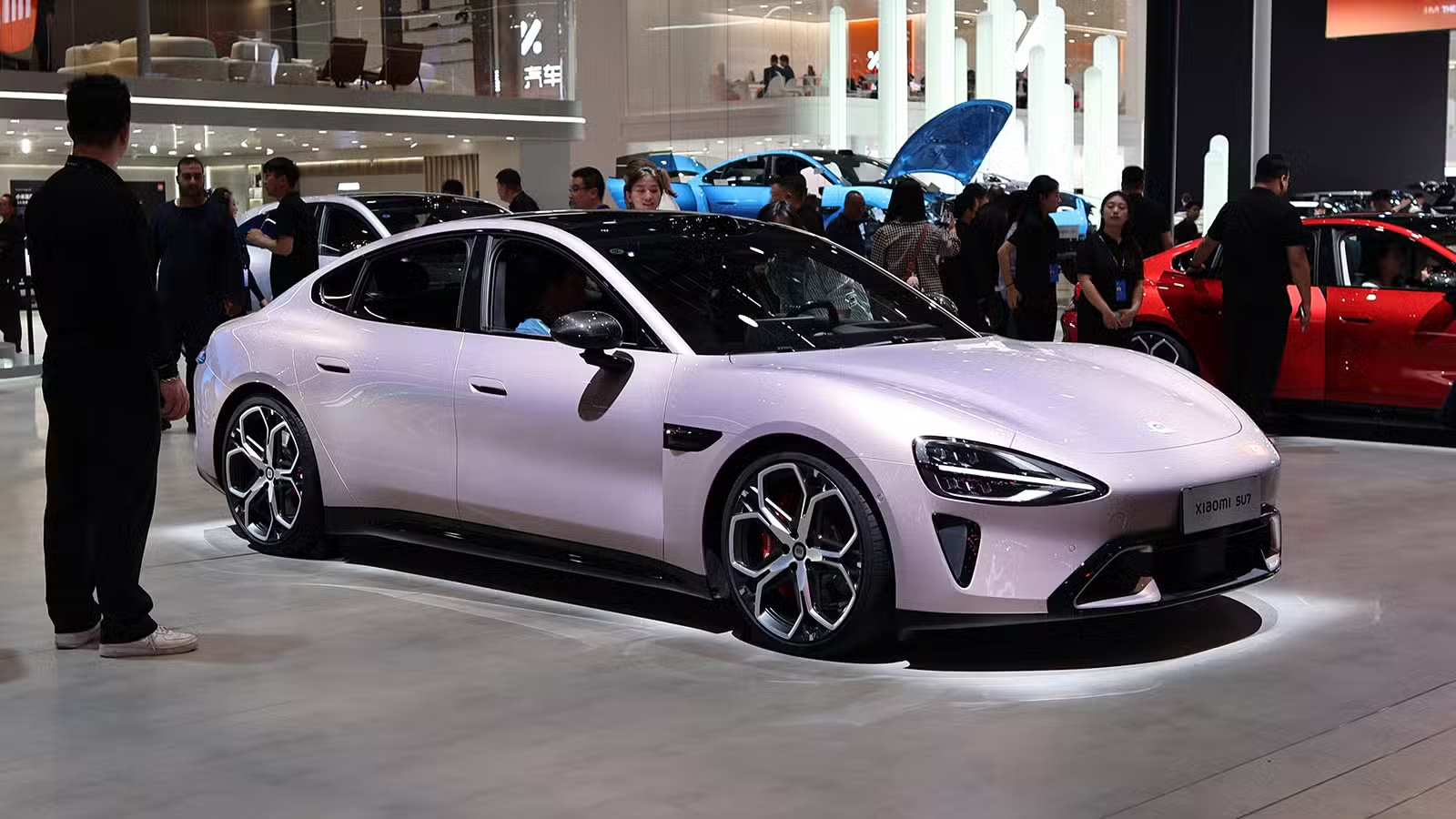
This financial setback was mainly attributed to the drag of the traditional Spring Festival holiday in China and the short-term impact of the transition period for the facelift of the core SU7 sedan, which temporarily suppressed the department's profitability.
In the first quarter, Xiaomi's innovative businesses, including EV and AI, saw an operating loss of 3.1 billion yuan ($460 million), according to a financial report released on Tuesday.
This contrasts with the strong financial performance of the segment in 2025. The innovative business achieved its first quarterly profit in the third quarter of 2025 and its first annual operating profit for the full year of 2025.
The company delivered a total of 80,856 vehicles in the first quarter, up 6.57 percent year-on-year, according to data compiled by CnEVPost.
Revenue from Xiaomi's innovative businesses stood at 19.9 billion yuan in the first quarter, an increase of 6.9 percent year-on-year, in line with the growth rate of vehicle deliveries.
Of this, the EV business generated revenue of 19 billion yuan in the first quarter, while other businesses contributed 900 million yuan.
The gross margin for the innovative business segment was 20.1% in the first quarter, down 3.1 percentage points year-on-year, primarily due to the retreat of purchase tax subsidies for new energy vehicles (NEVs) in China and rising costs of core components.
In the final month of the first quarter, Xiaomi EV delivered 21,440 vehicles in March. Due to the transition between old and new products, this figure was down 26.69 percent from a year earlier.
The YU7 SUV contributed 13,558 deliveries in March, down 32.87 percent from February. Nevertheless, it still accounted for 63.24 percent of the sales share, continuing to serve as the company's pillar model.
The new-generation SU7 electric sedan was officially launched on March 19 and began initial deliveries on March 23. The model contributed 7,882 vehicles during its brief delivery period in March, rebounding by more than 3,515 percent from February.
As the new-generation SU7 entered its first full month of deliveries, Xiaomi EV's sales momentum saw a strong recovery in April. Total deliveries for the month surged to 36,702 vehicles, a significant increase of 71.18 percent from March.
The SU7 contributed 26,826 deliveries in April, accounting for more than 70 percent of the sales share.
Xiaomi has set an ambitious full-year vehicle delivery target of 550,000 units for 2026. Between January and April, the company delivered a cumulative total of 117,558 vehicles, up 12.55 percent year-on-year.
The tech giant's ambitions are not limited to the domestic passenger car market in China; it plans to officially enter overseas markets in the second half of 2027, selecting Europe as the first stop for its global expansion.
($1 = 6.7851 yuan)