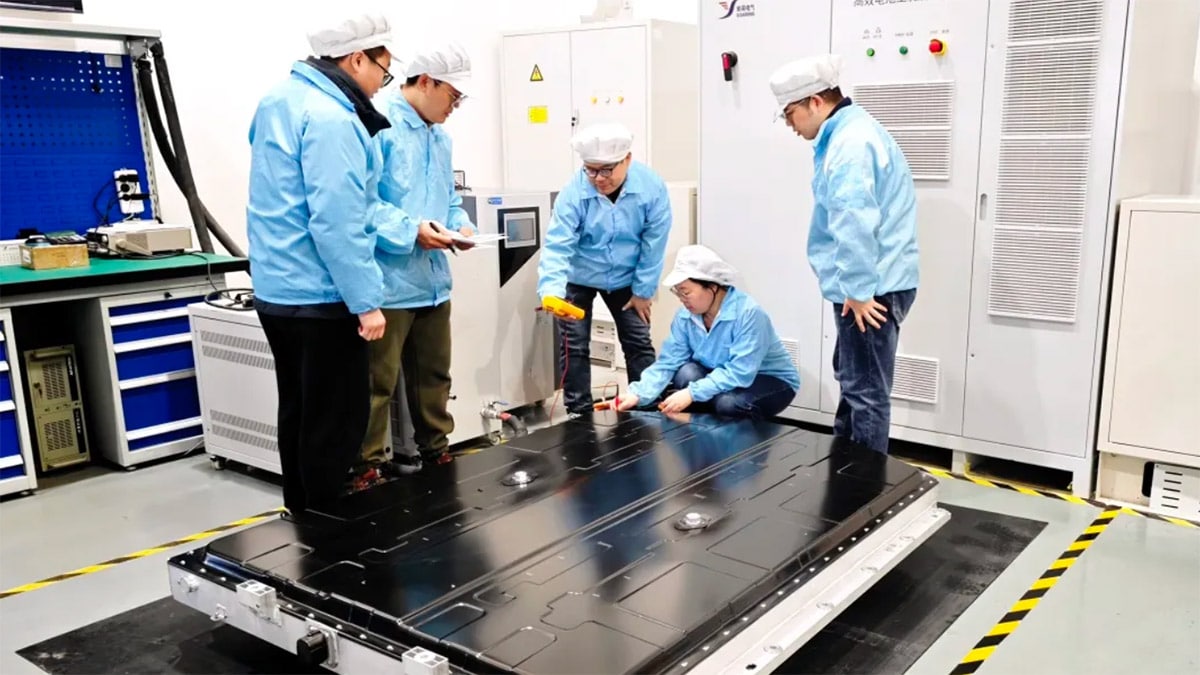
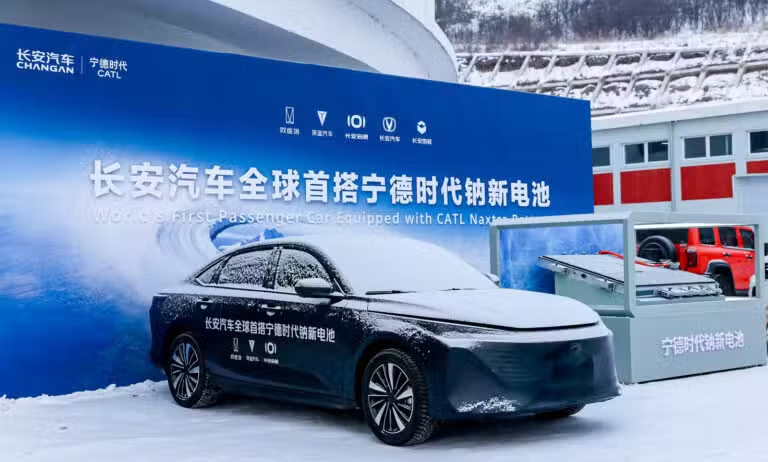
- BAIC said that its sodium-ion battery offers a range of 450 kilometers and supports 4C fast charging.
- BAIC's Aurora sodium-ion battery can complete a fast-charging cycle in just 11 minutes.
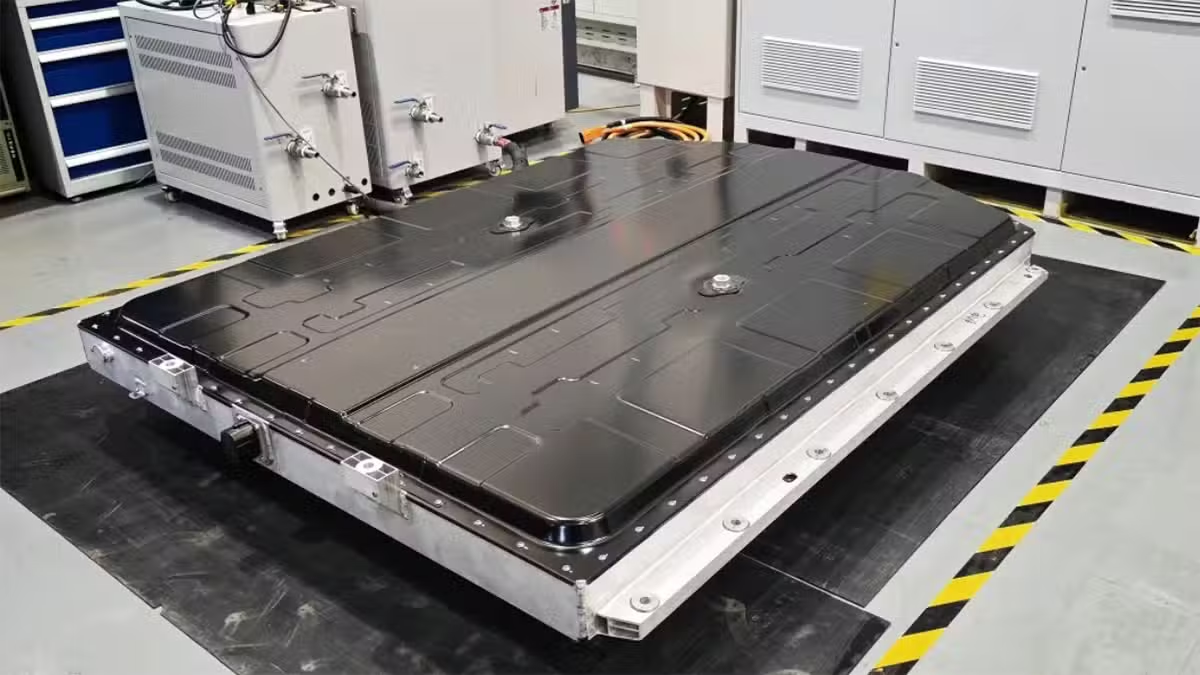
Beijing Automotive Group (BAIC Group) further detailed its sodium-ion battery, following the announcement of a breakthrough in the field last week.
The Chinese automaker said Tuesday that its sodium-ion battery can currently deliver a driving range of 450 kilometers, with a cell energy density exceeding 170 Wh/kg, placing it in the industry's top tier.
This latest technological advancement places BAIC in a broader, fierce competition among Chinese automakers pushing for the commercialization of sodium-ion batteries as an alternative to lithium batteries.
The company announced on March 19 that the development of its sodium-ion battery prototype had been completed, reaching an industry-leading level.
BAIC said at the time that this progress means its "Aurora Battery" platform has achieved full technological coverage of lithium, solid-state, and sodium-ion batteries.
The Aurora sodium-ion battery supports a 4C ultra-fast charging capability, meaning it can complete a rapid energy replenishment process in just 11 minutes, BAIC said in a detailed introduction today.
One of the battery's main selling points is its excellent performance in extreme environments, as sodium-ion batteries are inherently resistant to cold weather conditions.
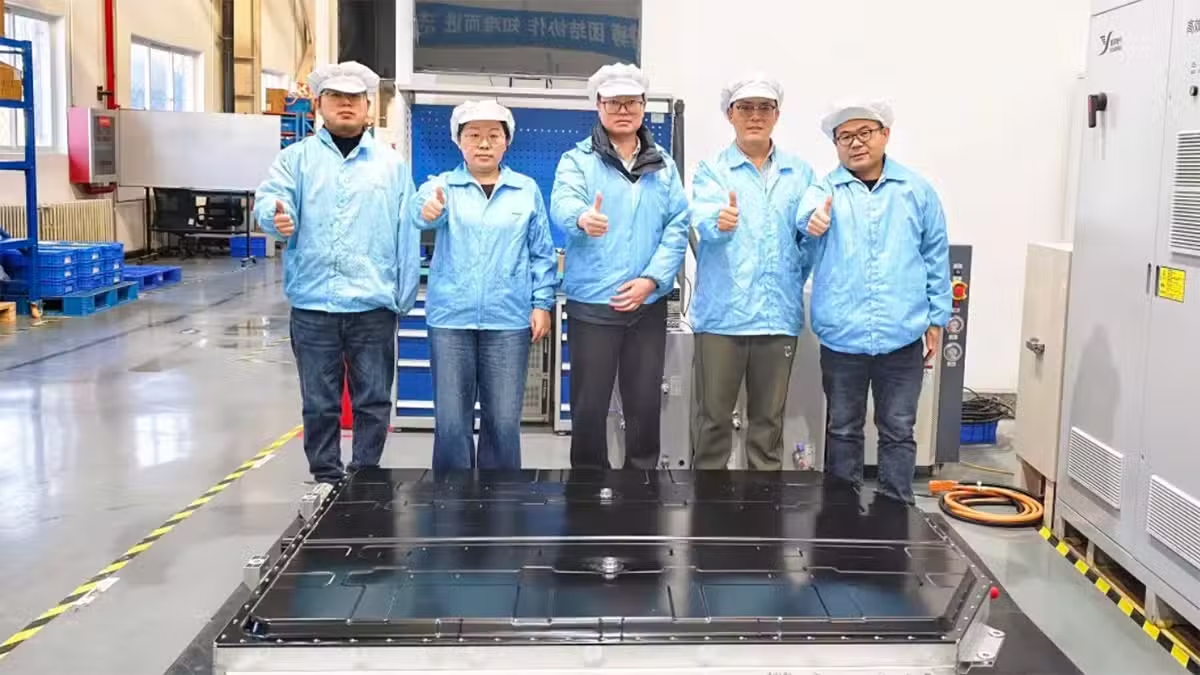
The company said the battery can operate stably in a range of minus 40 degrees Celsius to 60 degrees Celsius, maintaining a 92% power output at minus 20 degrees Celsius.
By completely removing lithium from the material system and using biomass hard carbon, the theoretical cost of the battery pack is reduced by about 15% compared to lithium iron phosphate (LFP) batteries, according to the company.
BAIC's R&D team invented a "smart pouring" charging strategy to prevent the dangerous precipitation of sodium metal on the battery's negative electrode during high-rate charging.
The team also built a digital twin model for the battery, which cut research and development time in half and controlled voltage prediction errors to a very low level.
BAIC emphasized that the battery did not catch fire or explode when overcharged to 200% or heated to 200 degrees Celsius, exceeding current Chinese national standards.
The current 450-kilometer range is fully sufficient for daily commuting, and this sodium-ion battery may enter the A-segment family car market in the future, it said.
Battery giants such as CATL and BYD are also advancing their mass production pace, as the sodium battery industry enters the eve of widespread commercial application.