- Dreame has adopted a "Huawei-like model" to build cars, co-creating new auto brands with partners.
- Dreame is pouring its primary capital and efforts into research and development.
Chinese smart cleaning device maker Dreame Technology has adopted an asset-light strategy to build cars, attempting to carve out a unique path in a crowded EV market.
The company adopted a "Huawei-like model" to make cars, co-creating new auto brands with partners, Ma Junye, president of Dreame's Nebula Next sub-brand, said in an interview in San Francisco, according to a Jiemian report on Wednesday.
In the manufacturing phase, Dreame has not taken the traditional route of building its own vehicle assembly plants, but is instead pouring its primary capital and efforts into research and development.
Under this approach, Dreame's traditional automaker partners will be responsible for vehicle assembly, while Dreame will provide core technologies and platform R&D, significantly reducing the required fixed-asset investment, Ma said.
Despite adopting an asset-light contract manufacturing route, Dreame still exhibits a strong desire for control over core components and underlying architecture.
Ma said Dreame insists on deep, in-house R&D for underlying technology paths, including fully drive-by-wire intelligent chassis, automotive electric motors, solid-state power batteries, and smart cabins.
He also noted that Dreame is independently planning and developing cabin and autonomous driving computing chips under a relatively asset-light model to meet the highly customized demands of its underlying architecture.
In terms of commercial positioning, Dreame abandoned the fiercely competitive mass-market segment in China from the outset of its car-making venture, opting instead to directly enter the high-end sector with vehicles priced above one million yuan ($146,360).
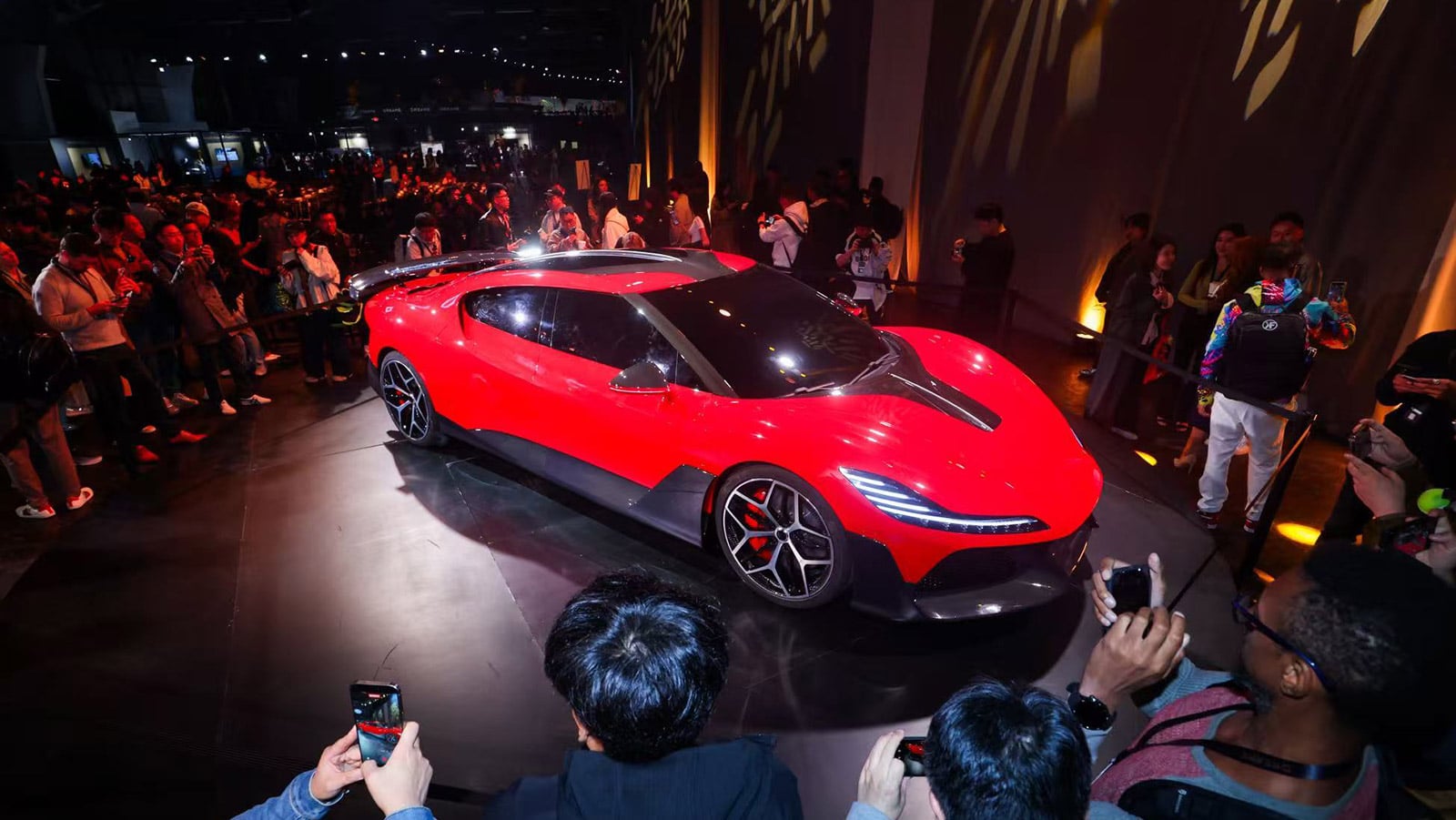
At a launch event in San Francisco on Monday local time, the company showcased a rocket-boosted pure electric supercar concept dubbed the Nebula Next 01 Jet Edition.
The prototype, used to validate extreme engineering capabilities, is equipped with a custom-built dual solid-rocket booster system, enabling the car to accelerate from zero to 100 kilometers per hour in 0.9 seconds, according to official introductions.
The original Nebula Next 01 concept made its debut earlier this year at the CES, benchmarking against the top-tier luxury sports car Bugatti Veyron. Dreame plans to begin production of this supercar in 2027.
Ma said that a large number of cost-effective models in the Chinese market are currently trapped in a dilemma where they sacrifice profits for sales volume. Dreame believes that commercial viability can only be achieved by ensuring high gross margins per vehicle.
He also mentioned that Dreame's car-making venture started earlier than previously understood by the public, with the automotive team beginning preparations between 2021 and 2022, a launch timeline in the same phase as Xiaomi EV.
Dreame officially announced its entry into the car-making ranks in August 2025, with its first model directly benchmarking the Bugatti Veyron.
Currently, the size of Dreame's automotive team has exceeded 1,000 people, with R&D personnel accounting for about 70%, Jiemian noted.
By the second half of this year, the total headcount of Dreame's automotive team is expected to approach 2,000.

($1 = 6.8323 yuan)