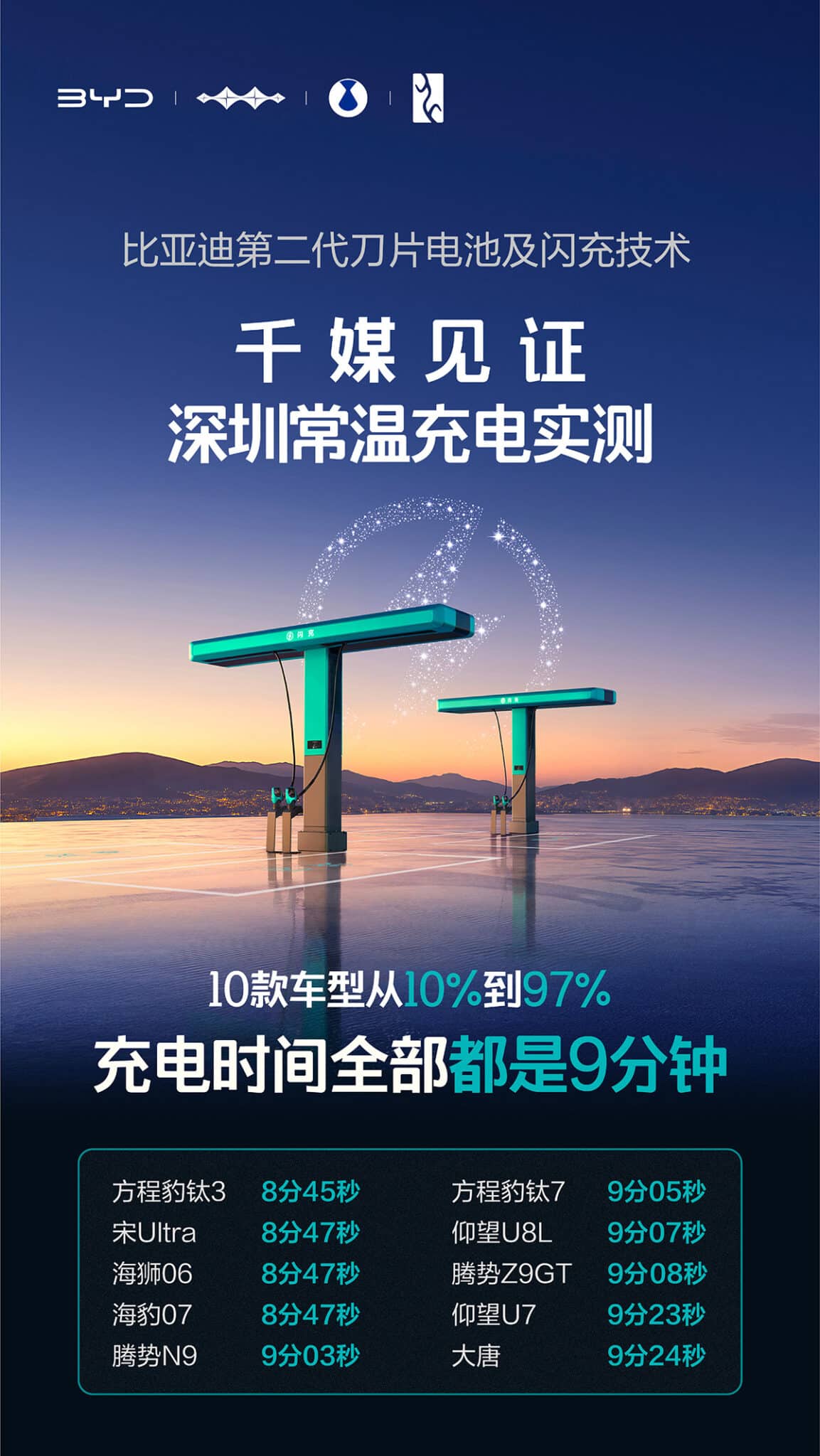
- BYD officially launched its second-generation blade battery, achieving an ultra-fast charge to 97% in just nine minutes.
- Upgraded across energy density, lifespan, and safety, the battery is set to help BYD reignite market demand.
BYD (HKG: 1211, OTCMKTS: BYDDY) has unveiled its next-generation blade battery, setting a new record for charging speeds.
The Chinese new energy vehicle (NEV) giant officially released the second-generation blade battery on Thursday. It takes only five minutes to charge from 10% to 70%, and just nine minutes from 10% to 97%.
BYD dubbed this extreme charging experience "flash charging," emphasizing that only a nine-minute full charge qualifies for the title.
BYD chairman Wang Chuanfu explained at a launch event that stopping the charge at 97% is a deliberate energy-saving measure. The remaining 3% capacity is reserved for regenerative braking, which helps reduce the vehicle's overall energy consumption.
In extreme cold, the battery resolves the industry-wide challenge of slow low-temperature charging. After being frozen at minus 30 degrees Celsius for 24 hours, it takes only 12 minutes to charge from 20% to 97%.
This extreme cold charging time is only three minutes longer than at room temperature. BYD claims this makes the persistent challenges of using EVs in China's freezing north a thing of the past.
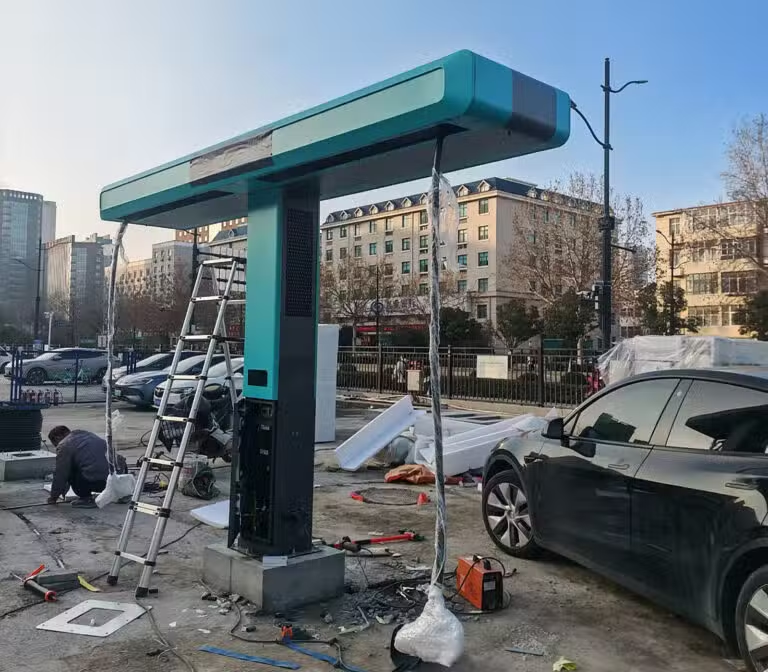
The flash charging technology boasts high compatibility. Vehicles equipped with the new battery can utilize roughly 4.8 million existing public charging piles, achieving overall speeds 30% to 50% faster than other models.
While achieving ultra-fast charging, the second-generation blade battery also increases energy density by over 5%, delivering superior range performance for vehicles.
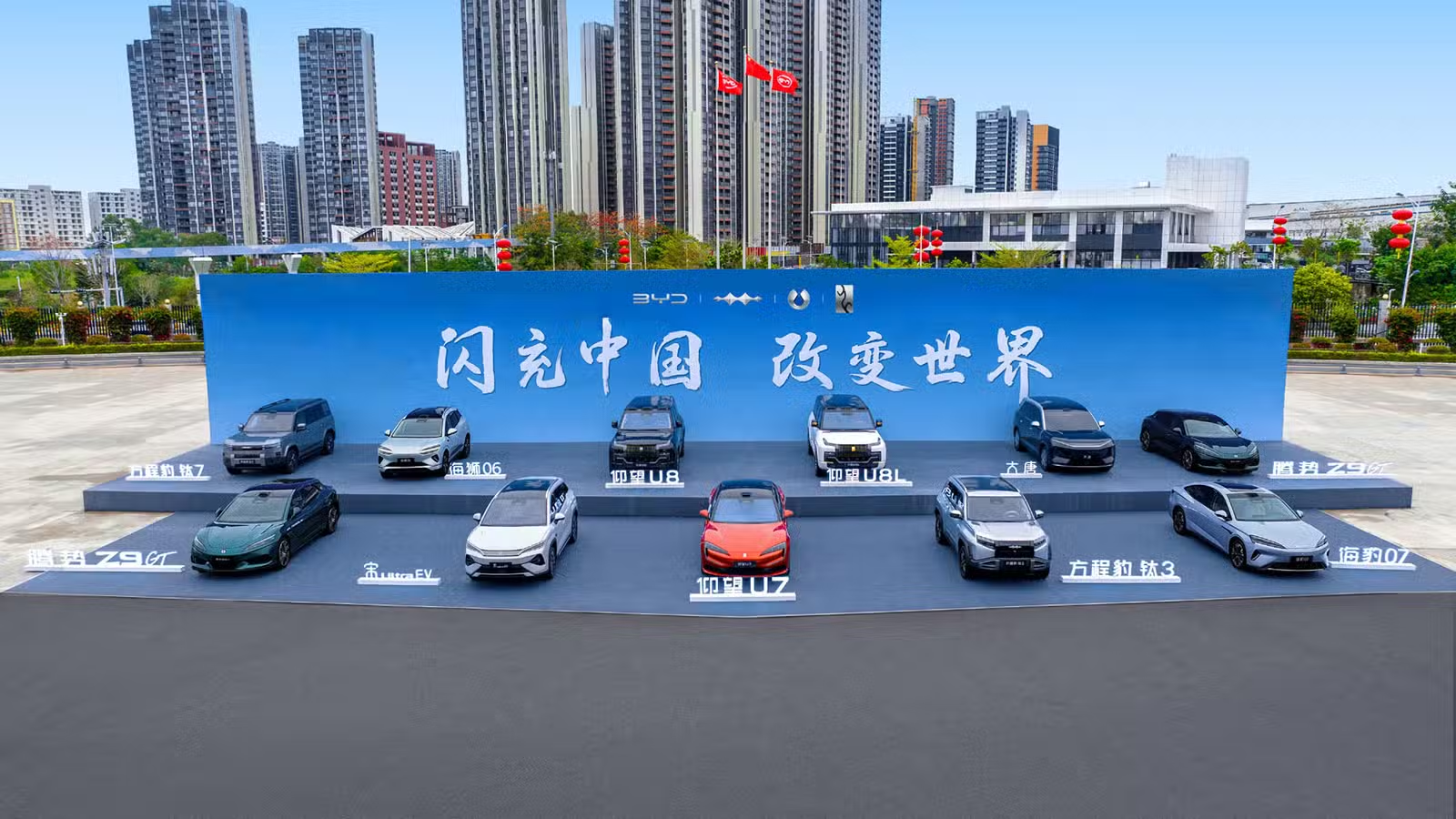
Ten BYD models will be the first to feature the battery. The Yangwang U7, equipped with a 150-kWh battery pack, achieves a pure electric range of 1,006 kilometers, while the fully electric Denza Z9GT boasts a range of up to 1,036 kilometers.
In terms of lifespan and warranty, the new generation outperforms its predecessor. BYD has increased the guaranteed capacity retention rate by 2.5% and promised a lifetime warranty on the battery cells.
Safety remains a core selling point. The battery passed a simultaneous charging and nail penetration test after 500 flash-charging cycles, emitting no smoke or open flames, thereby verifying the safety of long-term flash charging.
The new battery also withstood a bottom impact test with 10 times the force required by China's new national standards. In a thermal runaway test, it successfully endured the simultaneous short-circuiting of four cells without the battery pack catching fire or exploding.
Against the backdrop of a six-month sales slump and a sharp decline in February deliveries, BYD is attempting to regain the initiative in a sluggish market through this disruptive battery technology.