- The first passenger vehicle model equipped with CATL's sodium-ion batteries will come from GAC Aion.
- CATL's sodium-ion battery for light commercial vehicles has completed winter testing in JAC models and will enter mass production in July.
CATL (HKG: 3750, SHE: 300750) anticipates commencing the use of sodium-ion batteries in passenger vehicles next quarter, accelerating the large-scale adoption of this new battery type.
The company plans to extend sodium-ion battery applications to passenger vehicles in the second quarter, with the first model featuring such batteries coming from GAC Aion, CATL chief technology officer Gao Huan said in an interview with local media China Securities Journal on Thursday.
As production capacity expands, sodium-ion batteries will gradually scale up for passenger vehicles, commercial vehicles, energy storage, and even construction machinery, Gao said, adding that challenges like cost remain to be addressed.
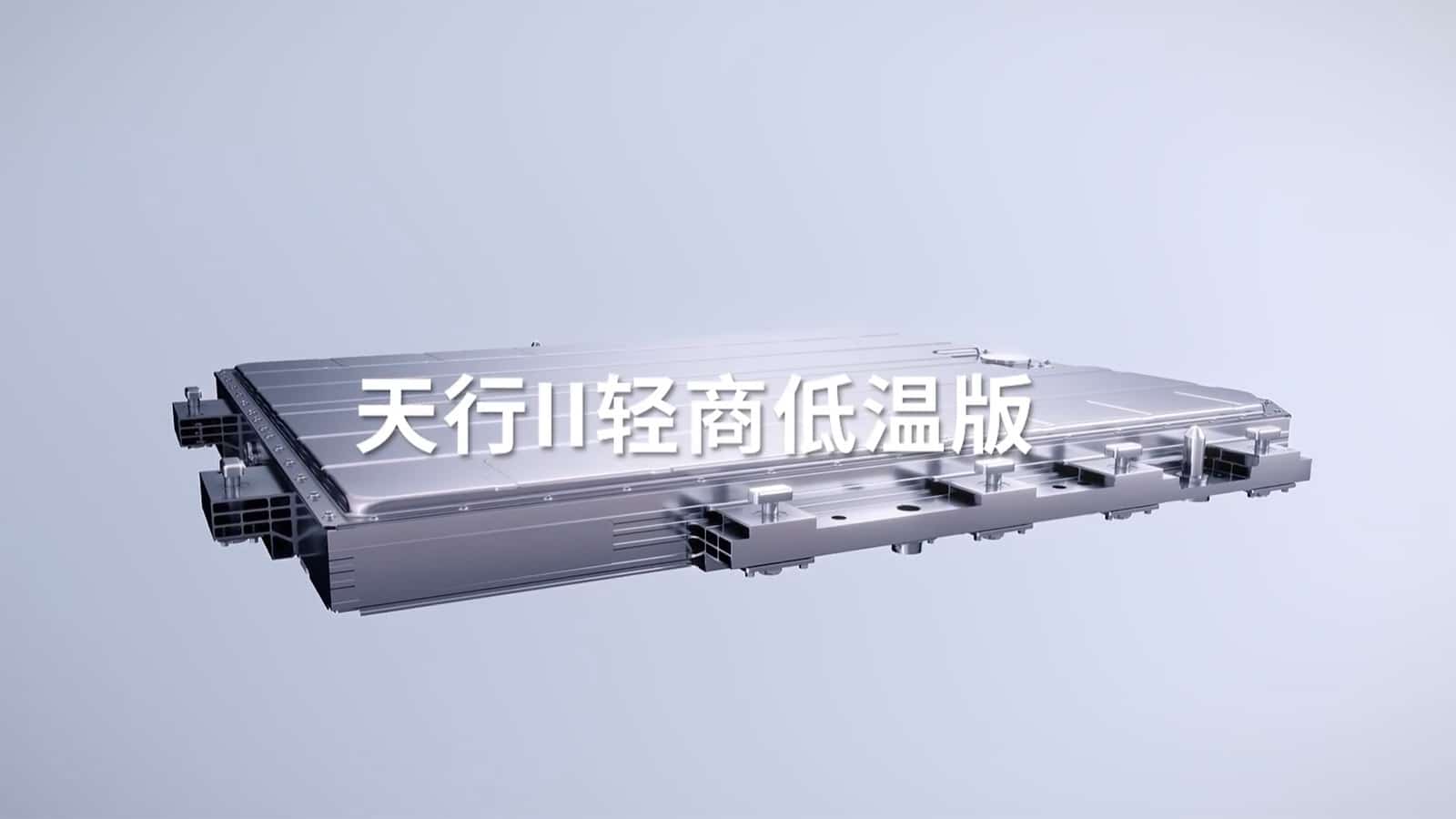
Earlier Thursday, the Chinese battery giant launched its Tectrans II series power batteries for light commercial vehicles, including a 45-kWh sodium-ion battery pack — the first such battery for light commercial vehicles.
The battery pack can still be plugged in and charged in extreme cold environments as low as -30°C. At -40°C, the battery retains 90% of its usable capacity, CATL said.
CATL did not mention a deployment timeline for the sodium-ion battery at the event. However, according to China Securities Journal, the battery will enter mass production in July this year, with versions available for both charging vehicles and battery swap models.
The sodium-ion battery has completed winter testing in Anhui Jianghuai Automobile Group Corp's (JAC) light trucks and mid-size vans, the report said.
Sodium batteries excel in high-power discharge performance, with temperature rise not exceeding 5°C at a 5C charging rate, Gao noted. This eliminates the need for additional cooling in the battery system, allowing for a more streamlined thermal management system.
He indicated that the transition of sodium batteries from lab to mass production signifies progress in overcoming challenges related to low-temperature performance.
CATL aims for sodium batteries to achieve energy densities comparable to current lithium iron phosphate (LFP) batteries within the next three years, while further reducing costs.
The company is developing its third-generation sodium battery, Gao said.
CATL unveiled its first-generation sodium-ion battery in July 2021 amid surging lithium carbonate prices, sparking widespread attention for this novel battery type.
In April 2025, CATL launched its sodium-ion battery brand Naxtra at its Tech Day event, initiating exploration of lithium battery alternatives under this new brand.
Naxtra passenger vehicle batteries achieve an energy density of up to 175 Wh/kg, leading global sodium-ion batteries and matching LFP batteries, CATL said at the time.
Beyond CATL, Chinese startups including Hina Battery are also developing sodium-ion batteries.
Hina has four sodium battery products in mass production and sales, including start-up batteries, energy storage batteries, and power batteries.