- Nio will intensify its focus on AI in 2026 and encourages employees to deeply integrate AI usage.
- In 2026, Nio's non-automotive business revenue is projected to potentially exceed RMB 10 billion ($1.43 billion).
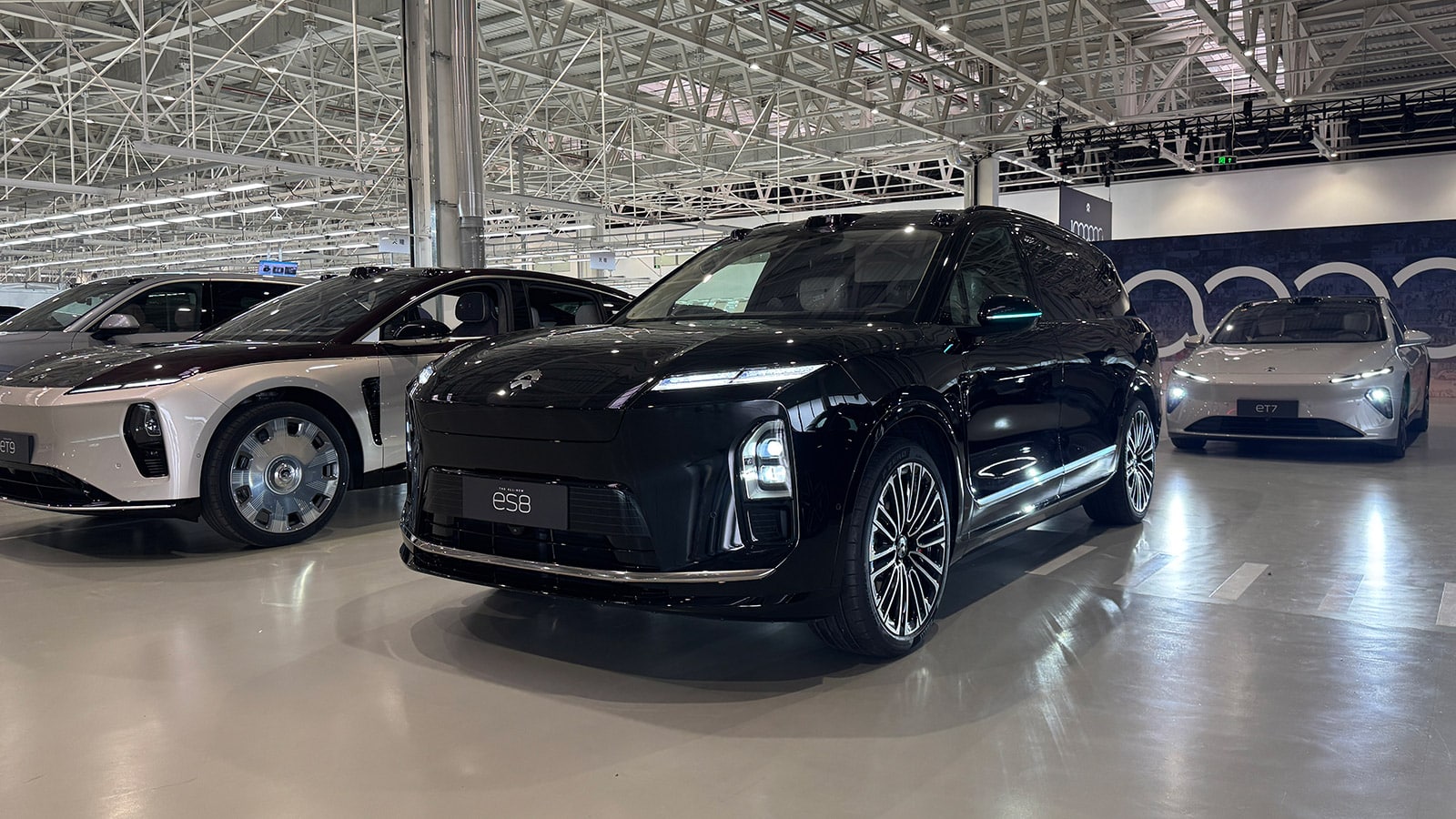
Nio Inc (NYSE: NIO, HKEX: 9866) will increase its bet on AI (artificial intelligence) in 2026 and expects employees to deeply integrate AI to enhance product competitiveness and operational efficiency, said William Li, founder, chairman, and CEO of the Chinese electric vehicle (EV) maker.
Li informed employees during an internal meeting on January 14 that AI will not only power the company's smart driving systems but also drive efficiency gains across R&D, manufacturing, supply chain, finance, and human resources.
He said that Nio has established an AGI committee tasked with promoting AI adoption across all business operations, according to the full text of the internal speech obtained by CnEVPost.
"Do not fear AI; embrace the change," Li urged employees.
He emphasized the need for a mindset shift, warning that Nio risks falling behind if competitors adopt AI to boost efficiency.
This echoes his remarks to domestic media earlier this month when Nio Inc reached its one millionth vehicle production milestone.
"I believe any automotive company with ambitions today must be an AI company — there's no question about it," Li told media including CnEVPost in Hefei, Anhui on January 6.
Beyond emphasizing AI, Li reiterated confidence in achieving first-ever quarterly profitability in the fourth quarter 2025 in Wednesday's internal speech.
He also noted that Nio's non-automotive businesses — including Nio Life, the in-car mall, and external technology partnerships —demonstrated strong gross margins in 2025.
This year, Nio's non-automotive revenue is projected to potentially exceed RMB 10 billion ($1.43 billion), representing significant opportunities, he said.
Below is the full transcript of Li's remarks, translated by CnEVPost.
Steady growth, cost reduction and efficiency improvement
Let's first look back at 2025, a year marked by intense market competition.
In the first half, we faced significant challenges, but in the second half, driven by two large vehicle models, we still achieved solid sales.
The Onvo L90 claimed the top spot in annual sales for pure-electric three-row SUVs, while the all-new Nio ES8 delivered 40,000 units within 100 days of its launch — both impressive achievements.
Additionally, Firefly exceeded our expectations, selling more than what we anticipated at the beginning of the year.
User satisfaction for new models also met our set targets.
The CBU (Cell Business Unit) mechanism has progressed well overall. The next step is to refine the entire target assessment and incentive system.
On the cost side, cost mining and the "million-fold thinking" approach are being implemented. Employee-driven operations are shifting from superficial efforts to tangible actions.
Regarding profitability in the fourth quarter of 2025, while the financial report hasn't been released yet, you can do the math: we delivered an additional 40,000 all-new ES8 units in the fourth quarter, each with solid gross margins.
Do the math, and you'll see profitability is achievable.
We've achieved counter-cyclical growth — shifting from the first quarter losses to projected fourth-quarter profitability — marking our entry into the company's third development phase. This was no small feat and represents our journey of building capabilities.
If a company cannot sustain operations, everything else is hollow and unsustainable.
At this stage and scale, we must deliver this result.
The past quarter has been challenging for everyone. Most colleagues recognized the importance of this task and made tremendous contributions. Thank you to all our colleagues.
This was the overall situation last year. It was tough for everyone, and I sincerely appreciate your efforts.
I hope that in our third development cycle — the next 3-5 years — we can achieve steady annual growth of 40%-50%.
During the second-generation product cycle, we largely achieved annual growth of around 30%.
We now operate three brands, with many more competitive products set to launch.
Our brand recognition, particularly for Onvo and Firefly, continues to rise.
I am confident our sales and service systems, along with our network coverage capabilities, will only strengthen.
Our channels will expand into less developed regions and reach an increasing number of countries.
Therefore, we are confident in achieving our 40%-50% growth target.
Second, we must steadily increase vehicle gross margins. As I said during last year's third-quarter earnings call, we aimed for a vehicle gross margin of 17%-18% in the fourth quarter of 2025. Current indicators suggest this is achievable, as our current product gross margins are solid.
At the same time, non-automotive business gross margins were also strong last year. This includes Nio Life, the car mall, and our external technology collaborations, which delivered substantial revenue growth.
Not only must the gross margins for vehicles improve steadily, but so must the gross margins for non-automotive businesses.
This year, we estimate our non-automotive business revenue has the potential to exceed RMB 10 billion, representing significant opportunities.
Third, we must control the sales and administrative expense ratio. On one hand, we need to keep fixed expense investments within reasonable limits; on the other hand, we must carefully calculate the ROI for variable costs and expenses.
Sales volume, gross margin, and expense control — these are our key priorities for this year.
Increase AI investment to enhance competitiveness and efficiency
We need to maintain technological and product leadership while comprehensively improving R&D operational efficiency.
When we launched the CBU mechanism last year, some colleagues expressed concerns: Could this lead to insufficient long-term investment? Might it compromise our technological accumulation over two to three years or even longer?
I believe this concern is valid. From this perspective, to control costs while maintaining technological and product leadership, we must find ways to boost efficiency.
Last year, I observed that limited resources foster greater focus.
We must strategize how to maximize output within constraints — identifying where funds should be allocated, distinguishing truly worthwhile initiatives from those with lower ROI or priority.
Prioritization is a critical skill we must hone throughout our careers. Sometimes, excessive or scattered resources can actually dilute our competitive edge.
Humans inherently feel insecure. When resources are abundant, we wonder: Am I missing opportunities? Am I failing to prepare for the future? Some departments may also worry: If I'm doing less, does that mean my work is less important?
However, from a long-term competitiveness perspective, this isn't necessarily true. More money invested doesn't automatically mean higher output.
Therefore, this year we will enhance our competitiveness and build our capabilities through efficiency improvements. We aim to achieve bigger results with smaller investments.
How will we achieve this? First, we must ensure the smooth, high-quality delivery of our three new models this year — especially the flagship Nio ES9, where significant work remains.
Additionally, for models currently in development slated for launch next year and the year after, we must deliver high-quality work at every milestone.
Second is smart driving assistance. Our R&D path for smart driving assistance has been quite challenging. Integrating our in-house developed smart driving chip, operating system, and world model is no easy feat — we've built a very deep foundation.
This year, we'll increase investment in computing power and R&D efficiency. Despite tight company resources, I've specifically allocated a special computing power budget for the smart driving department. We must also strive for greater efficiency, aiming to achieve superior results with fewer resources.
Let's avoid getting distracted. We've made significant strides in active safety and collective intelligence, and the feedback on our new version of assisted driving has been very positive.
This year, we will specifically increase investment in smart driving computing power, aiming to release three major versions and reclaim our position as an industry leader.
Third is the full-business-chain implementation of AI, building a company-wide AI capability system.
This extends beyond vertical areas like smart driving assistance. Every department and process — from R&D to production, manufacturing, supply chain, finance, HR, and beyond — needs AI to boost efficiency.
This is a systemic endeavor. Moving forward, our AGI Committee will lead the execution of AI applications across all business chains.
Do not fear AI; embrace the change. Do not worry that AI will take your jobs. Proactively master AI and become its master.
I believe AI-native or AI-friendly companies and organizations operate with higher efficiency.
If we resist change while others adapt, our efficiency will lag behind theirs.
If AI boosts efficiency by just 3% at each process, the company's overall efficiency gains will far exceed 3%.
Deepening organizational capability building and transformation
Building systematic capabilities is no easy feat. You can draw inspiration and learn from others, but ultimately, you must internalize these insights and find a model that suits your own context.
I believe no industry is more complex than the smart electric vehicle sector. We must meticulously examine our system capabilities: where exactly can we create greater user value and achieve higher efficiency than our competitors?
A company's competitiveness hinges on two core questions: What value do you deliver to users? How much more efficient are you than competitors? Clarify these two points, and your company will move forward.
2026 will bring many challenges, but I believe the greatest challenge lies not in the market, products, or sales — it's our mindset.
Mindset is a delicate thing. Last year, we channeled our energy toward profitability, overcoming obstacles with unified determination. Now that we've caught our breath, this mindset may shift slightly.
Our market share in China remains below 2%, leaving at least fivefold room for growth.
Remember: while we've gained some scale, we remain a startup.
We must fortify our positions, wage persistent battles, advance steadily day by day, and achieve success through sustained effort. This is the mindset we must embrace.
($1 = RMB 6.9699)