- EREV models with large battery packs not only sacrifice interior space but also create unnecessary cost burdens, said Onvo's president.
- About 40 percent of owners of the Onvo L90, which comes standard with an 85-kWh battery pack, have downgraded to the lower-capacity 60-kWh pack.
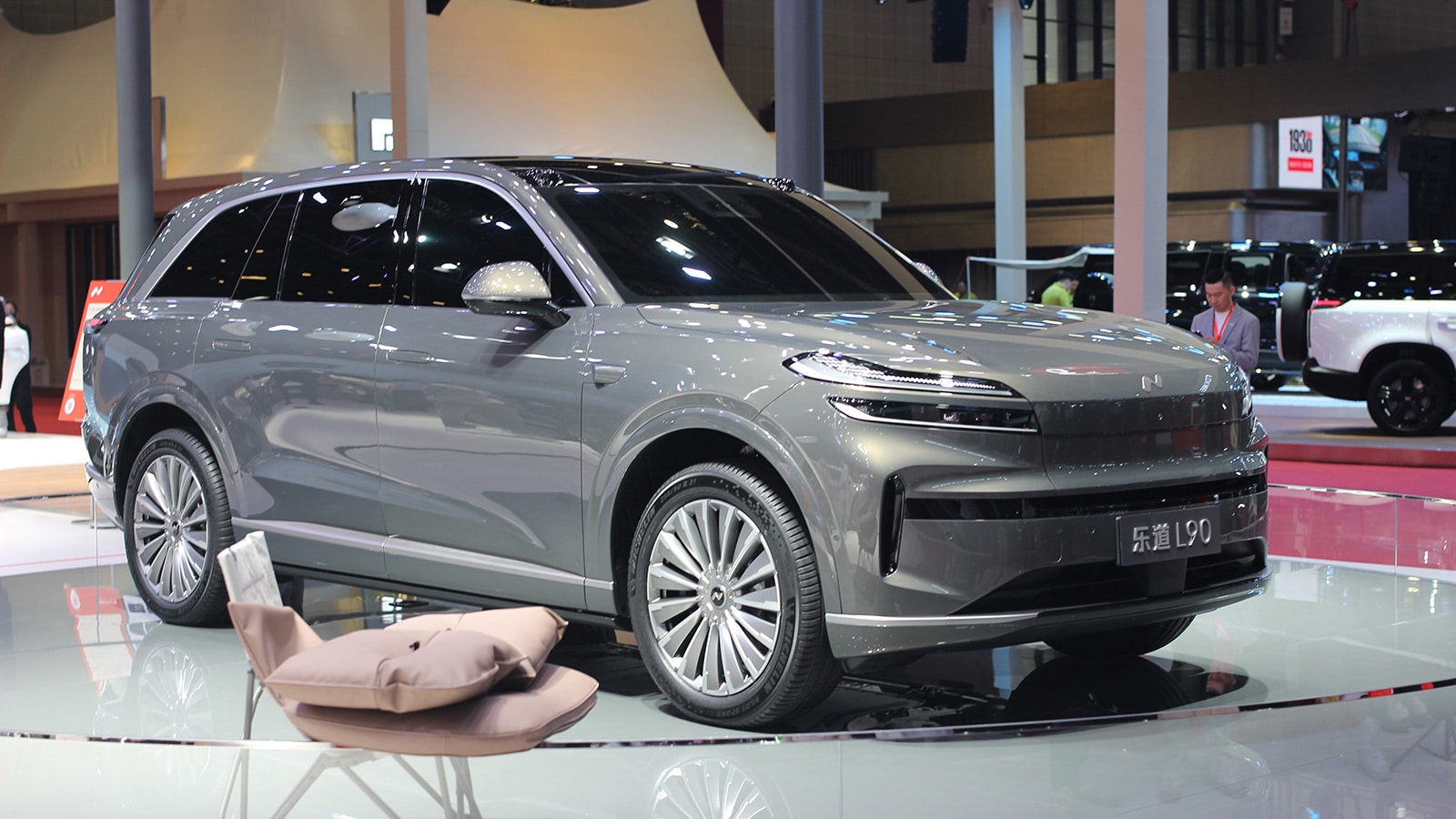
As more Chinese automakers promote large-capacity battery packs as a selling point for their extended-range electric vehicles (EREVs), Shen Fei, president of Nio Inc's (NYSE: NIO, HKG: 9866) sub-brand Onvo, holds a different view.
With charging infrastructure increasingly developed, EREVs with large battery packs represent "a waste of resources," Shen said in an interview with local media yesterday, according to a report by The Paper today.
This combination not only occupies more interior space but also imposes unnecessary cost burdens on automakers and consumers with the additional RMB 15,000 ($2,120) per range extender, Shen said.
EREVs and battery-swap-enabled vehicles compete on different dimensions, he explained, adding that making batteries and fuel tanks larger represents incremental innovation.
Battery swapping, however, is a systemic innovation that cannot be solved by a single technical solution and requires companies to address and resolve numerous challenges, Shen noted.
In recent months, multiple automakers have unveiled or launched EREVs equipped with large battery packs, positioning high-capacity batteries as key selling points.
Leapmotor (HKG: 9863) debuted its D19 large SUV on October 16, with the extended-range version featuring the largest 80-kWh battery pack among EREVs in China's market to date.
Xpeng (NYSE: XPEV, HKG: 9868) launched the X9 EREV on November 20, equipped with a 63.3-kWh battery offering a CLTC range of 452 kilometers.
In contrast to the trend of increasingly larger battery packs in EREVs, Shen noted that many Onvo users opt to downgrade their batteries to save costs.
About 40 percent of owners of the Onvo L90, which comes standard with an 85-kWh battery pack, downgrades to the lower-capacity 60-kWh pack, Shen said.
By doing so, they can save about RMB 3,600 in annual battery rental costs, according to Shen.
Furthermore, he noted that most owners no longer experience the range anxiety prevalent several years ago, thanks to the expansion of charging infrastructure.
Onvo currently offers two models -- the L60 and L90 -- with the L60 coming standard with a 60-kWh battery pack and the L90 equipped with an 85-kWh pack.
Onvo allows owners flexible upgrades to larger battery packs or downgrades to smaller ones via battery swap stations.
During the interview, Shen also explained why Onvo is doubling the number of battery packs in swap stations, saying this aims to enhance user experience and offset the negative impact of trade-in subsidy withdrawal on sales.
On December 5, Onvo announced it would deploy over 8,000 new battery packs in battery swap stations available to its cars, with completion expected by mid-January 2026.
Currently, Onvo has access to 2,300 Nio battery swap stations, housing about 7,000 battery packs.
Beyond serving vehicle owners, these batteries can generate revenue by providing services to the power grid.
Taking Zhejiang as an example, each battery in a swap station can earn about RMB 1.2 per kWh of electricity, according to Shen.
Calculating based on an average usable capacity of 50 kWh per battery, a reasonable daily income would be RMB 60, amounting to roughly RMB 20,000 annually, Shen noted.

($1 = RMB 7.0645)