- A potential new SU7 facelift release is finally arriving in the next couple of months, Goldman Sachs said.
- Goldman Sachs anticipated that Xiaomi's production capacity expansion plans will see further official progress in the coming months.
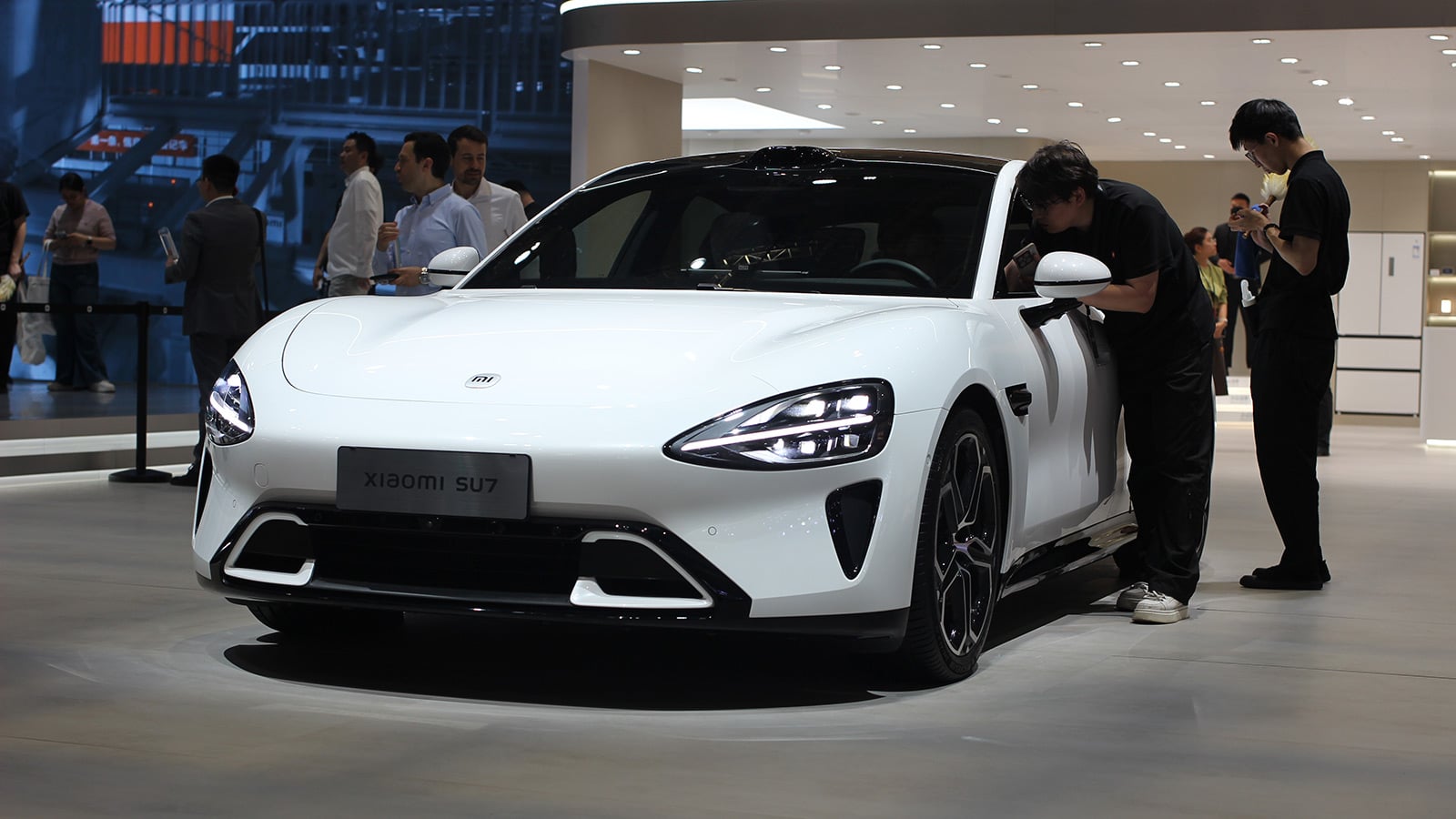
Xiaomi's (HKG: 1810) SU7 sedan saw a sudden and significant reduction in delivery wait times on Tuesday, sparking widespread discussion. Goldman Sachs attributes this to increased production capacity at Xiaomi EV's factory.
"We believe the shortened waiting time for SU7 Pro/Max demonstrates Xiaomi's consistent execution in ramping up manufacturing capabilities, and echoes our earlier view that the tax subsidies announced on Oct 24 reflect Xiaomi's confidence in manufacturing capacity ramp-up," wrote Goldman Sachs analyst Timothy Zhao's team in a research note yesterday.
The team noted that SU7 new order volume has been softening recently which helps digest the order backlog, and expected Xiaomi's capacity expansion plans to achieve further official progress in the coming months.
Goldman Sachs said that a potential facelift release is finally arriving in the next couple of months, which should create a favorable product cycle for SU7 into 2026 as one of Xiaomi's hero EV products.
On November 11, Xiaomi EV's mobile app indicated that Chinese customers currently ordering the SU7 Pro and SU7 Max can expect delivery within 6-9 weeks, a significant reduction from the previous 30-week wait.
The delivery wait for the entry-level SU7 Standard edition remains at 29-32 weeks.
This means customers ordering SU7 Pro and SU7 Max now can still expect delivery within this year, qualifying for higher purchase tax incentives compared to next year.
China continues its NEV purchase tax exemption for 2024-2025, with a maximum tax reduction of RMB 30,000 ($4,220) per vehicle.
From 2026-2027, China's NEV purchase tax will be levied at half the standard rate of 10 percent, equating to a 5 percent tax rate, with a maximum reduction of RMB 15,000 per vehicle.
Late last month, Xiaomi EV announced that for customers who lock in orders by November 30, the company would cover any potential loss of purchase tax subsidies they would have received this year if delivery is delayed to 2026 due to reasons attributable to Xiaomi.
Xiaomi EV would provide this subsidy through a cash rebate on the final payment, ensuring users incur no additional vehicle purchase tax expenses, capped at RMB 15,000.
Xiaomi EV delivered a record 48,654 vehicles in October, marking the second consecutive month exceeding 40,000 units, according to data compiled by CnEVPost from the China Passenger Car Association (CPCA).
The SU7 sedan series, comprising the standard SU7 and SU7 Ultra, delivered 14,992 units in October, marking a 27.67 percent year-on-year decline and a 23.43 percent month-on-month decrease.
The YU7 SUV (sport utility vehicle) delivered a record 33,662 units in October, accounting for 69.19 percent of Xiaomi EV's monthly deliveries. This represents a 50.49 percent increase from September's 22,369 units.

($1 = RMB 7.1119)