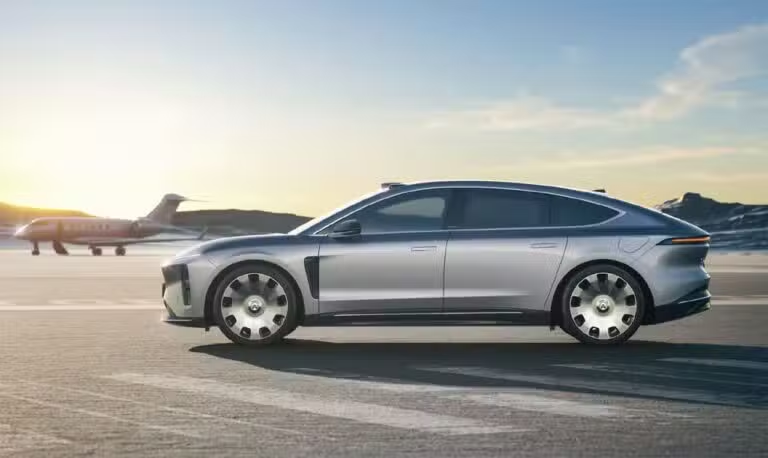
- The move is seen as benefiting emerging domestic luxury EV models, while negatively impacting German models that dominate the market.
- This marks China's first inclusion of pure electric vehicles in the scope of consumption tax levies.
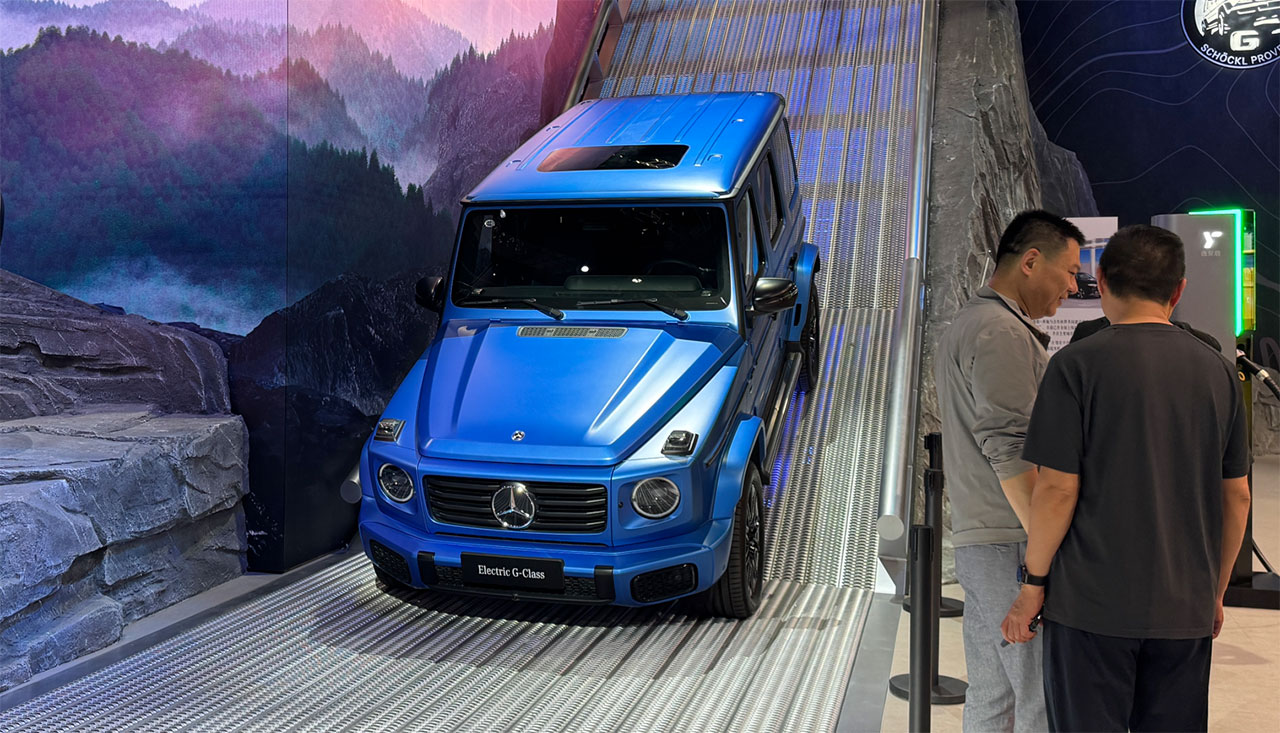
China has expanded the coverage of its luxury car consumption tax to include lower-priced models, a move seen as benefiting emerging domestic luxury electric vehicles (EVs) while negatively impacting German models that dominate the market.
The threshold for the luxury car consumption tax has been lowered to RMB 900,000 ($125,330) excluding VAT, down from the previous RMB 1.3 million, effective July 20, according to an announcement by China's Ministry of Finance yesterday.
The policy applies to vehicles of all power types, including gasoline-powered vehicles, pure electric vehicles, and fuel cell vehicles. Used luxury cars will be exempt from the consumption tax, according to the announcement.
The previous policy, which took effect on December 1, 2016, did not include pure electric vehicles.
In terms of retail prices, the latest adjustment means that luxury vehicles with a tax-inclusive price exceeding RMB 1.017 million will be subject to consumption tax, compared to the previous threshold of RMB 1.469 million.
In the first half of this year, luxury vehicles with a tax-inclusive price of over RMB 1.017 million sold 37,000 units in China, with gasoline-powered vehicles accounting for 33,000 units, or 89 percent, according to data shared by Li Yanwei, a member of the expert committee of the China Automobile Dealers Association, in an article yesterday.
Mercedes-Benz holds a 48 percent market share in this segment, with sales of 16,000 units in the first half of the year; followed by Land Rover with 8,500 units, accounting for 23 percent of the market share, according to Li.
Porsche, Lexus, and Bentley hold market shares of 18 percent, 8 percent, and 3 percent, respectively, with sales of 6,800 units, 3,000 units, and 1,100 units, respectively.
At a time when the luxury car market is relatively sluggish, lowering the consumption tax threshold would further compress the market space, Li said.
The increased consumption tax may be passed on to consumers, as the sales profit margin for some models is less than 10 percent, according to Li.
Separately, Cui Dongshu, secretary-general of the China Passenger Car Association, believes that luxury cars are currently offering significant discounts, so the impact of lowering the threshold is limited.
Currently, models priced at RMB 1.3 million excluding VAT typically offer a 30 percent discount, bringing the actual price down to around RMB 900,000, according to Cui.
Lowering the threshold to RMB 900,000 is reasonable and can ensure a relatively stable tax base, Cui said.
In recent years, domestic automakers have had virtually no luxury vehicles priced around RMB 1 million due to insufficient brand influence.
However, with the rapid advancement of electrification, some domestic automakers are leveraging more advanced technologies to enter this market.
To date, domestic luxury vehicles include Nio's (NYSE: NIO) ET9, with a starting price of RMB 788,000 including the battery; Maextro's S800, with a starting price of RMB 708,000; and Zeekr's 009 Grand, with a starting price of RMB 789,000; and multiple models from BYD Yangwang.
Yiran, a car blogger who previously served as Nio's PR director, commented on Weibo yesterday that the latest policy will not affect domestic luxury vehicles, as they were only launched in the past two years, with starting prices generally ranging from RMB 700,000 to 800,000.
"This is the first time pure electric vehicles have been subject to consumption tax. Although it targets a small niche market, I believe this is just the beginning," Yiran wrote.
($1 = RMB 7.1809)