Monthly Data
-
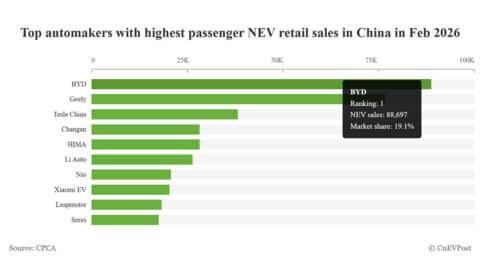
Automakers' share in China NEV market in Feb: BYD leads with 19.1%, Tesla 3rd with 8.2%
In the overall passenger car retail market, Geely ranked first with a 14.1% share, while BYD ranked second with an 8.6% share.
-
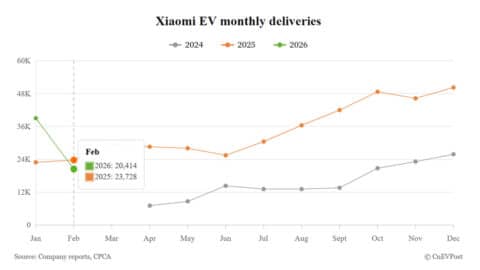
Xiaomi EV Feb deliveries fall to 20,414 ahead of revamped SU7
Xiaomi EV delivered 20,414 cars in February, with the YU7 SUV contributing nearly 98% of total deliveries.
-
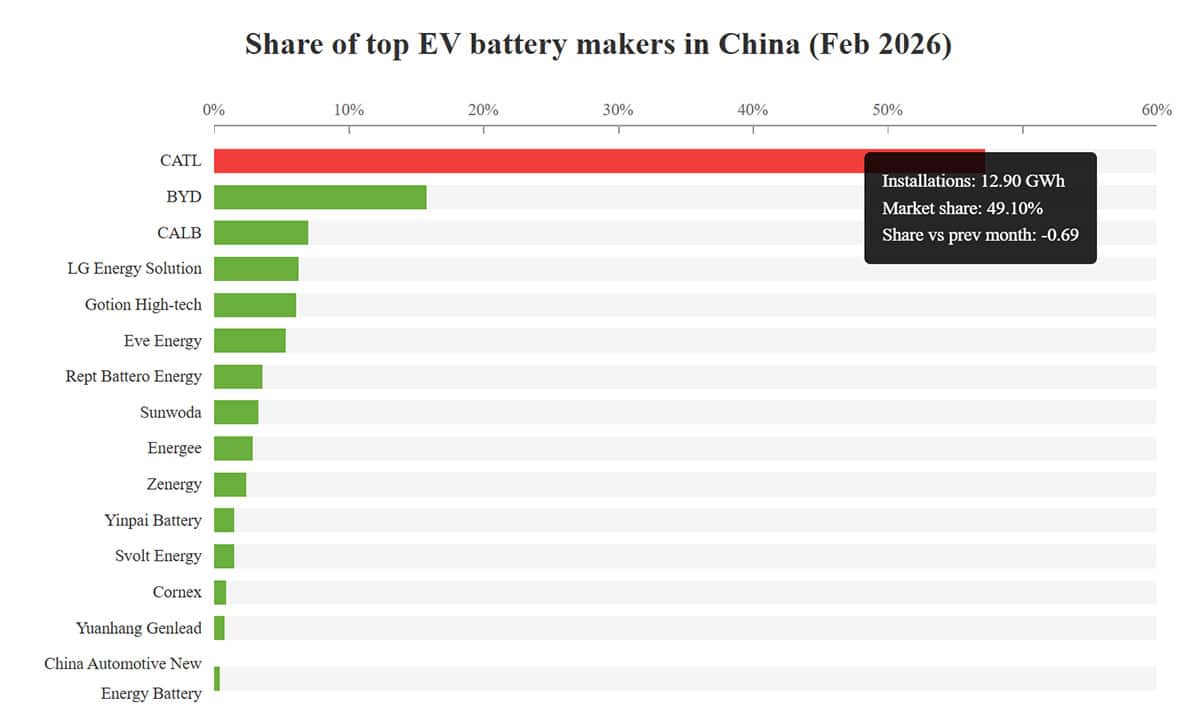
Top battery makers' China share in Feb 2026: CATL 49.10%, BYD 13.56%
Both CATL and BYD saw their shares in the overall market decline in February, as smaller rivals gained ground.
-
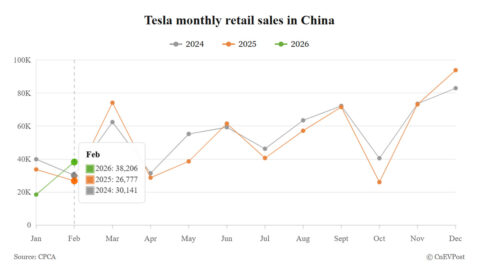
Tesla's China sales rebound in Feb as market share hits nearly 2-year high
Tesla's retail sales in China surged in February amid broader market weakness, pushing its share in the BEV market to the highest since April 2024.
-
China Feb NEV sales drop 32% as broader auto market weakens, CPCA data shows
Exports of passenger NEVs from China surged 124.7% to 269,000 units, providing a strong bright spot for Chinese automakers.
-
China Feb NEV sales see 1st decline since Mar 2024, while exports double
Domestic NEV sales plunge over 36% year-on-year, dragged by the traditional low season and additional purchase tax costs.
-
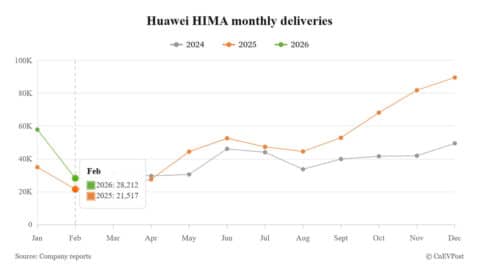
Huawei HIMA sees Feb car deliveries rise 31% to 28,212
HIMA's February deliveries rose 31.11% year-on-year, though down 51.29% from January.
-
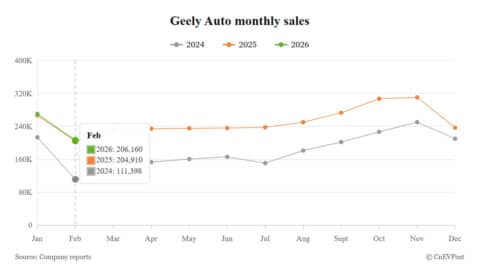
Geely posts sales growth during holiday lull as exports surge 138% to record
Geely Auto's February sales grew about 1% to 206,160 units, with record exports serving as the core growth engine.
-
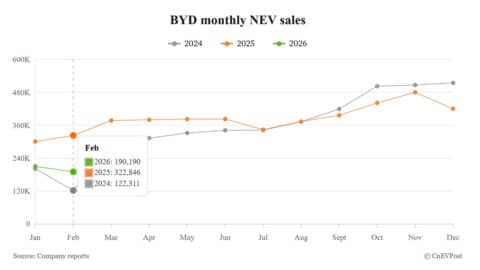
BYD Feb NEV sales drop 41% while exports remain strong
BYD's February NEV sales totaled 190,190 units, marking the sixth consecutive month of decline.
-
Flagship ES8 SUV accounts for over half of Nio's Feb deliveries
The ES8 delivered 11,260 units in February. Nio introduced purchase tax subsidies for the SUV to boost spring demand.