- Production of the Opel model is expected to officially start in 2028, with a target of 50,000 vehicles a year.
- The deal, if finalized, would help Stellantis significantly cut the time and financial costs of developing a new EV model.
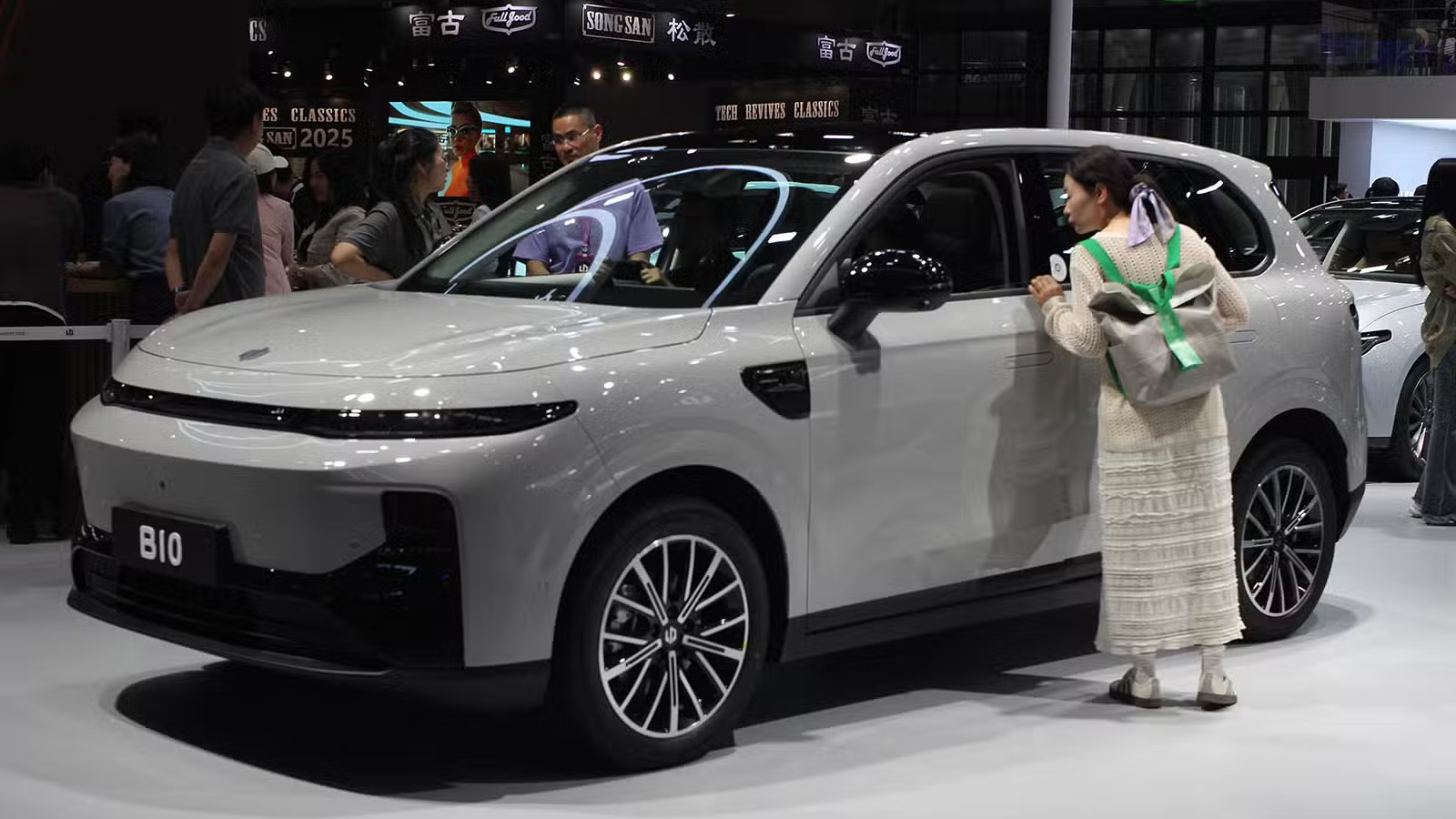
Stellantis NV is in advanced talks with Chinese electric vehicle (EV) maker Leapmotor to jointly develop a new electric SUV under the Opel brand, according to a Reuters report on Wednesday.
The new model will use Leapmotor's technology and is planned to be produced at Stellantis' Zaragoza plant in Spain, the report said, citing three people familiar with the matter.
The deal, if finalized, would help Stellantis significantly reduce the time and cost required to develop a new EV model, the report noted.
The new model will share a platform with Leapmotor's B10 compact SUV, which will also be assembled at the Zaragoza plant later this year for the European market, Reuters cited two of the sources as saying.
Production of the Opel model is expected to officially begin in 2028, with a targeted annual output of 50,000 vehicles.
Under the terms currently in advanced discussions, Leapmotor will be responsible for supplying key core technologies and vehicle components, including electronic and electrical parts.
Opel will design the vehicle's exterior, while a significant portion of the vehicle's research and development will take place in China, one of the sources said.
Talks over the Opel project, internally codenamed O3U, began in late 2025, and the two sides could reach a formal agreement as early as this month, according to Reuters.
Stellantis has been studying the use of Leapmotor's EV technology to develop the next-generation Opel Mokka B SUV, production of which is eventually expected to be shifted to Spain from France, the report said.
Stellantis has also started preliminary talks with Leapmotor on developing an Alfa Romeo model using the same architecture at the Zaragoza plant to optimize factory capacity, according to the report.
The potential Opel EV project is only the most advanced of several ongoing discussions between the two automakers.
They have also discussed other models based on Leapmotor's architecture for smaller A-segment cars, which would require a different production line from the one in Zaragoza, the people said.
Stellantis invested 1.5 billion euros ($1.75 billion) in Leapmotor in October 2023 to acquire an about 20% stake, becoming the Chinese EV maker's largest external shareholder.
Over the past two years, Leapmotor has entered dozens of international markets leveraging Stellantis' sales network.
Beyond the collaboration in Europe, Stellantis is also weighing an early-stage business plan to produce Leapmotor EVs at an idled Canadian factory.
These early discussions are primarily focused on a facility in Brampton, Ontario, which has been idled and thousands of workers laid off for years, according to a Bloomberg report on April 2.
This would be the first major strategic investment by Chinese capital in the Canadian auto industry since the government reached an agreement to lower tariffs on Chinese-made EVs.
In January, Canada agreed to exempt up to 49,000 Chinese-made EVs annually from a 100% tariff, allowing these vehicles to enjoy a 6.1% most-favored-nation tariff rate.
Leapmotor is one of the fastest-growing Chinese EV makers, delivering nearly 600,000 new vehicles in 2025.
The company generated revenue of 15 billion yuan ($2.2 billion) in 2025 and achieved its first full-year profit on the back of strong growth.
The company has set a target to deliver one million vehicles in 2026 and plans to launch four new models throughout this year.

($1 = 6.8251 yuan, $1 = 0.8551 euros)