- The 2026 Onvo L90 will feature a new version of the Nio World Model for the first time, according to a local media report.
- The move marks Nio accelerating the penetration of its in-house developed semiconductor technology into its sub-brands.
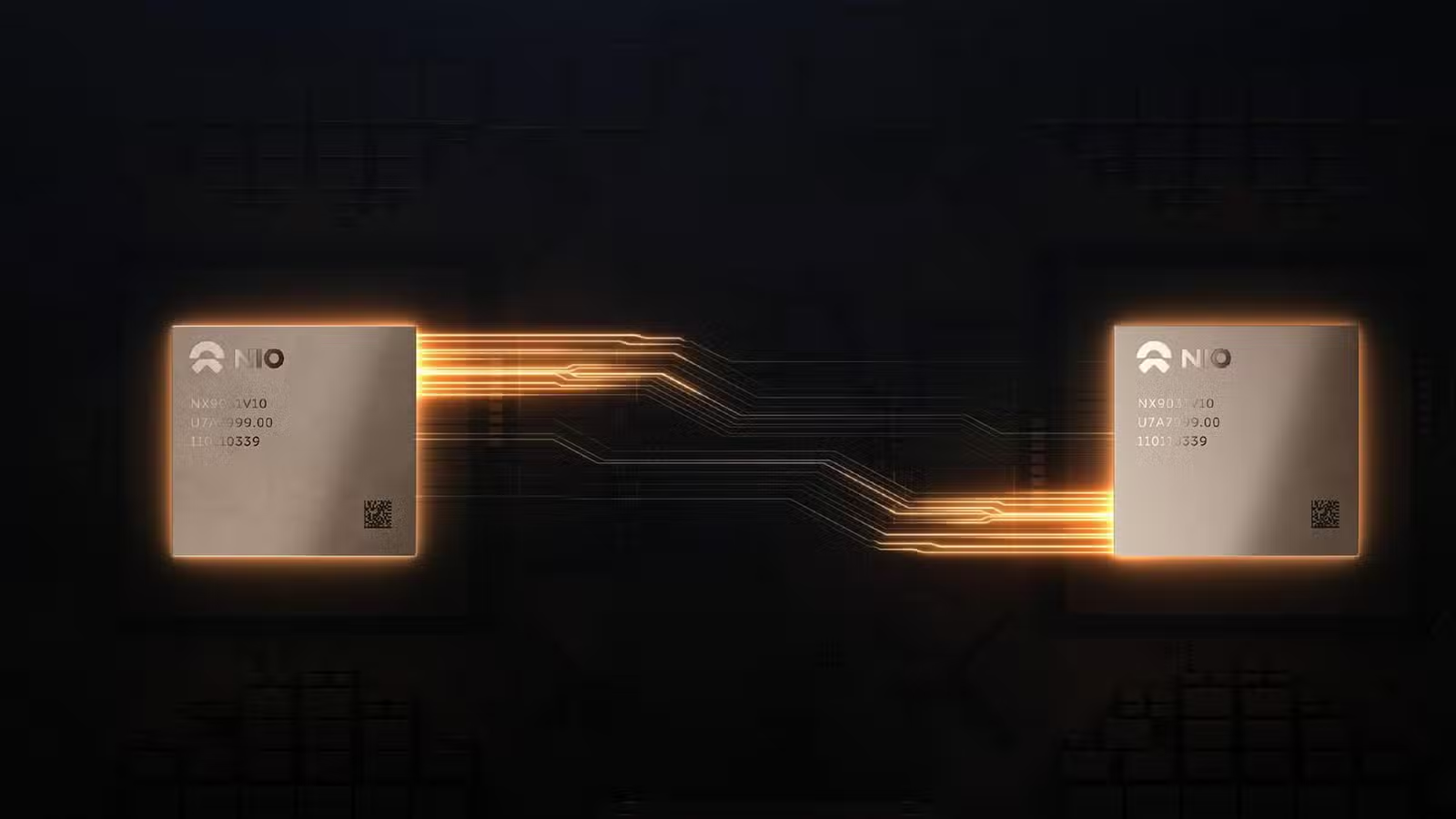
Nio Inc's sub-brand Onvo is reportedly set to use the company's in-house developed Shenji smart driving chip in the updated L90 launching later this month, as it continues to transition away from Nvidia chips.
The 2026 Onvo L90 electric SUV (sport utility vehicle) will be equipped with Nio's in-house developed smart driving chip based on a 5 nm process, local media Leiphone said in a report on Tuesday.
Onvo announced on April 3 that it will officially launch the 2026 L90 on April 21, featuring a major upgrade to its smart driving system. The updated model will introduce a LiDAR-equipped version for the first time.
Onvo's head of product Eric Yu said on Weibo earlier last week that the cost of the updated L90 has increased by about 10,000 yuan ($1,460) due to rising prices of components such as high-performance memory chips in recent years.
Currently, the Nio main brand has fully adopted the in-house developed Shenji chips across its lineup, while Onvo still uses Nvidia's Orin-X chips to power its smart driving system.
Onvo will feature the new version of the Nio World Model for the first time, adopting a new unified technical architecture with Nio's flagship models, and possessing industry-leading levels from the underlying architecture to the application layer, Leiphone cited people familiar with the matter as saying.
Nio's first in-house developed smart driving chip, the Shenji NX9031, has a computing power exceeding 1,000 TOPS, with cumulative shipments surpassing 150,000 units.
During an earnings call last month, Nio's management said that the second Shenji chip, aimed at a broader customer base, has successfully taped out and is currently in the mass production process.
The second Shenji chip is also based on a 5 nm process, with the performance of a single chip equivalent to three Nvidia Orin X chips, and its cost is significantly lower than the Shenji NX9031, the company said at the time.
Notably, the Shenji NX9031 chip needs to be paired with LPDDR5x memory. As prices for components like high-performance memory have continued to rise in recent years, this has brought cost pressures, the Leiphone report noted.
Amid unabated memory price hikes, it remains unknown whether the Onvo L90 will ultimately choose the NX9031 with over 1,000 TOPS of computing power, or the lower-cost second chip with an estimated computing power of about 700 TOPS, the report said.
Nio's local peer Xpeng is rapidly switching to its in-house developed smart driving chips. For example, the recently launched 2026 Mona M03, a low-priced sedan, has already started to be equipped with its in-house developed Turing AI chip.
In February this year, Nio's chip subsidiary Shenji completed its first round of financing of over 2.2 billion yuan, bringing Shenji's post-money valuation to nearly 10 billion yuan.
Nio is attempting to seek financial returns from this costly R&D business. A local media report last month said that Nio's Shenji unit and its partner Axera are pitching a co-developed new M97 chip to automakers.

($1 = 6.8864 yuan)