- Hina Battery general manager expects a historic convergence in the price ranges of sodium-ion and lithium batteries next year.
- Sodium-ion battery costs are falling rapidly, while lithium battery costs have risen.
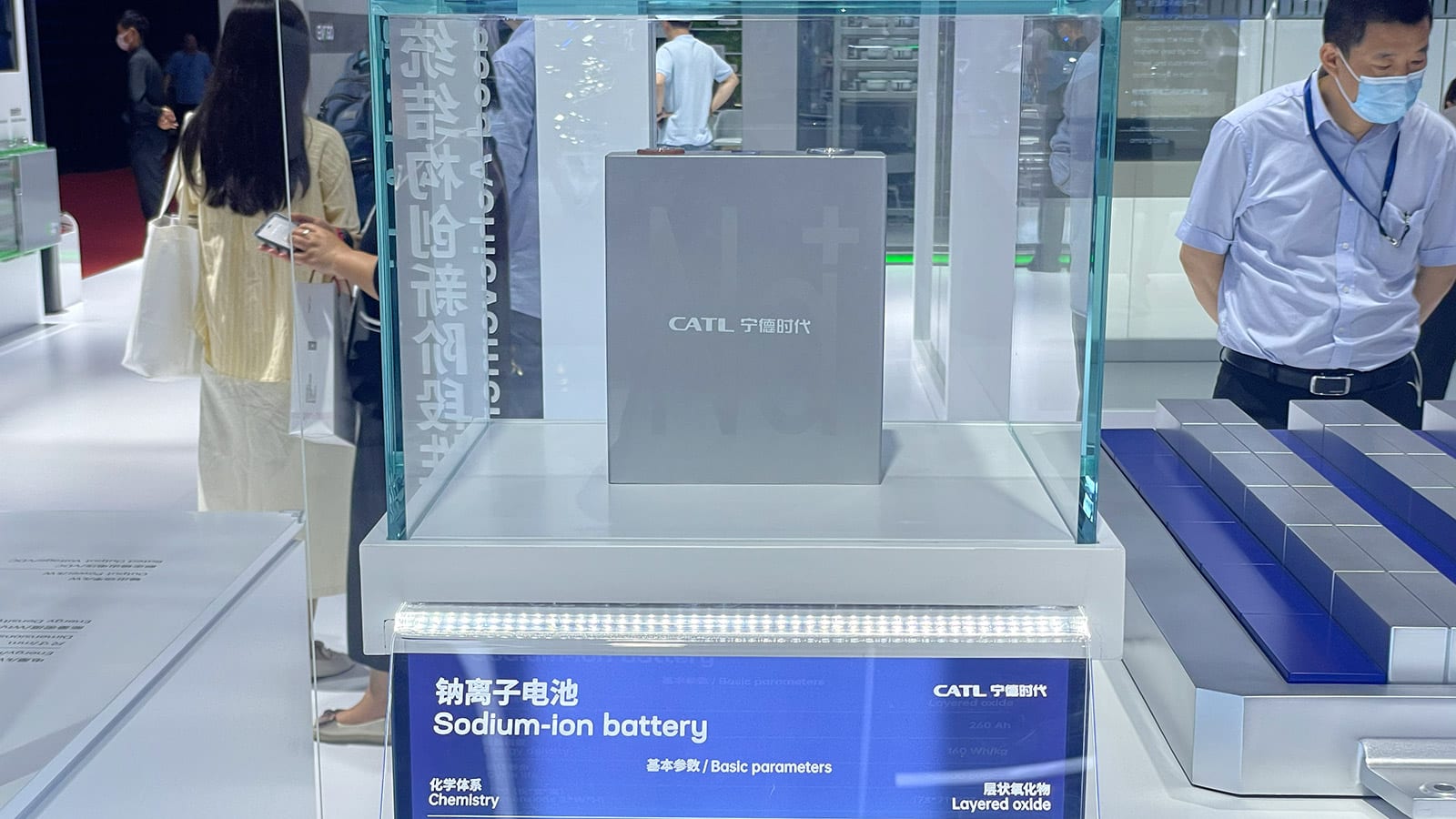
For sodium-ion batteries, high costs are currently hindering large-scale adoption. However, this is expected to change in the next year or two.
Sodium battery prices are expected to fall to match that of lithium-ion batteries by 2027 or 2028, Li Shujun, general manager of Chinese power battery maker Hina Battery, said in an interview with local media on Tuesday.
The cost of sodium-ion batteries is falling rapidly, while that of lithium batteries has risen somewhat, meaning their price ranges will converge and overlap, Li said, according to a report by Jiemian on Wednesday.
The point of convergence will be symbolic, indicating that market integration will have formed by then, and market confidence will shift accordingly, Li said.
He expects the price convergence point to appear next year, with an overlap forming the year after. "We believe the timing for next year is relatively certain," he said.
Currently, lithium battery prices mainly range from 0.3 yuan ($0.044) to 0.5 yuan per watt-hour, while current sodium battery prices are in the range of 0.5 yuan to 0.7 yuan per Wh, depending on specific application scenarios, Li said.
Hina hosted the 2026 Global Sodium Battery Industry Ecology Conference on Tuesday. At the event, Li forecast that after 2028, the performance battery market will drive sodium-ion batteries to an industrial scale measured in hundreds of gigawatt-hours (GWh).
By then, the cost of sodium-ion battery cells will drop to 0.3 yuan per Wh, and technological evolution will increase the energy density of power-type sodium battery products to over 180 Wh/kg, he said.
Other Chinese battery giants and automakers are also accelerating their commercialization pace, laying the industrial foundation for the large-scale application of sodium-ion batteries.
CATL launched its Naxtra sodium-ion battery in April 2025, and in February partnered with Changan Automobile to unveil the first mass-produced sodium battery passenger vehicle.
This CATL sodium battery has an energy density of 175 Wh/kg, providing a pure electric range of about 400 kilometers for the model, which is expected to hit the market in mid-2026.
BYD, the world's second-largest power battery maker, also revealed during an investor communication that the company has developed a sodium battery with a lifespan of 10,000 cycles.
BAIC Group has similarly joined the technological race, with its latest Aurora sodium-ion battery capable of delivering a driving range of up to 450 kilometers for vehicles.

($1 = 6.8829 yuan)