- Semi-solid-state batteries are expanding into the light truck market as CALB launches a 400 Wh/kg product.
- The battery supports 2C fast charging, capable of boosting power from 30% to 80% in 15 minutes.
The adoption of semi-solid-state batteries in China is spreading to the light truck sector, marking the expansion of advanced battery technology from passenger cars to commercial vehicles.
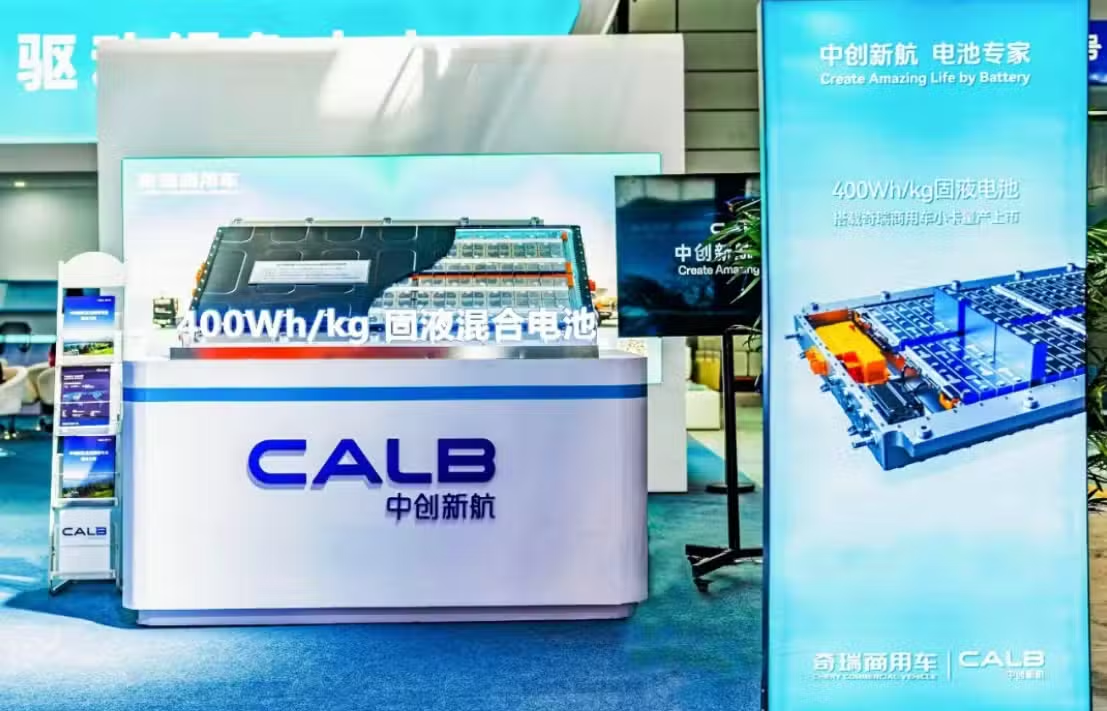
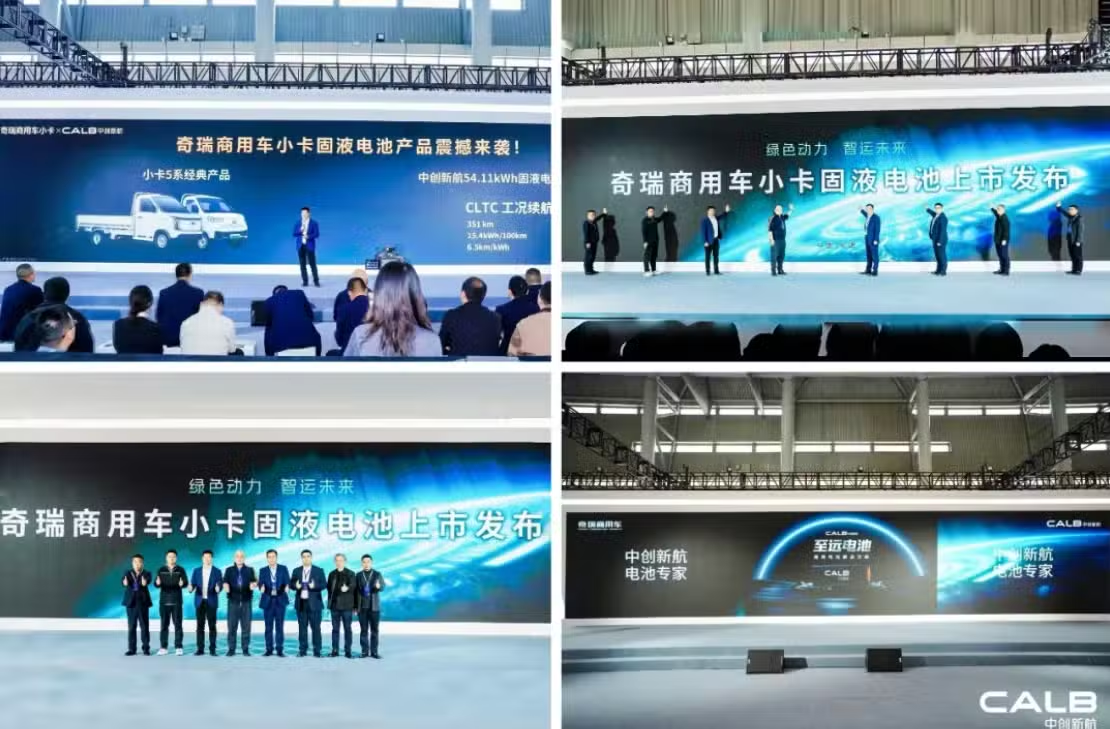
CALB announced Sunday that it unveiled a solid-liquid hybrid battery at a new energy commercial vehicle exhibition in Hefei, Anhui province, on March 28. The battery has already entered mass production and is equipped in Chery Automobile's light trucks.
The development marks one of the first large-scale applications of semi-solid-state battery technology in light commercial vehicles, expanding its commercial boundaries.
Utilizing a solid-liquid hybrid electrolyte system, semi-solid-state battery strikes a balance between safety and energy density, and is widely viewed as a crucial transitional pathway toward all-solid-state batteries.
CALB said its solid-liquid hybrid battery has an energy density of 400 Wh/kg, an increase of about 122% compared to traditional liquid lithium batteries, significantly enhancing driving range.
The higher energy density also translates to reduced battery weight, which is particularly critical for light truck operations that rely heavily on payload efficiency.
The product has passed 44 safety tests — including thermal propagation, fire, and crush tests — exceeding China's latest battery safety standards, CALB said.
This safety design aims to mitigate risks for commercial vehicles operating under complex conditions and to extend the battery's reliability throughout its lifecycle.
In terms of charging performance, the battery supports 2C fast charging, allowing it to charge from 30% to 80% in 15 minutes, according to the battery maker.
This replenishment efficiency helps improve vehicle operational efficiency, especially in high-frequency logistics and distribution scenarios.
Low-temperature performance is also a core selling point. In a -25°C environment, its range improves by more than 20% compared to traditional batteries, and it supports 1C continuous discharge.
CALB said it will continue to drive the large-scale application of its battery technology in commercial vehicles, special-purpose vehicles, and the broader transportation sector.
The company has accelerated its footprint in cutting-edge battery fields in recent years. Last week, CALB announced that the aviation-grade power batteries it supplies to Aridge for flying cars have officially rolled off the mass production line.
Aridge, a technology unit majority-owned by Guangzhou-based Xpeng and its chairman and CEO He Xiaopeng, aims to begin mass production of flying cars later this year.
CALB ranked third in China's overall domestic power battery installations in February with a 6.00% market share, according to data from the China Automotive Battery Innovation Alliance (CABIA).
The Chinese battery market remains dominated by two giants, CATL and BYD, which together accounted for a combined market share of over 62% in February.