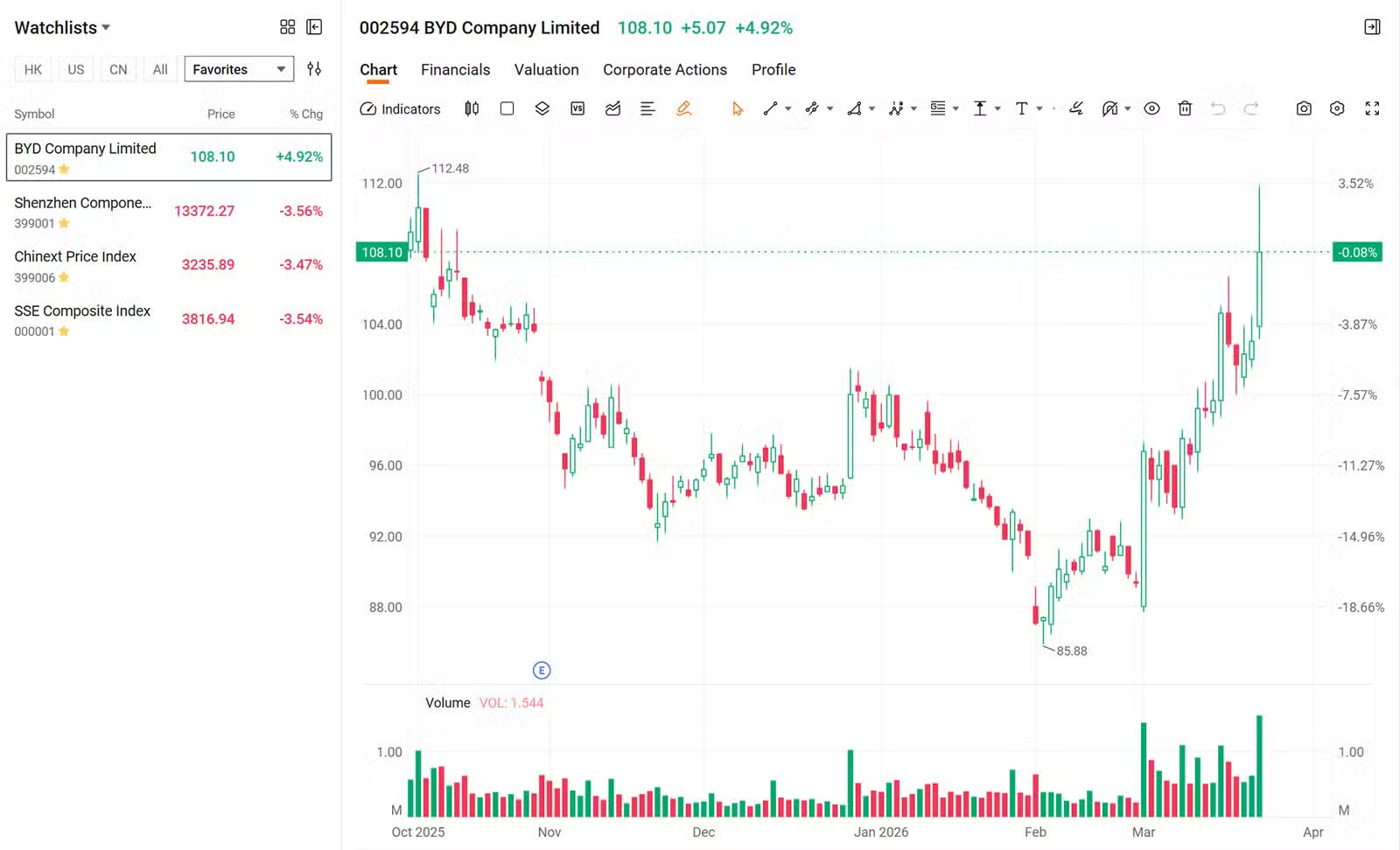
- BYD's Shenzhen-listed shares rose 4.92% as of press time, reaching their highest level since October 2025.
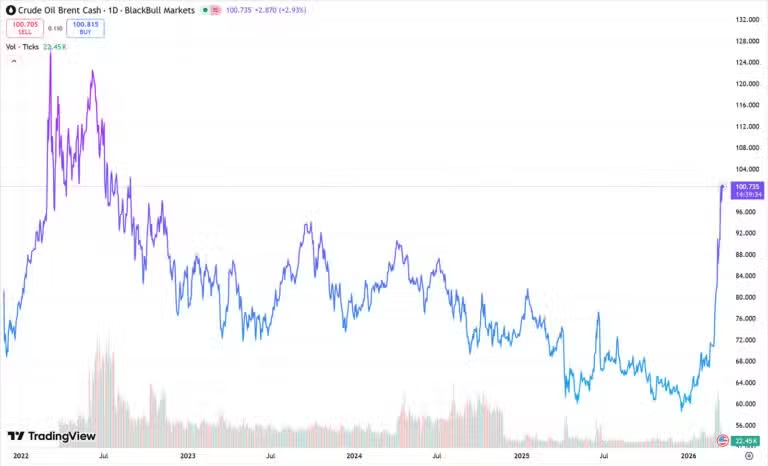
- Surging international oil prices are driving up travel costs for traditional combustion-engine vehicles, accelerating consumer transition to NEVs.
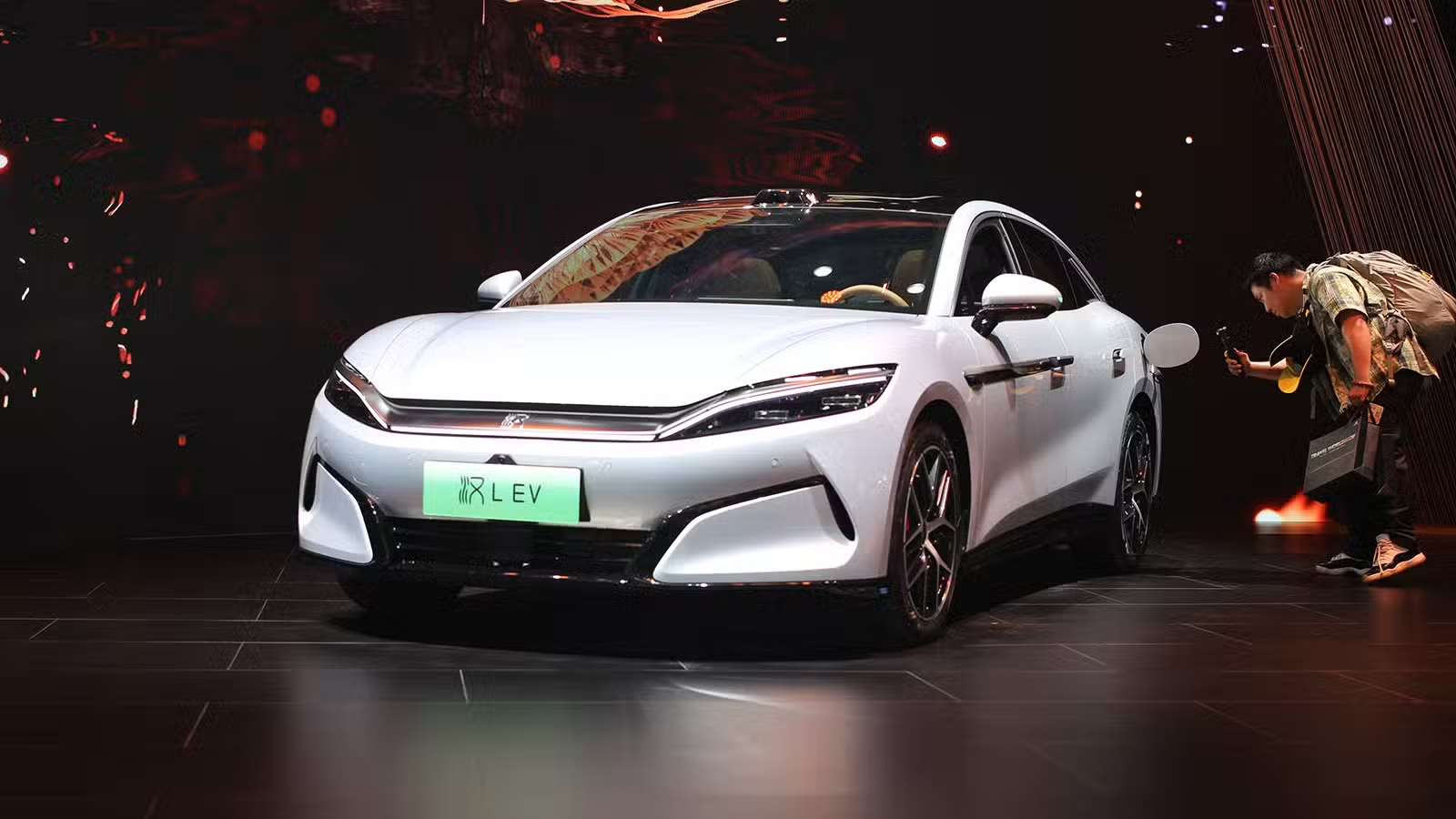
Shares of new energy vehicle (NEV) giant BYD surged as a rally in international crude prices triggered sharp spikes in Chinese gasoline costs.
The automaker's Shenzhen-traded stock defied a broader market slump on Monday. As of press time, the shares climbed 4.92% to 108.10 yuan ($15.67) per share, hitting the highest level since October 2025.
In contrast, the broader Chinese A-share market tumbled. The benchmark Shanghai Composite Index fell 3.54%, the Shenzhen Component Index dropped 3.56%, and the ChiNext Index slid 3.47%.
BYD's Hong Kong-listed shares jumped as much as 8.4% in early trading. Although the stock has since erased all gains to trade flat, its overall performance remains stronger than the broader market.
The rally is primarily driven by an impending, substantial hike in China's gasoline prices. Starting at 12:00 am Beijing time on March 24, domestic refined oil prices will undergo their sixth adjustment of the year.
The upcoming price hike is expected to be around 2,000 yuan per ton, according to estimates by Sublime China Information. This will mark the fifth increase this year and the largest to date.
It is worth noting that China's National Development and Reform Commission later on Monday announced in a statement that it would implement temporary regulatory measures on domestic refined oil prices, resulting in price increases that were lower than originally anticipated.
Based on the current pricing mechanism, the maximum domestic retail price of gasoline was set to increase by 2,205 yuan per ton starting at midnight on March 23. However, to alleviate the burden on downstream consumers, the price increase was actually set at 1,160 yuan per ton under the temporary regulatory measures, according to the announcement.
For private car owners, based on a 50-liter fuel tank, filling up with standard #92 gasoline will still require an additional expenditure of approximately 40 yuan.
As travel costs for traditional combustion-engine vehicles soar, the NEV sector is seen as a major beneficiary.
BYD ceased production of traditional internal combustion engine vehicles in March 2022. In 2025, the company's full-year battery electric vehicle (BEV) sales reached 2,256,714 units, surpassing Tesla's 1,636,129 units for the first time.
In addition to BEVs, BYD's passenger vehicle lineup includes plug-in hybrid electric vehicles (PHEVs), which recorded sales of 2,288,709 units in 2025, according to data compiled by CnEVPost.
Facing fierce competition, BYD unveiled its second-generation Blade Battery and flash-charging technology earlier this month, enabling a charge from 10% to 70% in just five minutes.
BYD also plans to build 20,000 flash-charging stations nationwide by the end of 2026; these initiatives further enhance the competitiveness of its NEV models in the market, accelerating the replacement of gasoline-powered vehicles.
($1 = 6.9118 yuan)