- Nio's cumulative production of in-house developed chips has exceeded 550,000 units, driven primarily by strong shipments of the Yangjian and Shenji NX9031 chips.
- The Yangjian chip for LiDAR has helped Nio save hundreds of yuan in costs per vehicle.
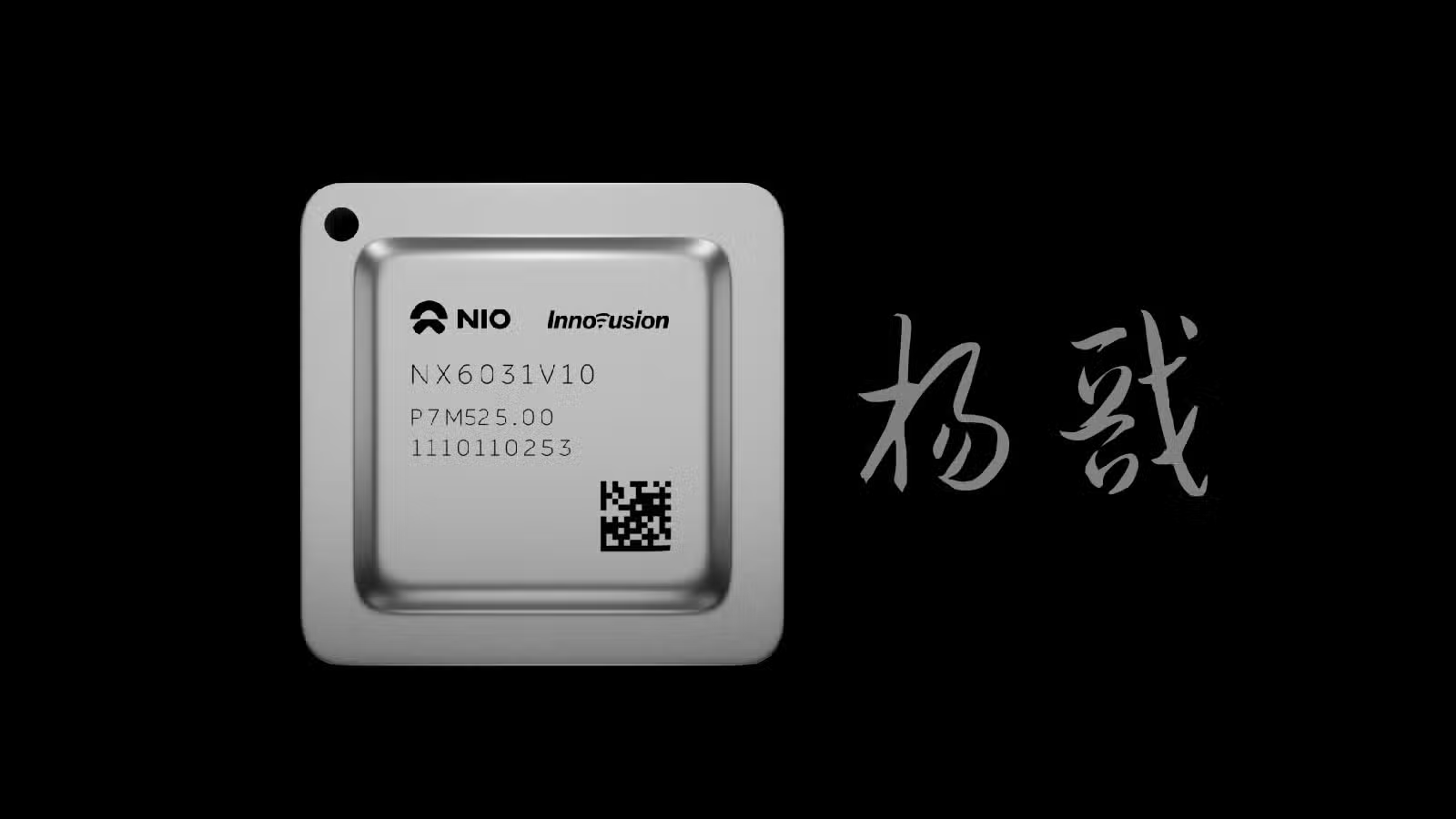
Nio Inc (NYSE: NIO) has achieved initial scale in its semiconductor business, with cumulative mass production of its in-house developed chips exceeding 550,000 units.
William Li, founder, chairman, and CEO of the Chinese electric vehicle (EV) maker, revealed the figure at a semiconductor industry summit in Shanghai on Thursday.
The production volume is primarily composed of two core chips: the Yangjian master control chip for LiDAR, and the Shenji NX9031, which powers smart driving features.
The Yangjian chip was officially launched in September 2023 and put into use in April 2024. To date, shipments of the chip have surpassed 400,000 units.
The Shenji NX9031 chip, built on a 5 nm process, was first unveiled in December 2023.
The smart driving chip was officially put into use with the delivery of the ET9 sedan in March 2025, and its shipments have exceeded 150,000 units so far.
The in-house developed chips have brought significant cost benefits to Nio. The Yangjian chip helps Nio save hundreds of yuan per vehicle, Li said today.
At the same time, the chip offers better performance and quality, validating Nio's strategy of trading short-term R&D investment for higher long-term gross margins.
In his speech, Li also noted that the automotive semiconductor industry is currently facing three key challenges: a surge in demand for AI computing power, the fragmentation of chip architectures, and increased supply chain volatility.
Nio is building core capabilities for the intelligent era through in-house developed and customized chips, committing to optimizing the performance and cost of high-value chips.
Meanwhile, Nio is advancing the standardization of automotive chips, aiming to cover all vehicle chip selections with no more than 400 specifications, which will help enhance scale effects and system efficiency.
Li expects that by 2027, about 35% to 40% of Nio's automotive semiconductors will be sourced domestically.
This production milestone follows recent financing for Nio's chip division. In February, Nio's chip subsidiary Shenji completed its first round of financing of over 2.2 billion yuan ($320 million).
The funding round brought Shenji's post-money valuation to nearly 10 billion yuan, as Nio is attempting to seek financial returns from this highly expensive R&D business.
The company is also actively expanding its external customer base. Nio's Shenji unit and its partner Axera are pitching the co-developed new M97 chip to automakers, according to a local media report yesterday.

($1 = 6.9005 yuan)