- Horizon Robotics is developing the J7 series chips, aiming to significantly surpass Nvidia's Thor-X in computing power by 2027.
- Horizon Robotics is transitioning from a chip supplier to a more comprehensive provider of integrated hardware and software solutions.
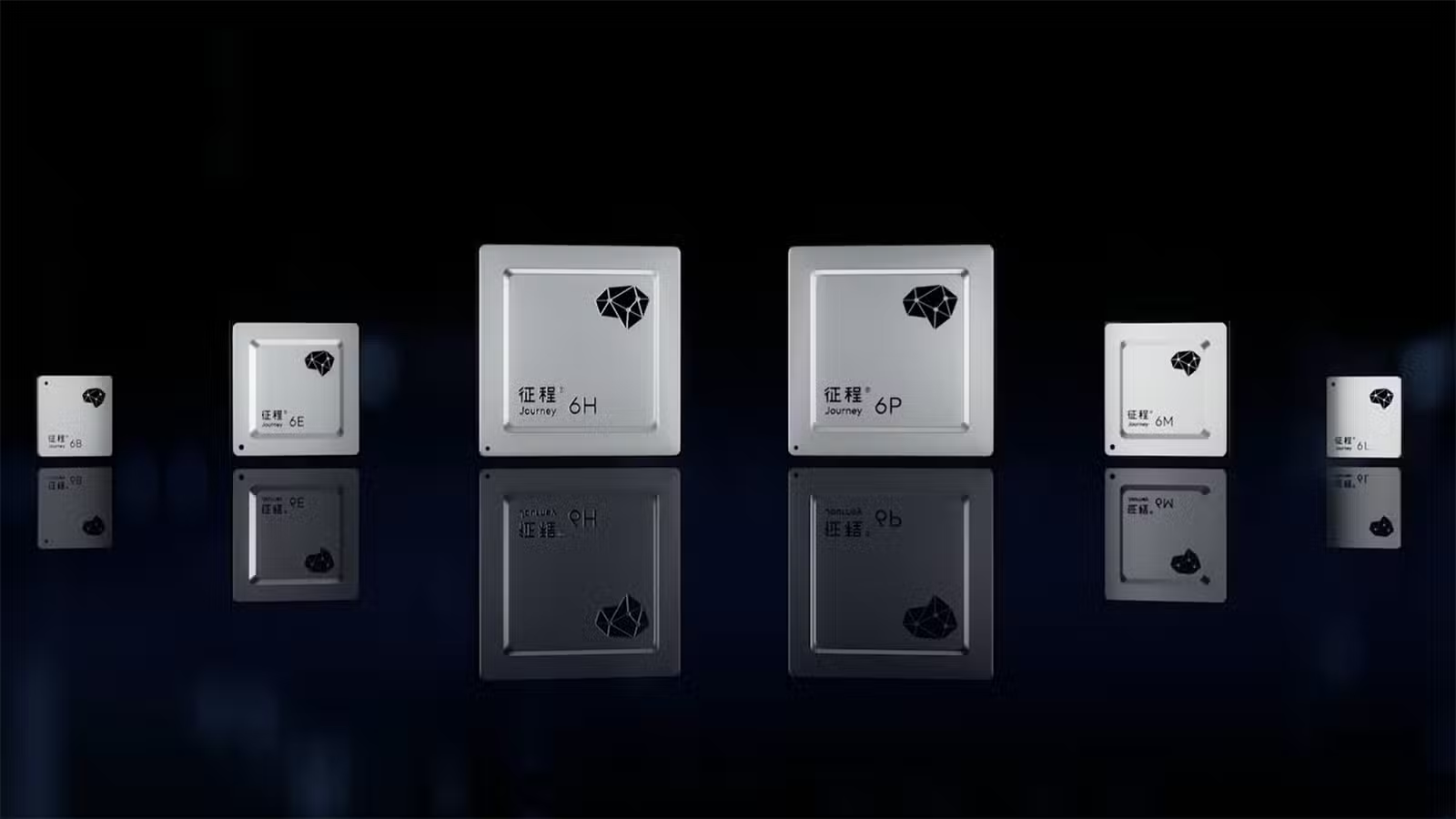
Chinese smart driving solutions provider Horizon Robotics is preparing a new generation of autonomous driving chips, with the highest-performance version of its Journey 7 (J7) series set to significantly surpass Nvidia's Thor-X in computing power, according to a Thursday report by local media LatePost.
The high-end chip is scheduled to officially enter mass production in 2027 and will maintain a family product lineup to meet the auto industry's growing AI demands.
Unlike previous iterations primarily led by the chip team, product planning for the J7 series is largely driven and defined by Horizon Robotics' algorithm team, the report said.
This marks a strategic step for Horizon Robotics as it transitions from a pure chip supplier to a more comprehensive provider of integrated hardware and software solutions.
Meanwhile, Horizon Robotics plans to release a new integrated cabin-smart driving chip named "Xingkong" in April this year. The product supports the localized deployment of large AI models for the cabin and will enter mass production within the year, the LatePost report said.
As in-vehicle AI model parameters rapidly expand from the millions to the billions, the auto industry is experiencing explosive growth in demand for underlying chip computing power.
Because the development cycle for automotive chips typically takes three to four years, silicon designed today must reserve ample computing headroom for the evolution of complex models over the next two to three years.
For Horizon Robotics, the company is facing intensifying competitive pressure in its home market as some potential customers are turning into direct competitors, LatePost noted.
Nio Inc's sub-brand Firefly uses Horizon Robotics' chips to power its driver-assistance system. Notably, Nio is among several EV makers that have developed their own in-house smart driving chips.
Nio's chip unit, Shenji, is actively approaching manufacturers including Leapmotor and Geely to pitch its newly taped-out smart driving chip, according to a Wednesday report by another local media outlet, 36Kr.
Nio partnered with local chipmaker Axera Semiconductor to develop the M97 chip, which boasts a computing power of over 700 TOPS. Its performance benchmarks against Horizon Robotics' 560-TOPS J6P chip, according to the 36Kr report.
Automakers are currently actively seeking cost-effective, high-computing-power domestic chips to replace Nvidia's expensive products and regain control over their driver-assistance technologies.
Horizon Robotics' previous strategy of bundling chips with algorithms has made some automakers hesitant, creating a highly attractive market window for the joint product from Nio and Axera.