- Deutsche Bank analysts noted that China's mature EV ecosystem provides a natural buffer against surging oil prices.
- Despite the resilience of NEVs, the broader auto industry still faces "silent inflation" as surging petroleum derivative costs impact manufacturing and logistics.
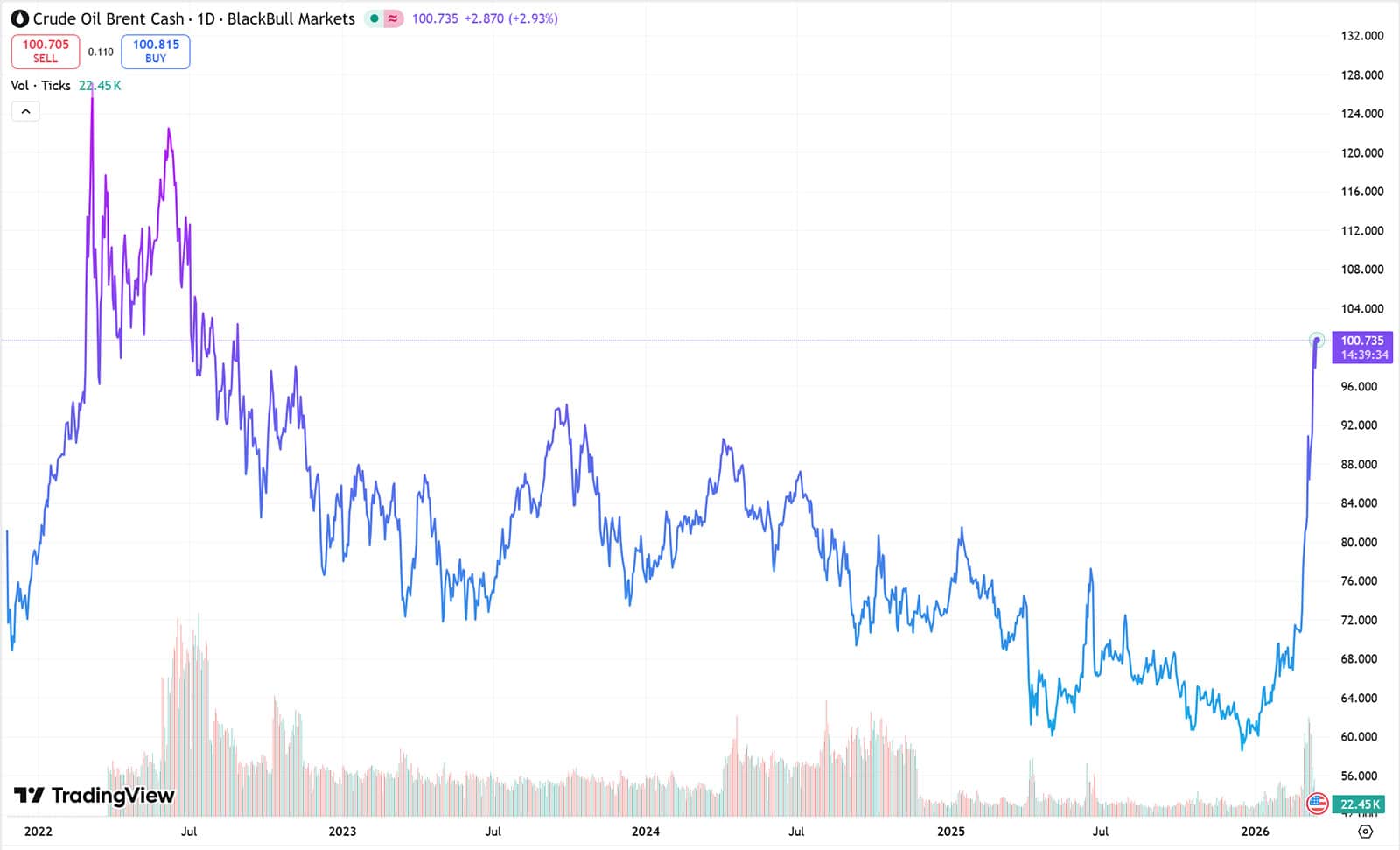
As geopolitical tensions in the Middle East push oil prices to multi-year highs, Deutsche Bank analysts are assessing what rising oil prices mean for China and the global automotive industry.
The global auto market is entering a period of uncertainty and volatility as Brent crude fluctuates near $100 a barrel, a team led by Deutsche Bank analyst Edison Yu wrote in a research note on Tuesday.
However, China continues to exhibit the highest resilience to oil price spikes, largely benefiting from its mature new energy vehicle (NEV) ecosystem and aggressive domestic price competition.
This unique market structure provides a natural buffer for consumers looking to exit internal combustion engine (ICE) vehicle ownership.
The analysts noted that oil price fluctuations have indirectly influenced the auto sector by shifting consumer preferences toward energy-efficient cars and NEVs.
This means the turmoil in the crude market has not directly hit overall sales volumes in the Chinese auto market, but rather reshaped the demand structure.
This assessment comes as the US-Israel war against Iran causes historic turmoil in energy markets, with refined oil products surging even more than crude itself.
Fuel costs in parts of Asia have already doubled compared to pre-war levels, bringing systemic pressure to global supply chains, according to Goldman Sachs data.
Despite the pressure of rising fuel costs, Deutsche Bank said that gasoline cars remain relevant in the Chinese market.
This is due to the widespread refueling convenience provided by over 110,000 gas stations nationwide, alongside the high technological maturity of gasoline vehicles.
However, the far-reaching impact of oil prices means that even NEV owners cannot completely escape this energy crisis.
The Deutsche Bank report warned that rising oil prices are contributing to a "silent inflation" across the broader economy, which will affect all consumers.
NEV manufacturing and maintenance costs remain affected by oil price fluctuations, as components like tires and battery parts rely heavily on petroleum derivatives.
Furthermore, the global transportation network's reliance on petroleum fuels leads to higher logistics costs, which are ultimately passed on to consumers of everyday goods.
On investment strategy, given the anticipated domestic market downturn in 2026, Deutsche Bank analysts favor Chinese automakers with substantial overseas exposure like Chery.
For the US market, Deutsche Bank believes that the impact of volume delays is more pronounced at the moment, as consumers generally adopt a broader wait-and-see stance.