- Xpeng's humanoid robot production base will span about 110,000 square meters, covering processes from R&D to large-scale manufacturing.
- The facility will pave the way for Xpeng to achieve its goal of mass-producing advanced humanoid robots by the end of 2026.
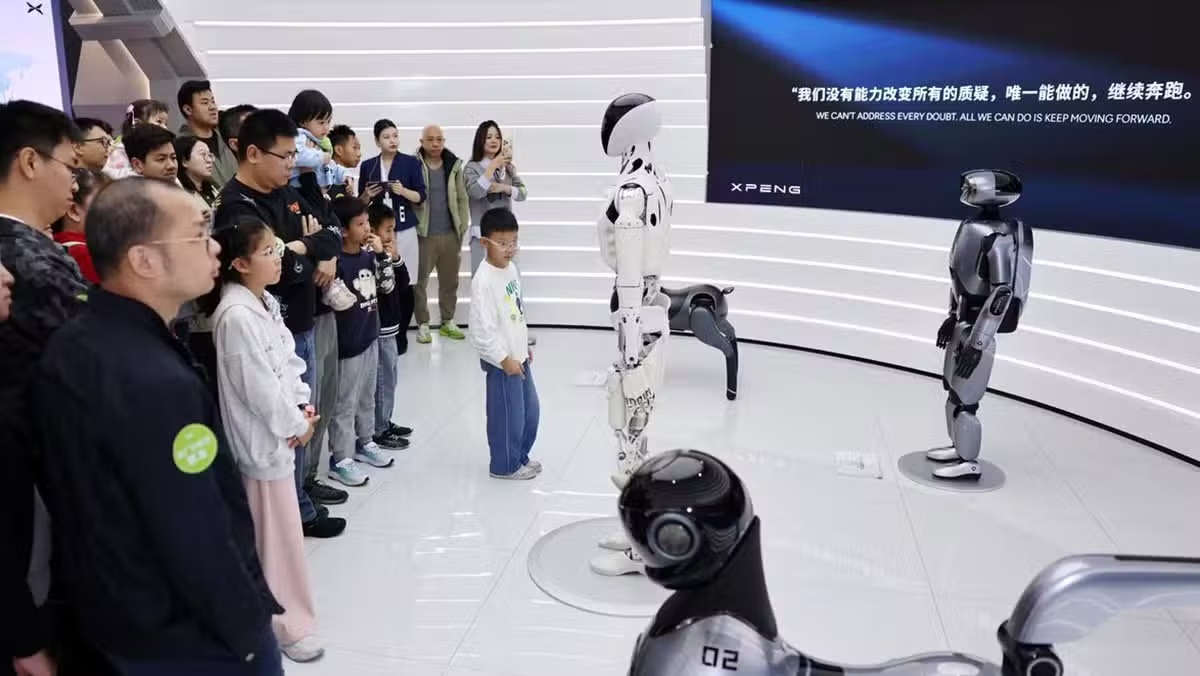
Xpeng (NYSE: XPEV, HKG: 9868) is accelerating its artificial intelligence (AI) ambitions beyond wheels to robots.
The company plans to break ground on its humanoid robot mass production base in Guangzhou this first quarter, paving the way for achieving large-scale production of advanced humanoid robots by the end of 2026.
The facility will be the industry's first "full-chain" humanoid robot mass production base, spanning about 110,000 square meters in Guangtang Sci-Tech Innovation City, Tianhe district, Guangzhou, Xpeng said in a Wednesday announcement.
Phase one will include robot factory buildings, power stations, and supporting infrastructure to underpin the industrialization of Xpeng's humanoid robots.
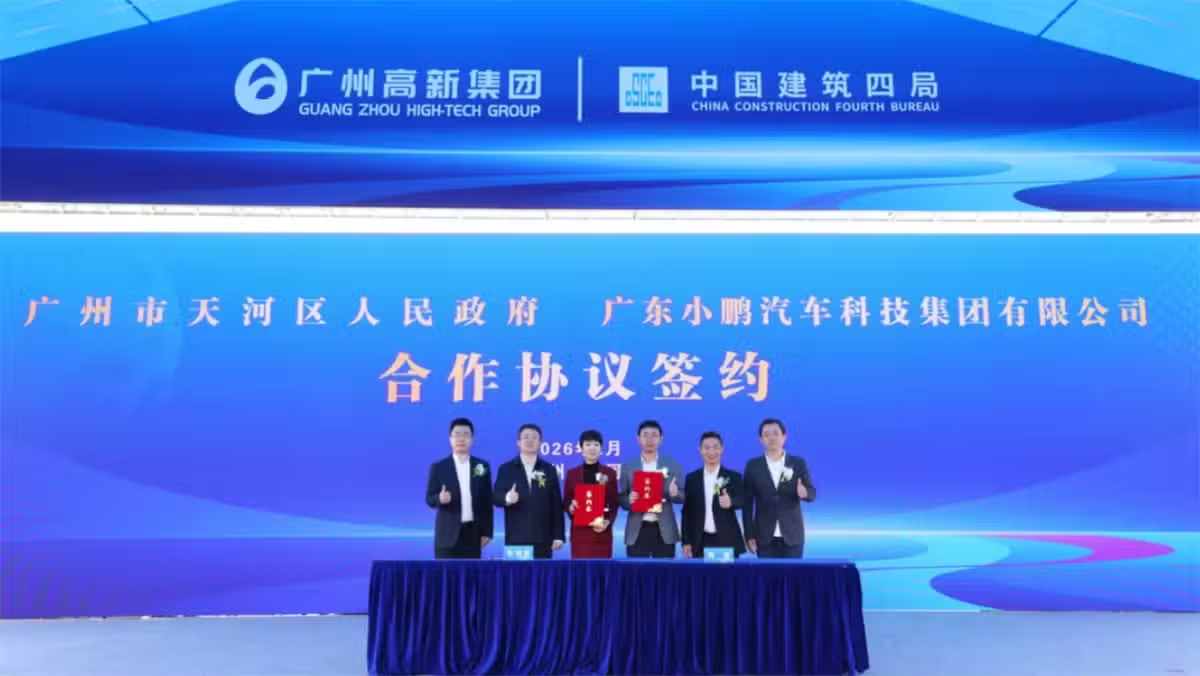
Headquartered in Guangzhou, Xpeng signed a strategic cooperation agreement with the Tianhe district government on Wednesday. The base will cover processes from R&D validation and small-batch trial production to large-scale manufacturing.
The move aims to directly address core bottlenecks currently facing the humanoid robotics industry: insufficient high-quality training data and extremely high mass production barriers in the hardware and software supply chain.
The production capacity expansion follows key breakthroughs in Xpeng's product development.
Last month, He Xiaopeng, chairman and CEO of Xpeng, revealed the company had completed its first "ET1" prototype robot developed to automotive standards.
The milestone signifies Xpeng's deep integration of its mature engineering and manufacturing expertise in smart vehicles with its in-house developed full-stack capabilities into its robotics business.
At its AI Day event late last year, Xpeng showcased its next-generation humanoid robot, Iron.
Standing 178 cm tall and weighing 70 kg, the robot features a highly anthropomorphic form with flexible skin and utilizes all-solid-state batteries for lightweight construction.
For core computing power, Iron incorporates three Turing AI chips developed in-house by Xpeng, delivering a total processing capacity of 2,250 TOPS.
It also integrates the company's second-generation VLA (Vision-Language-Action) large model, enabling complex conversational, walking, and interactive capabilities.
Amid intensifying competition in the electric vehicle market, Xpeng is leveraging its technology synergy to gain an early advantage in the global race for embodied AI.