- TrendForce forecasts that demand for solid-state batteries in humanoid robots could grow thousands of times over the next decade.
- Increasing requirements for long endurance and high-load operation in humanoid robots are likely to propel solid-state lithium batteries toward becoming the mainstream solution.
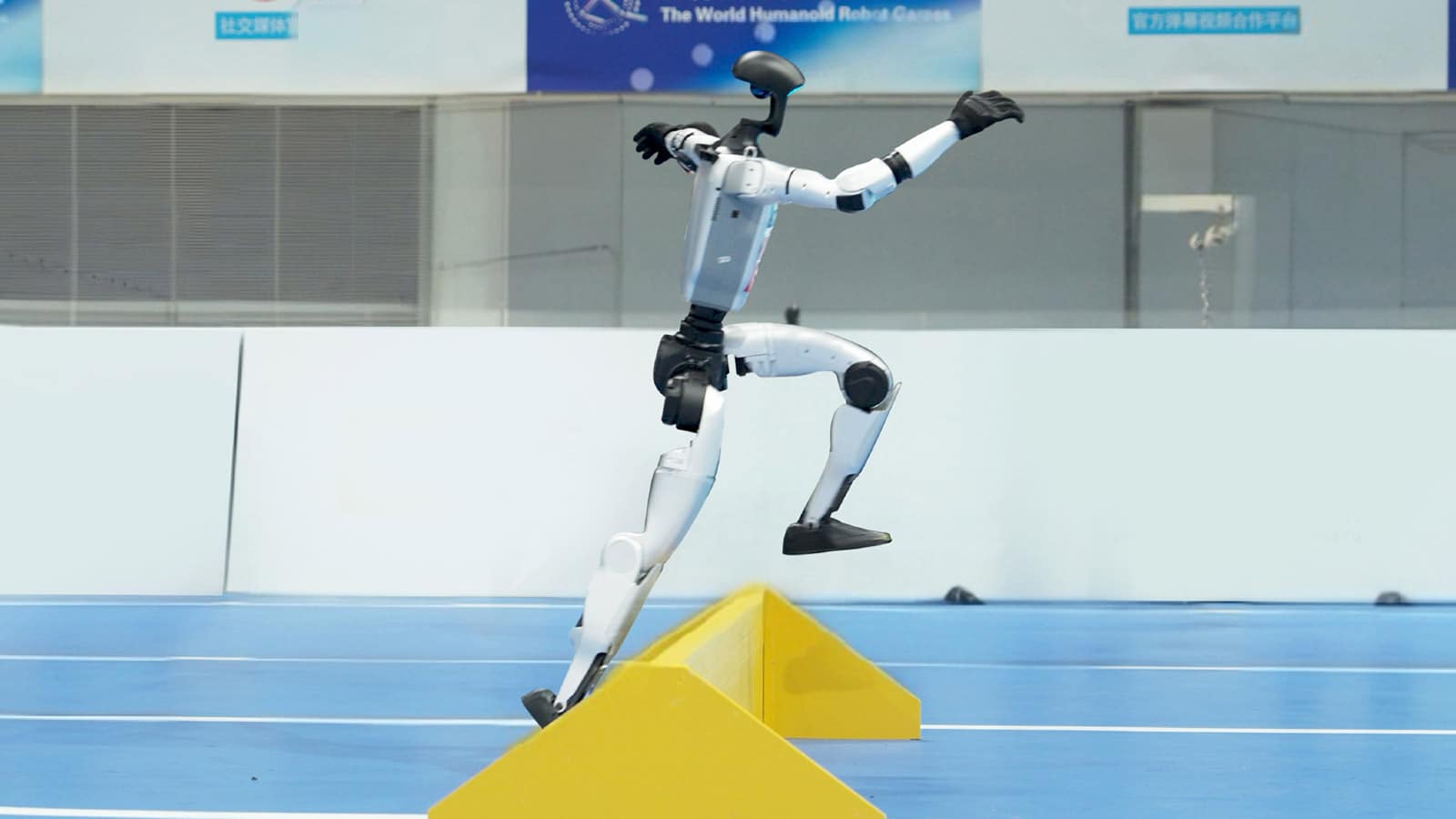
Demand for solid-state batteries in humanoid robots is poised for explosive growth over the next decade as technology matures.
Market research firm TrendForce projects humanoid robots' demand for solid-state batteries could exceed 74 GWh by 2035, representing thousands of times growth compared to 2026, according to a report released today.
As humanoid robots reach a critical point for commercialization in 2026, batteries serving as energy sources will gain greater importance, the report noted.
| Year | Demand (GWh) |
|---|---|
| 2025 | 0.01 |
| '26e | 0.05 |
| '27e | 0.3 |
| '28e | 1.3 |
| '29e | 3 |
| '30e | 8.6 |
| '35e | 74.2 |
Currently, humanoid robots primarily utilize liquid lithium batteries. However, increasing demands for extended endurance and high-load operations will drive high-energy-density solid-state lithium batteries to become the mainstream solution, TrendForce said.
TrendForce forecasts global humanoid robot shipments will surpass 50,000 units in 2026, marking an annual growth exceeding 700%.
High-nickel ternary lithium batteries (NMC/NCA) remain the mainstream choice for robotics due to their relatively high energy density.
Meanwhile, lithium iron phosphate (LFP) batteries, favored for their cost advantages, are predominantly used in conversational robots with lower endurance requirements, the report observes.
Most current products offer 2-4 hours of runtime with battery capacities generally below 2 kWh. For instance, the Unitree H1 features a 0.864-kWh battery providing less than four hours of static operation, while Tesla's (NASDAQ: TSLA) Optimus Gen2, equipped with a 2.3 kWh high-nickel ternary battery system, maintains about two hours of dynamic runtime.
To extend endurance to 5-8 hours, battery swap strategies can be employed. For instance, Agility Robotics' Digit and Apptronik's Apollo leverage plug-and-play technology, enabling battery replacement without system reboot to achieve theoretical 24-hour continuous operation, according to the report.
Another approach involves boosting battery capacity through high-energy-density battery technology. Robots like Xpeng (NYSE: XPEV, HKG: 9868) Iron, GAC GoMate, and Engine AI T800 have opted for solid-state batteries, significantly extending their endurance to over 4 hours.
TrendForce notes that core humanoid robot technologies are still undergoing rapid iteration, creating significant uncertainty for customized battery development.
Additionally, as humanoid robots are in the early stages of commercialization, the industry's primary goal is identifying scenarios suitable for large-scale commercial deployment, with battery endurance improvements being a secondary task, according to TrendForce.