- There is no ongoing investigation into exports of hybrid vehicles from China to the European Union, a spokesperson said.
- "The commissioners are politicians and have the right to raise whatever issues they want," he said.
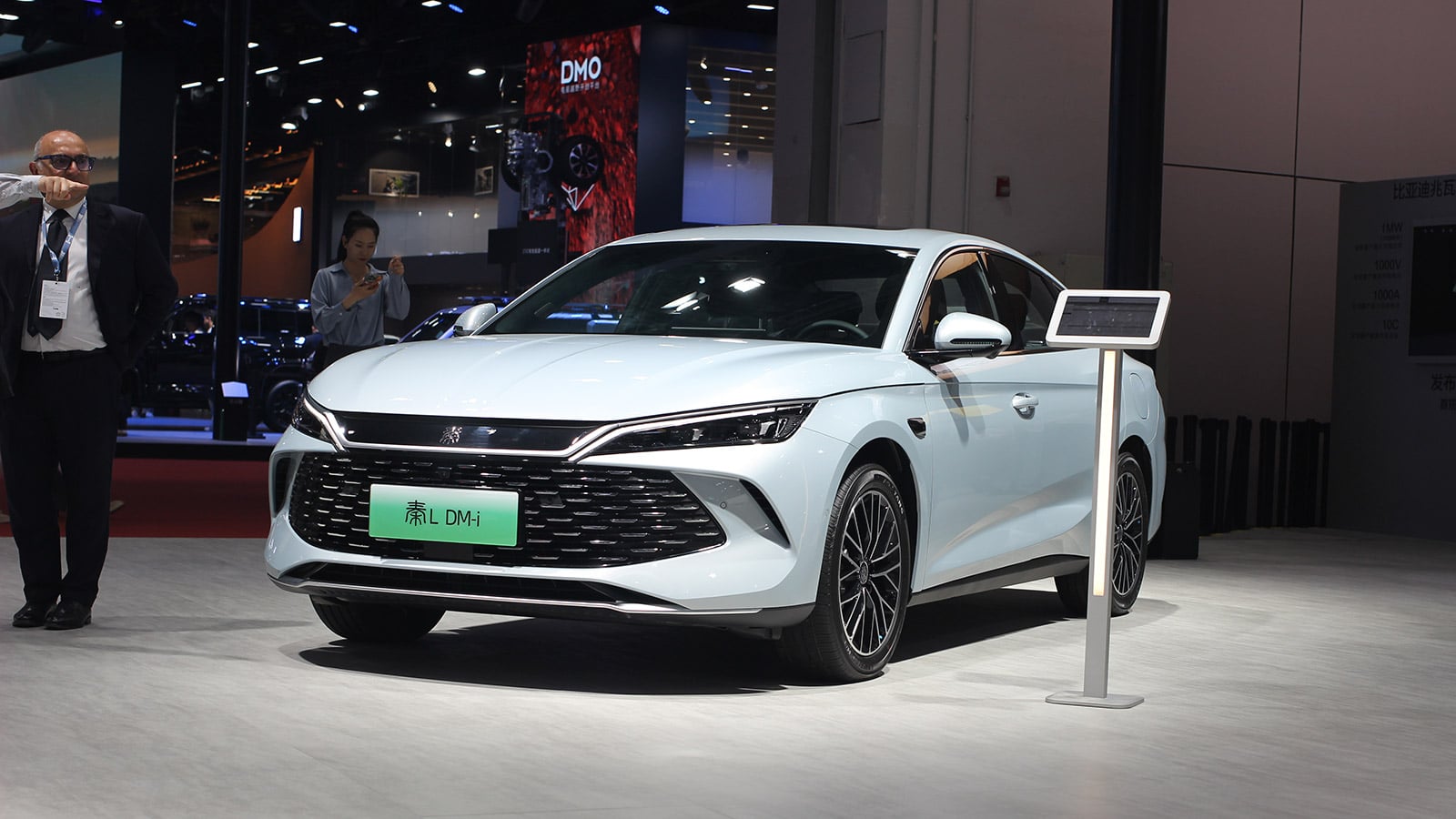
The European Commission refuted claims that it is considering tariffs on Chinese hybrid cars like those it imposes on battery electric vehicles (BEVs), following a report last week that raised concerns.
"As I have said, on behalf of the European Commission, there is no ongoing investigation into exports of hybrid vehicles from China to the European Union," EU trade spokesman Olof Gill said at a Brussels press conference when asked whether commissioners were pushing for such an investigation.
"The commissioners are politicians and have the right to raise whatever issues they want," he said, according to a Monday report by Mobility Portal, a news portal in Latin America and Europe.
The investigation that was initially carried out — a necessary prerequisite before taking any tariff measures, as established by the rules of the World Trade Organization (WTO) — focused "solely" on electric vehicles, the spokesman said.
This was because the electric battery sector is seen as problematic, with trade patterns potentially threatening EU industry, Gill explained.
Last Thursday, another European outlet, Euractiv, reported that the European Commission was considering tariffs on Chinese hybrid vehicles, with discussions on the measure ongoing.
An official told Euractiv that the French EU Commissioner, who is also one of the Commission's six vice-presidents, had repeatedly raised concerns about Chinese hybrid vehicles.
He questioned why tariff policies applicable to electric vehicles do not extend to hybrids, given identical production conditions and the need for European competitors to receive equivalent protection and a level playing field.
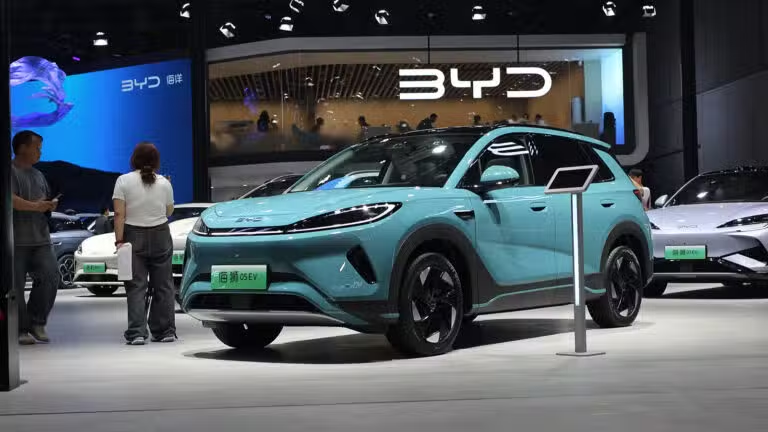
This comes amid a surge in Chinese hybrid vehicle exports to the EU, with sales surging 155% last year. By contrast, Chinese BEV exports grew only 12%, Euractiv noted.
Other sources consulted by Europa Press confirmed that the Vice-President of the European Commission for Prosperity and Industrial Strategy, the French liberal Stéphane Séjourné, had indeed "repeatedly" raised this question.
The European Commission formally launched an anti-subsidy investigation into imported BEVs originating from China on October 4, 2023, alleging they benefited from unfair Chinese subsidies that distort the European market.
In October 2024, after concluding the anti-subsidy investigation, the European Commission decided to proceed with imposing additional tariffs for a period of five years. Meanwhile, discussions on price undertakings continued.
These tariffs would be imposed on top of the original 10% rate, with different EV manufacturers facing varying rates, the highest being 35.3%.
On January 12, China's Ministry of Commerce announced that it had reached a consensus with the EU on price commitments for Chinese BEV exports.
This marks significant progress in replacing the additional tariffs, as Chinese exporters are expected to avoid them by selling electric vehicles at or above the minimum prices permitted by the EU.