- China's EV trio is betting big on AI, but their approaches differ significantly.
- Nio has established an AGI committee tasked with driving AI adoption across its entire business chain.
Everyone is talking about AI (artificial intelligence). In China, if an electric vehicle (EV) maker hasn't made a splash with AI, they must be living in the last century.
After DeepSeek's explosive popularity since a year ago, introducing AI capabilities into the cockpit became a crucial starting point for many legacy Chinese automakers to leverage AI.
Nio Inc (NYSE: NIO, HKG: 9866), Xpeng (NYSE: XPEV, HKG: 9868), and Li Auto (NASDAQ: LI, HKG: 2015) — China's most prominent EV startups — hold greater expectations for AI, yet their approaches diverge markedly.
Nio: Increasing bets on AI
In his first internal address to employees since entering 2026 on January 14, Nio founder, chairman, and CEO William Li said the company will intensify its AI investments this year. He urged employees to deeply integrate AI usage to enhance product competitiveness and operational efficiency.
Nio has established an AGI committee tasked with driving AI adoption across its business chains to boost efficiency in R&D, manufacturing, and supply chain management.
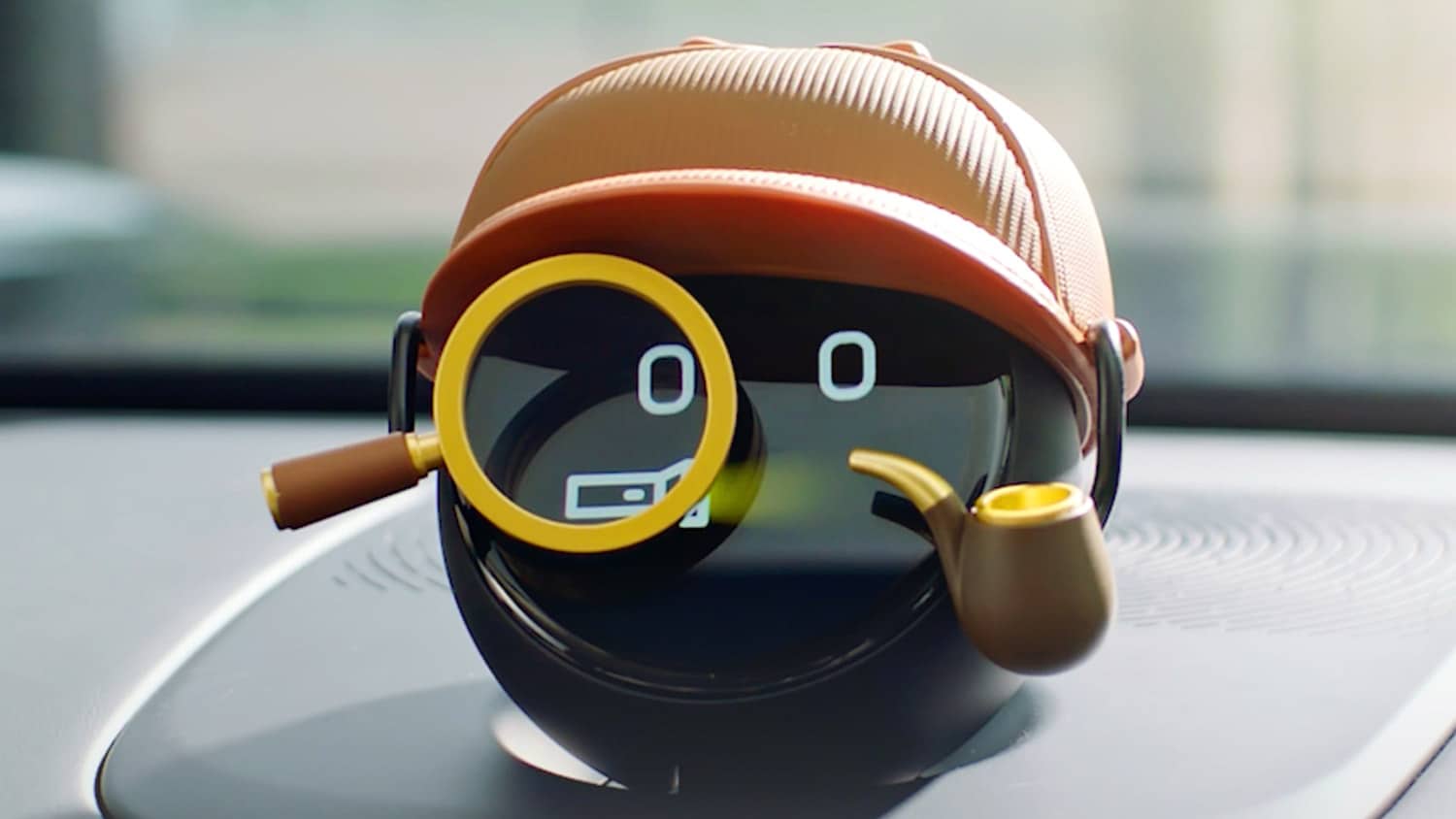
For Nio, its NOMI virtual voice assistant serves as the direct interface through which owners interact with its AI capabilities.
In 2017, Nio launched its first mass-produced model, the ES8. With the SUV's market debut, its in-car voice assistant NOMI became the world's first mass-produced automotive AI system.
In April 2024, as ChatGPT gained global attention, Nio introduced NOMI GPT, leveraging large language models to make NOMI smarter.
For smart driving capabilities, Nio is betting on the Nio World Model (NWM) to deliver a better experience. NWM can use AI to simulate 216 possible scenarios within 100 milliseconds and identify the optimal decision.
Nio will increase investment in smart driving computing power in 2026, aiming to regain its industry-leading position through three major version releases this year, Li said on January 14.
For vehicle production, Nio developed a new AI self-inspection system named Tiantan. Vehicles can automatically check over 1,000 functions in three minutes, with the entire process handled by AI. This covers and identifies areas difficult for traditional manual inspections to reach.
The company also partnered with UK AI software startup Monolith to utilize its European battery swap network for real-time testing and refinement of EV battery packs.
In January 2025, a Chinese media report indicated Nio had formed a team to research AI robot dog projects. However, this has not been confirmed.
Xpeng: Betting on physical AI
Xpeng appears to have placed a larger bet on AI, aiming to drive its smart driving systems, robots, and robotaxis with artificial intelligence. The company's annual technology event was renamed AI Day starting in 2024.
At its November 2024 AI Day event, Xpeng unveiled the Canghai Platform, described as an AI automotive nervous system designed for Level 4 autonomous driving scenarios.
During last year's AI Day, it launched the next-generation Iron humanoid robot, VLA 2.0 smart driving system, and a new flying car, touting them as its physical AI achievements.
Particularly noteworthy was the Iron humanoid robot, whose lifelike appearance led many to suspect the company had hidden a real person inside the demonstration prototype during the launch event.
In August 2024, Xpeng unveiled its first in-house developed Turing AI chip, which has since been deployed across multiple vehicle models.
Starting with the P7+ sedan launched in November 2024, the company began branding its new models as AI vehicles.
In October 2025, Xpeng appointed Liu Xianming, an AI expert, as head of its autonomous driving center, shifting greater focus toward AI.
Li Auto: Aiming to become a leading AI company
Li Auto has similarly placed a major strategic bet on AI, viewing automobiles as merely one physical manifestation of AI in the real world.
In a January 2023 internal letter, founder, chairman, and CEO Li Xiang said the company aimed to become a globally leading AI company by 2030.
In late 2024, Li conducted multiple interviews with domestic media, branding the series "AI Talk" to showcase the company's AI focus.
Li positioned Li Auto as an AI company, stating its goal isn't merely vehicle intelligence but using cars as AI carriers to bring AI benefits to every household.
As part of this initiative, Li Auto launched the Livis smart glasses in November 2025, envisioning the device as a gateway for more users to experience its AI capabilities.
The name "Livis" echoes Marvel Comics' Jarvis, signaling Li Auto's ambition to create a comparable intelligent assistant.
The company is also developing an AI inference chip named M100 to power its smart driving system.
![Nio to ramp up bet on AI in 2026, William Li says at internal meeting [Full Speech]](https://cnevpost.com/wp-content/uploads/2026/01/2026011506450230-768x432.jpg)