- The Song Plus has been replaced by the Sealion 06 as part of BYD's efforts to restructure its product portfolio.
- The Song Plus sold 400,920 units in 2025, making it one of BYD's best-selling models.

BYD (HKG: 1211) has officially removed its popular Song Plus series from its Ocean lineup as part of its efforts to restructure its product portfolio.
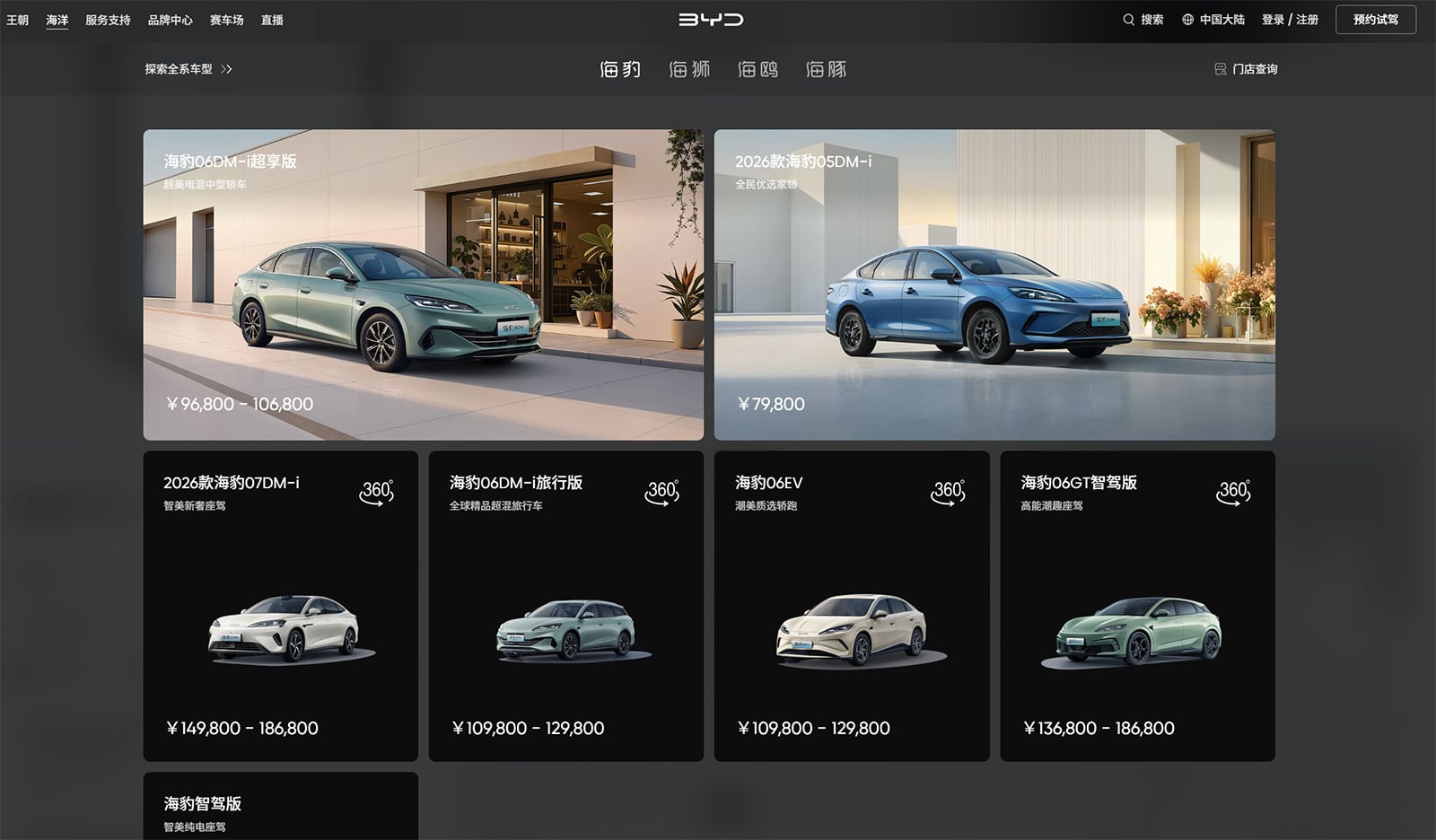
Information on BYD's China website indicates its Ocean lineup now comprises the Seal, Sealion, Seagull, and Dolphin series -- all models named after marine creatures.
The Song series SUV (sport utility vehicle) models were previously the only BYD vehicles available in both the Dynasty lineup -- typically named after ancient Chinese dynasties -- and the Ocean lineup.
The Song series in the Ocean lineup previously included the all-electric Song Plus EV and the hybrid Song Plus DM-i.
In October, rumors surfaced that BYD would discontinue the Song Plus. The company later clarified that the Sealion 06 serves as the successor to the Song Plus, with the discontinuation representing a normal product transition.
The Dynasty lineup launched in 2012 features models named after ancient Chinese dynasties like Xia, Qin, Tang, Song, Yuan, and Han. The Ocean lineup primarily uses marine life and vessels for naming, such as Seal and Frigate 07.
During the Ocean lineup's initial rollout in 2021, BYD incorporated the Song Plus DM-i hybrid SUV into the lineup to expand its model range.
In overseas markets, the Song Plus DM-i is marketed as the Sealion 6 or Seal U DM-i.
For several years, Song series models consistently held BYD's highest monthly sales volume. However, since July 2025, the Qin series models have surpassed it as BYD's top-selling lineup.
Throughout 2025, the Song series sold 788,003 units, remaining BYD's best-selling model and contributing 17.12% to the auto group's annual sales, according to data compiled by CnEVPost.
The Song Plus from the Ocean lineup sold 400,920 units in 2025, a year-on-year decrease of 21.69%; The Dynasty lineup Song sold 387,083 units, down 20.08% year-on-year.