- Analysts predict budget automakers like Leapmotor, BYD, and Geely will face the greatest impact.
- Compared to 2025, subsidies for lower-priced models will decrease by several thousand yuan.
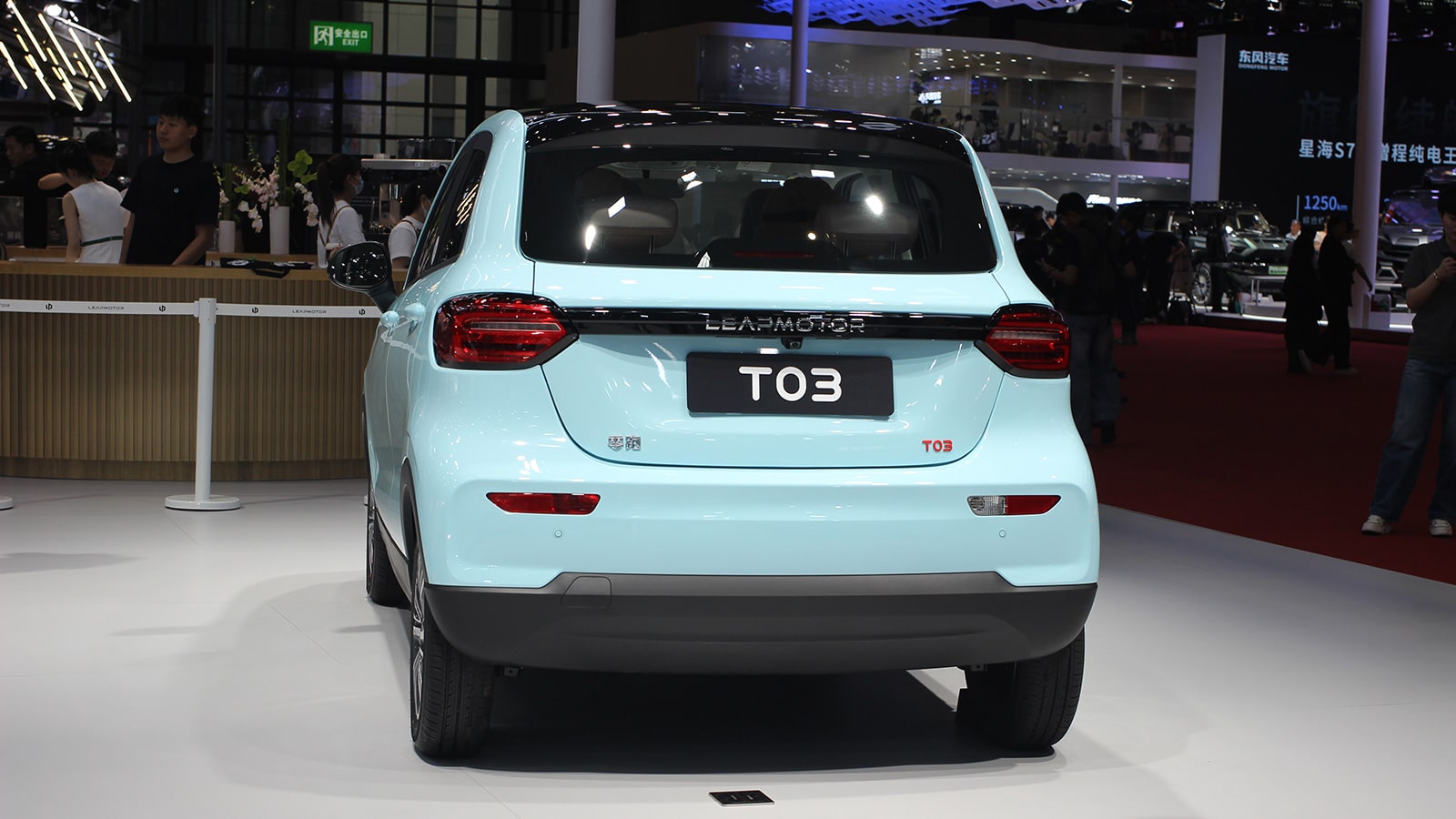
China announced yesterday it will continue offering vehicle purchase trade-in subsidies in 2026, though adjustments to specific details are seen as disadvantageous to affordable models.
In 2026, the subsidy caps for vehicle purchases remains unchanged from 2025, with a maximum of RMB 20,000 ($2,860) for scrapping old vehicles and RMB 15,000 for trade-ins.
The 2026 subsidies will be calculated as a percentage of the vehicle price, up to 12 percent, differing from the fixed amounts in 2025.
The revised vehicle trade-in subsidy policy significantly reduces per-vehicle subsidies for mid-to-low-priced cars -- those priced below RMB 150,000 -- according to a research note released yesterday by Deutsche Bank analyst Wang Bin's team.
The move is interpreted as aiming to promote technological innovation and optimize the automotive industry's product structure. Typically, higher-priced vehicles drive technological advancement due to their greater material costs, the team wrote.
Under the new rules, only new energy vehicles (NEVs) priced above RMB 166,700 and gasoline vehicles priced above RMB 150,000 qualify for the full central government scrappage trade-in subsidy, the research note said.
Similarly, local governments used-car trade-in subsidies require NEVs/fuel vehicles to exceed RMB 187,500/RMB 216,700 to qualify for maximum subsidies.
For example, a NEV priced at RMB 80,000 receiving a RMB 20,000 central subsidy in 2025 would only qualify for RMB 9,600 in 2026, Deutsche Bank illustrated.
Low-priced automakers like Leapmotor (HKG: 9863), BYD (HKG: 1211, OTCMKTS: BYDDY), and Geely Auto (HKG: 0175, OTCMKTS: GELYF) -- which hold significant market share in China's mid-to-low-end vehicle segment -- are expected to be most negatively impacted, Deutsche Bank said.
The team anticipates that with the reinstatement of vehicle trade-in subsidies in 2026, retail sales will temporarily rebound to year-on-year growth in January 2026, driven by the release of partially suppressed demand.
However, this year-on-year growth momentum is expected to be short-lived, with overall sales projected to decline year-on-year in the first half of 2026, Deutsche Bank said.
The team projects China's passenger vehicle wholesale volume will decline 5 percent year-on-year in 2026 to 28.9 million units, down from the 30.4 million units forecast for 2025.
Separately, the China Automobile Dealers Association (CADA) projected in a report today that over 12 million vehicles are expected to benefit from trade-in subsidies in 2026, boosting new car consumption by nearly 1.5 million units.
CADA said that 2026's vehicle trade-in policy will benefit more consumers than in 2025, as the eligibility criteria for qualifying used vehicles have been expanded.

($1 = RMB 6.9887)