- BYD chairman said sales decline stems from its technology lead not being as strong as in previous years, with major technological releases coming soon.
- BYD's core competitiveness lies in technology, and its team of 120,000 engineers will be the key support for reestablishing its leading edge.
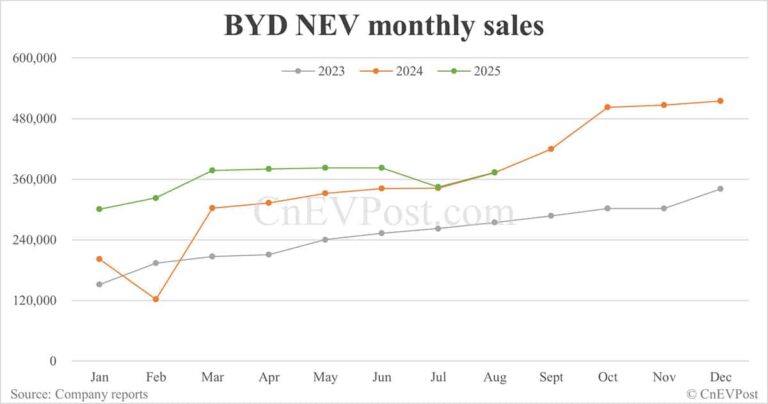
After years of rapid growth that propelled it to become the world's largest new energy-vehicle (NEV) maker, BYD has seen a significant slowdown in growth this year, with sales even declining over recent months.
Now, chairman and president Wang Chuanfu has explained to shareholders why a recovery in momentum can be anticipated.
Domestic sales at BYD have declined this year because the company's current technological edge is not as pronounced as in previous years, and the wow factor of its technological achievements has waned, Wang said today at an extraordinary shareholders' meeting, according to a report by local media outlet China Securities Journal.
Meanwhile, the industry's race to the bottom has become more pronounced, a shift consistent with the cyclical nature of product and technological development, Wang said.
Additionally, the issue of slow charging speeds at low temperatures urgently requires resolution through technological breakthroughs, he noted.
"I say our technology isn't sufficiently advanced now because we have major technological announcements coming, but I can't disclose details at this time," Wang said.
BYD's core competitiveness lies in technology, and its team of 120,000 engineers will be the key support for tackling technological challenges and reestablishing its leading edge, Wang emphasized.
The company will intensify R&D and deployment efforts over the next 2-3 years to deliver more advanced innovations and expand its technological edge, according to the BYD chairman.
BYD will address past marketing inertia cultivated during favorable market conditions by strengthening its sales capabilities, precisely aligning with user needs to efficiently translate technological advantages into market competitiveness, he said.
The company will also intensify efforts to expand in overseas markets, Wang noted.
BYD sold 480,186 NEVs in November, marking its highest monthly figure this year but representing a 5.25 percent year-on-year decline -- the third consecutive month of year-on-year contraction.
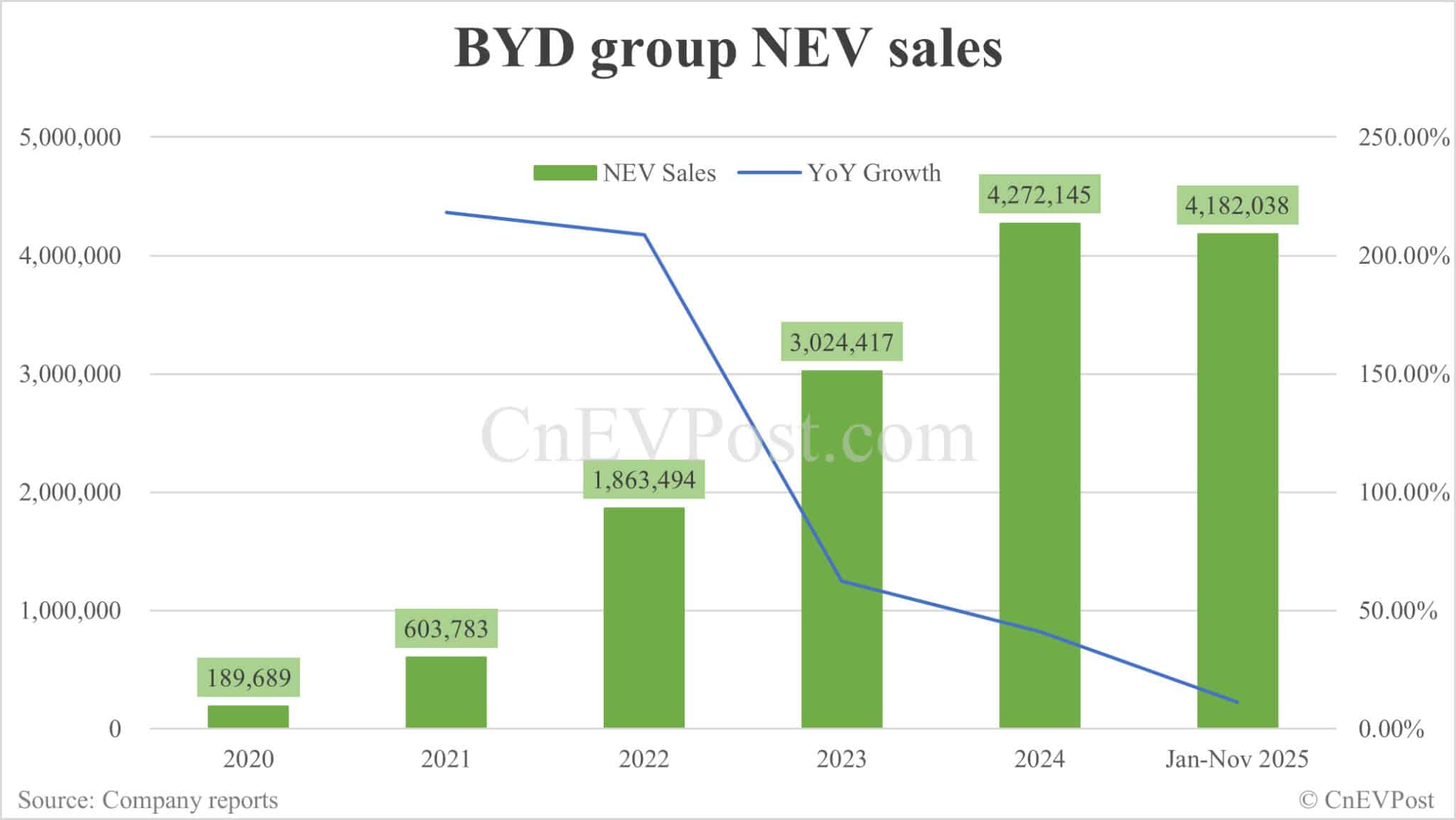
From January to November, BYD sold 4,182,038 NEVs, reflecting an 11.30 percent year-on-year increase.
By comparison, the company's annual sales growth rates from 2021 to 2024 were 218.30 percent, 208.64 percent, 62.30 percent, and 41.26 percent, respectively.
BYD unveiled fewer new technologies this year than in previous years, instead updating a large number of models with smart driving features in February, hoping this would drive sales growth.
However, this strategy failed to meet expectations, prompting the company to subsequently introduce lower-priced variants without smart driving systems for certain models.
Meanwhile, competitors including Geely Auto (HKG: 0175, OTCMKTS: GELYF) have intensified competition by launching numerous fuel-efficient hybrid models and more affordable pure electric vehicles.