- Li Auto will begin commercializing its M100 chip next year, hoping it will deliver a significant upgrade to the user experience of its products.
- Li Auto will perform an architecture upgrade for its smart driving system in late December, adapting it for the M100 chip.
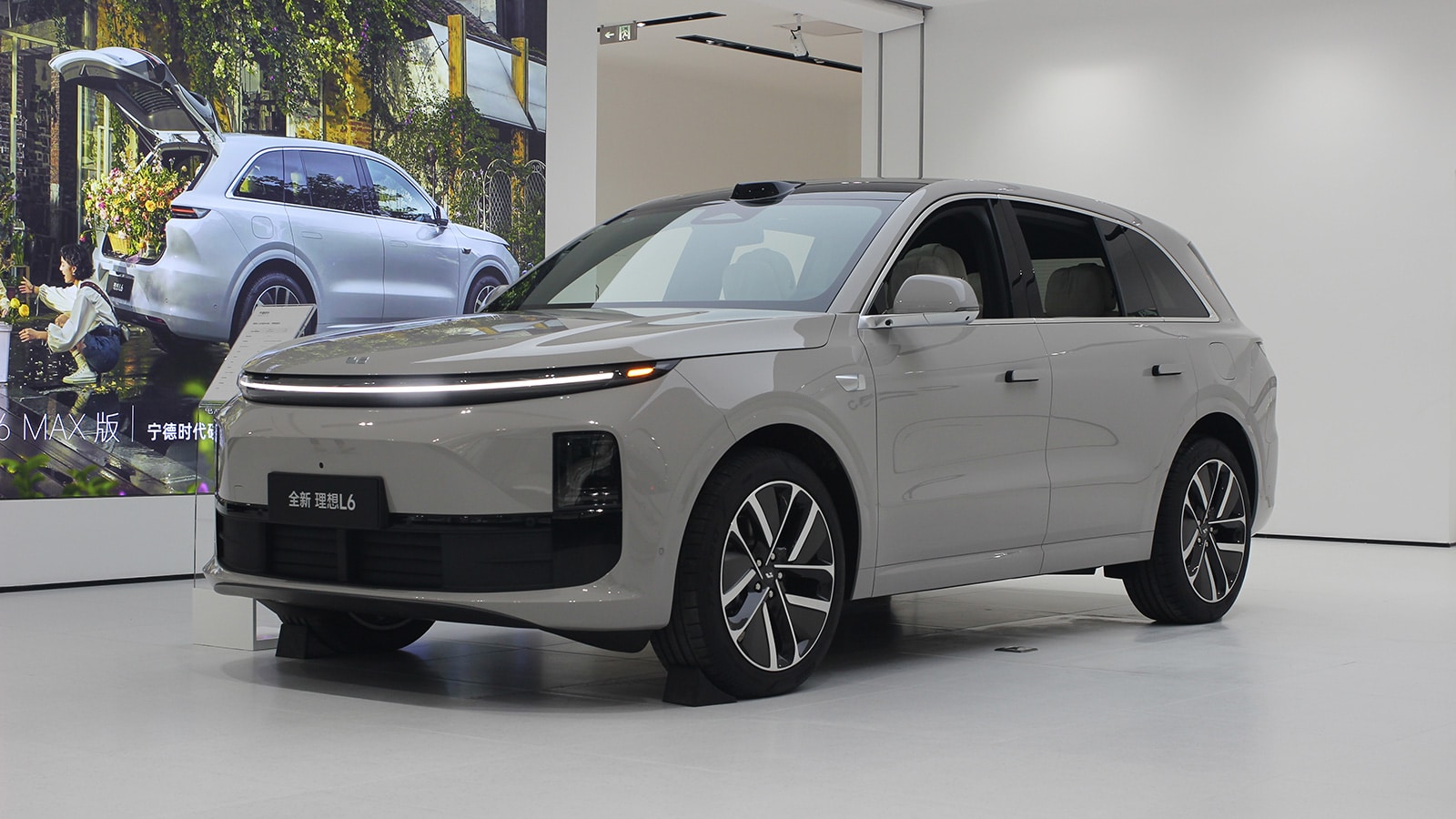
Li Auto (NASDAQ: LI) will deploy its in-house developed M100 smart driving chip in mass-produced vehicles next year, becoming the latest Chinese electric vehicle (EV) maker to do so after Nio Inc (NYSE: NIO, HKG: 9866) and Xpeng (NYSE: XPEV, HKG: 9868).
The company's management mentioned the plan during yesterday's earnings call, referring to the M100 as an AI inference chip -- the first official disclosure of its name.
Li Auto is conducting large-scale system testing on controllers built around the M100 chip, with commercial deployment expected next year, it said.
The chip was designed in tandem with Li Auto's base model, compiler, and software system. The company said it will deliver at least three times the performance of current high-end chips at comparable prices within its next-generation autonomous driving system based on the VLA (Visual-Language-Action) model.
Based on an efficient AI inference and execution system, Li Auto has initiated performance enhancement and cost-reduction development for its next-generation platform and chips, its management said.
Li Auto will upgrade its smart driving system architecture at the end of December, focusing on strengthening the interaction between language and behavioral information, optimizing decision-making processes, and adapting the M100 chip, the company said.
"We believe that in 2026 -- next year -- when our M100-based AI system begins delivering value in production vehicles, we'll see truly transformative changes in both value and experience," said Li Auto founder, chairman, and CEO Li Xiang during the conference call.
In late August, local media outlet LatePost reported that Li Auto's M100 smart driving chip successfully completed prototype production in the first quarter of this year, passing a critical pre-mass production milestone.
Subsequently, the company completed functional and performance testing of the M100 within two weeks, passing rigorous stress tests conducted by R&D engineers. It had since been installed in small batches on prototype vehicles for road testing, according to the report.
When executing computational tasks involving large language models (LLMs), a single M100 chip delivers effective computing power roughly equivalent to two Nvidia Thor-U chips, according to the report.
When handling traditional vision tasks related to convolutional neural networks (CNNs), such as image recognition, a single M100 chip delivers effective computing power comparable to three Nvidia Thor-U chips.
The M100 was expected to enter mass production and vehicle integration next year. Until then, Li Auto would continue relying on its two existing partners -- Nvidia and China's Horizon Robotics -- the report noted.
Nio launched its chip project in 2021 and unveiled its in-house developed Shenji NX9031 autonomous driving chip in December 2023.
The ET9, which began deliveries in late March, features two Shenji NX9031 chips. Nio said each chip delivers computing power equivalent to four Nvidia Orin X chips combined. The company has already integrated this chip into multiple updated models this year.
Xpeng unveiled its in-house developed Turing AI chip earlier this year, stating each chip matches the computing power of three mainstream autonomous driving chips.
The company has deployed three Turing AI chips in multiple car models and its next-generation Iron humanoid robot.