- Pony AI said its seventh-generation robotaxi has achieved city-wide unit economics breakeven in Guangzhou.
- Pony AI's vehicles in Guangzhou now average 23 daily orders per vehicle.
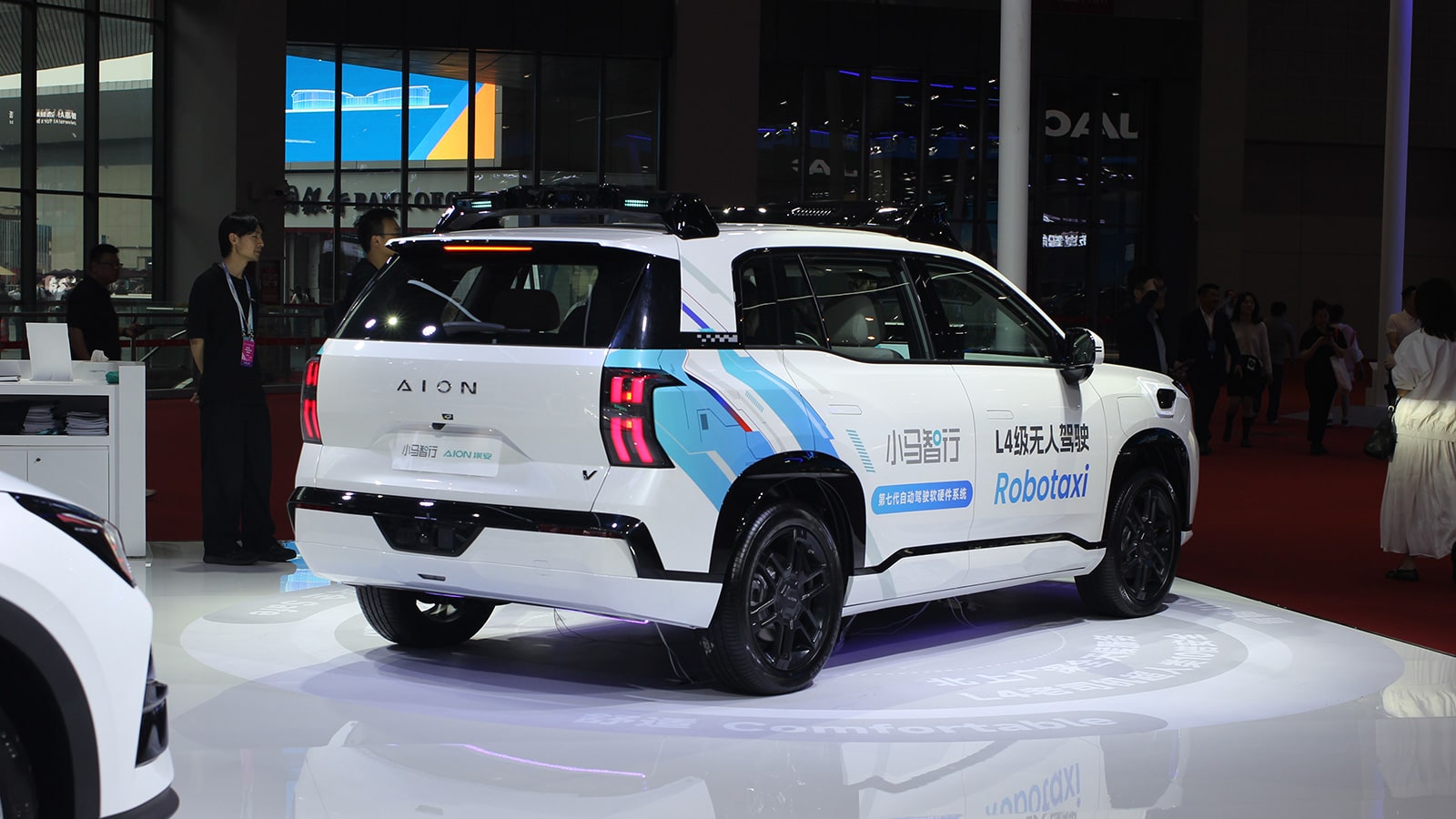
Chinese autonomous driving startup Pony AI (NASDAQ: PONY) aims to triple its robotaxi fleet size next year, as its seventh-generation robotaxi has achieved city-wide breakeven in a major Chinese city.
Pony AI will achieve its year-end target of 1,000 robotaxis as planned and advance toward its 2026 goal of exceeding 3,000 vehicles, the company said in its third-quarter 2025 earnings release today.
To date, the company operates 961 robotaxis, including 667 seventh-generation models.
The seventh-generation robotaxi has achieved city-wide unit economics breakeven in Guangzhou, validating a viable business model and laying a strategic foundation for scalable domestic and international expansion, it said.
Driven by robust user demand and the company's optimized operational efficiency, the average daily order volume per vehicle in Guangzhou has reached 23 orders, Pony AI said.
Earlier this month, Baidu announced its autonomous ride-hailing service Apollo Go surpassed 250,000 fully driverless ride orders per week as of October 31.
Compared to its 2025 baseline, Pony AI's seventh-generation robotaxi autonomous driving kits (ADK) will see a further 20 percent reduction in bill-of-materials (BOM) costs during the 2026 production phase, the company said.
Pony AI's third-quarter revenue reached $25.4 million (RMB 181.1 million), up 72.0 percent year-on-year, primarily driven by growth in robotaxi services and licensing and application revenue.
Robotaxi service revenue for the third quarter was $6.7 million, an 89.5 percent increase year-on-year. Fare revenue surged over 200 percent year-on-year, mainly due to rising user demand in tier-1 cities and optimized pricing strategies.
Its gross margin for the third quarter was 18.4 percent, compared to 9.2 percent in the third quarter 2024.
Pony AI reported a larger net loss of $61.6 million for the third quarter, compared to a net loss of $42.1 million in the third quarter 2024.
Its non-GAAP net loss for the third quarter was $55.0 million, compared to a non-GAAP net loss of $41.4 million in the third quarter 2024.