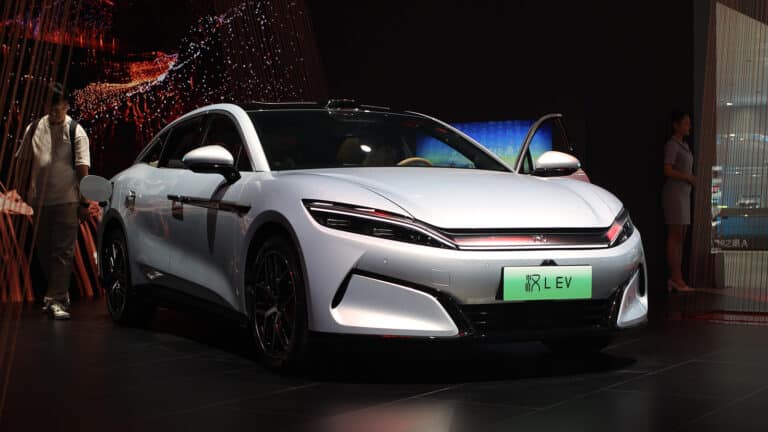
- BYD retained its position as the top BEV seller in the third quarter with a 15.4 percent global share, though sales declined compared to the second quarter.
- In the global PHEV market, BYD maintained its leading position with a 27.9 percent market share.
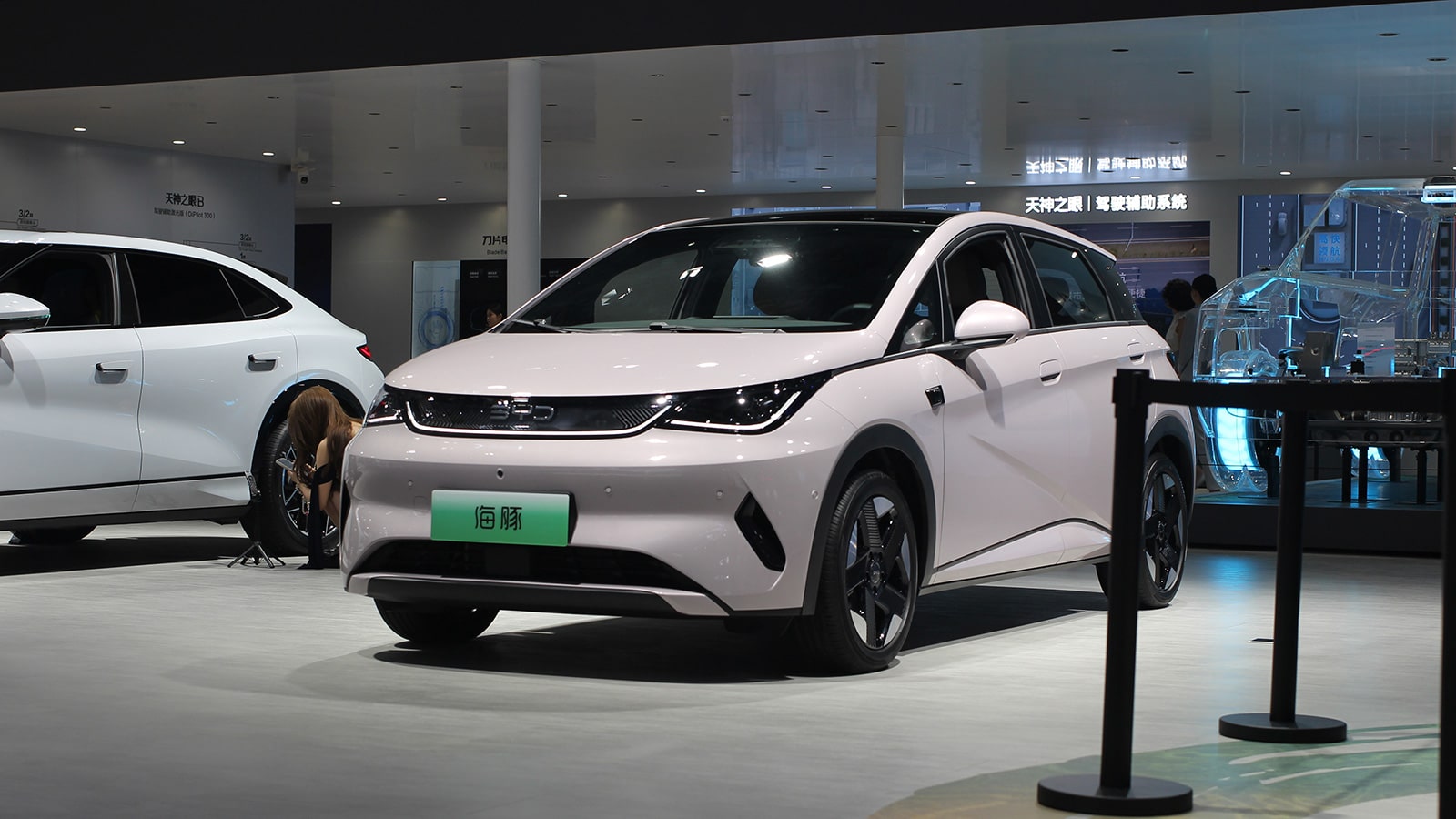
BYD (HKG: 1211, OTCMKTS: BYDDY) and Tesla (NASDAQ: TSLA) continued to dominate the global battery electric vehicle (BEV) market last quarter, according to a new report.
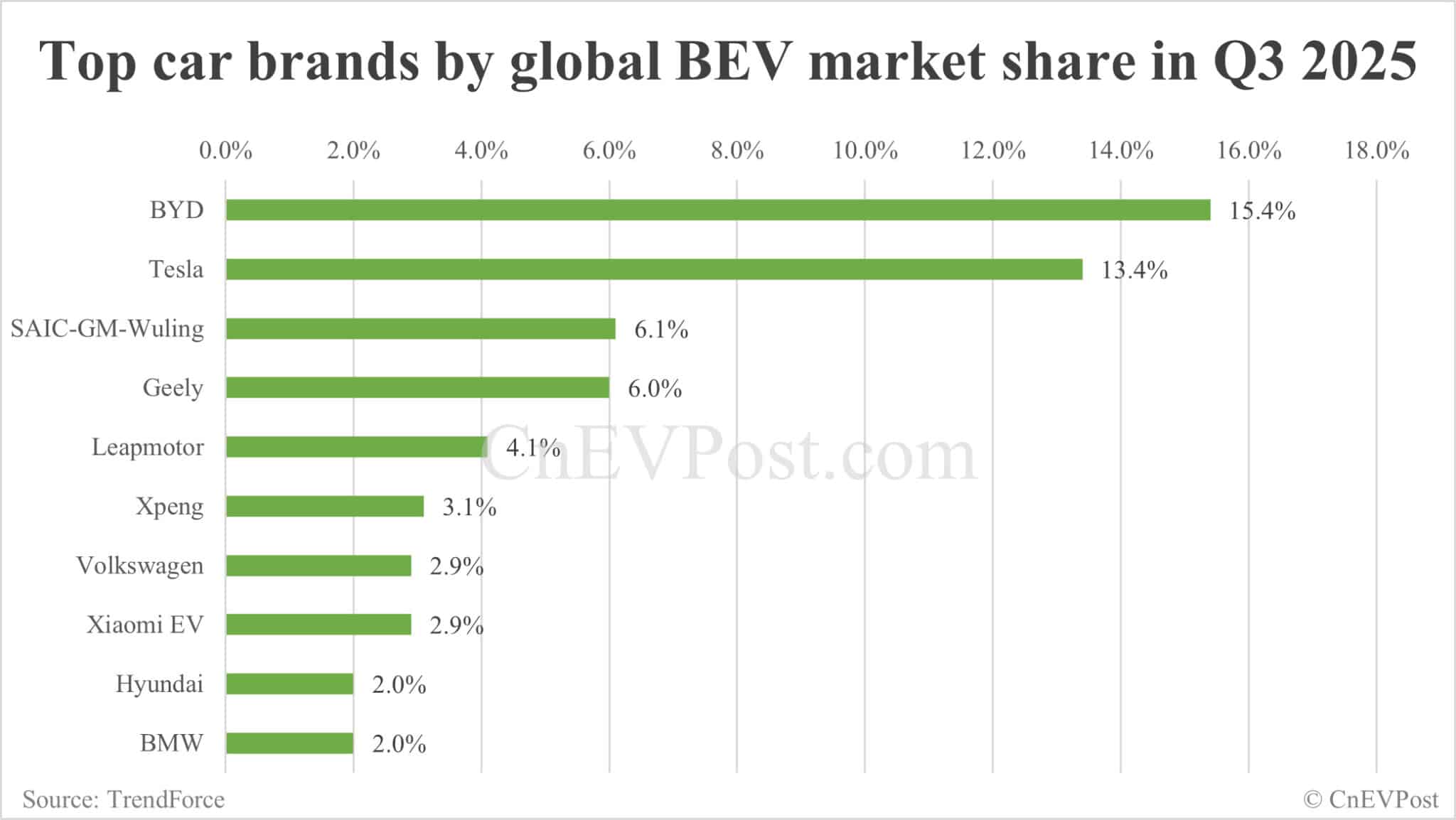
BYD retained its position as the top BEV seller in the third quarter with a 15.4 percent global share, though sales declined compared to the second quarter, per a report released today by market research firm TrendForce.
Tesla ranked second with a 13.4 percent share, posting robust third-quarter sales growth of 29 percent quarter-on-quarter, the report said
BYD, which produces BEVs and plug-in hybrid electric vehicles (PHEVs), sold 582,522 passenger BEVs in the third quarter -- a 31.37 percent year-on-year increase but a 4.03 percent decline from the second quarter -- according to data compiled by CnEVPost.
Tesla, which only produces BEVs, delivered 497,099 vehicles globally in the third quarter, a 7.39 percent year-on-year increase and a 29.41 percent rise from the second quarter.
Tesla's growth momentum primarily stemmed from stimulus driven by US market subsidy deadlines and achieving quarterly growth in the Chinese market, TrendForce noted.
Geely Auto (HKG: 0175, OTCMKTS: GELYF) and Leapmotor (HKG: 9863) demonstrated remarkable growth momentum in the third quarter, capturing 6 percent and 4.1 percent market share respectively, according to the report.
Xpeng (NYSE: XPEV, HKG: 9868) ranked sixth in the global BEV market with a 3.1 percent share in the third quarter, while Xiaomi (HKG: 1810, OTCMKTS: XIACY) placed eighth with a 2.9 percent share.
In the global PEHV market, BYD maintained its leading position with a 27.9 percent share.
Facing market saturation and intense competition in China, BYD saw sequential sales growth in the third quarter but experienced a year-on-year decline, TrendForce noted.
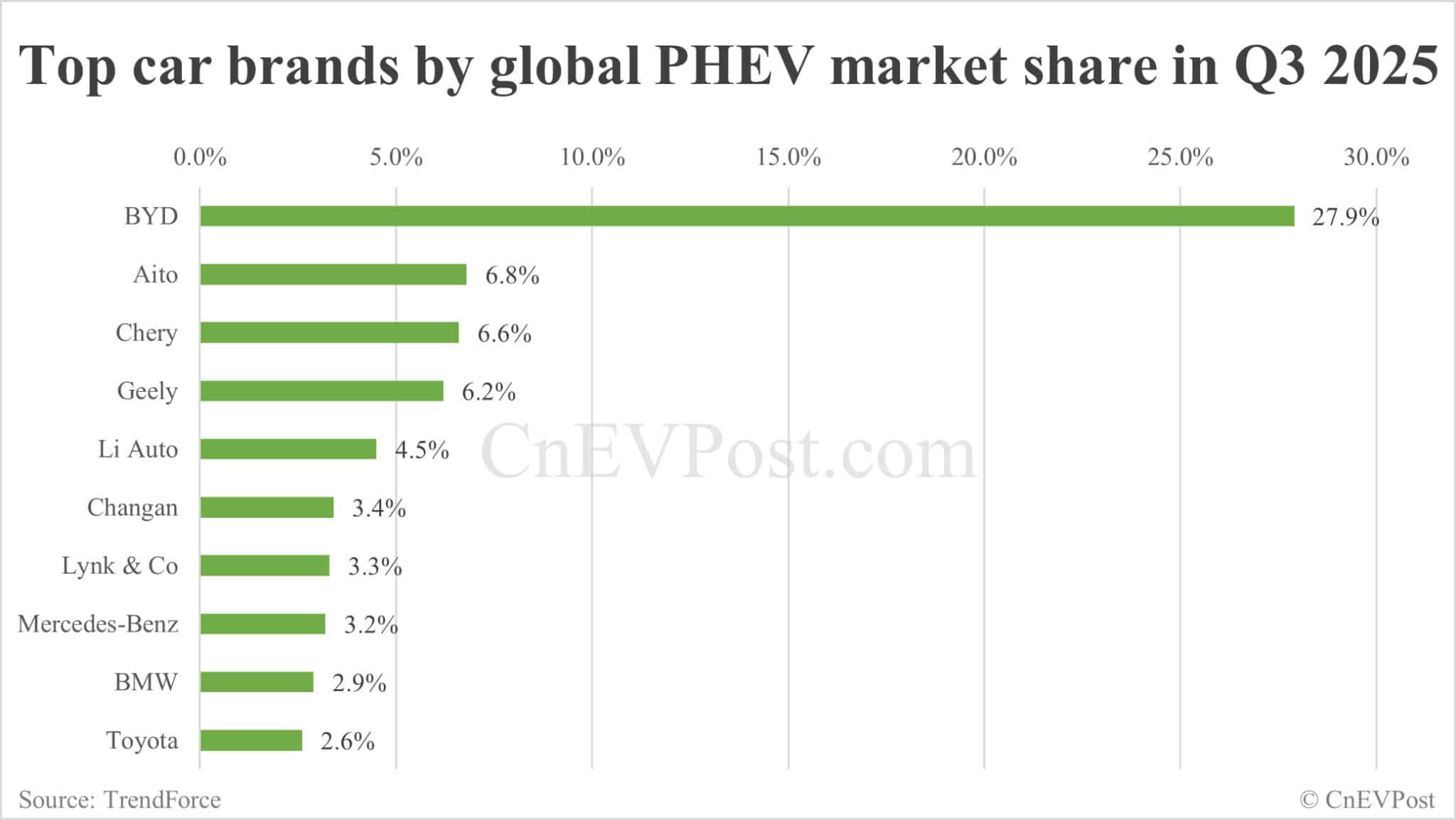
BYD's third-quarter passenger PHEV sales totaled 523,069 units, down 23.73 percent year-on-year despite a 0.56 percent increase from the second quarter, according to data compiled by CnEVPost.
Aito, Chery (HKG: 9973), and Geely rose to second, third, and fourth place respectively. Chery's sales growth was particularly rapid, increasing its market share to 6.6 percent in the third quarter, TrendForce noted.
Li Auto (NASDAQ: LI, HKG: 2015), despite securing second place in second-quarter sales, saw its market share rapidly eroded amid intensifying competition from increasingly more carmakers launching extended-range electric vehicle (EREV) models. Its third-quarter sales declined both sequentially and year-on-year, the report said.
Li Auto delivered 93,211 vehicles in the third quarter, down 39.01 percent year-on-year and down 16.08 percent quarter-on-quarter.
Global new energy vehicle (NEV) sales reached 5.39 million units in the third quarter, a 31 percent year-on-year increase, according to TrendForce.
BEV sales reached 3.71 million units, up 48 percent year-on-year, while PHEV sales totaled 1.67 million units, rising 4 percent year-on-year.
TrendForce projects global NEV sales to reach 20.43 million units in 2025, representing about 25 percent year-on-year growth.
Global NEV sales are projected to reach 22.8 million units in 2026, representing a 12 percent year-on-year increase, TrendForce said.