- Representatives from several Chinese automakers visited CATL headquarters to secure battery capacity before the rollback of NEV purchase tax incentive.
- CATL currently prefers to offer guarantees and preferential terms to automakers that exclusively use its products and have high shipment volumes.
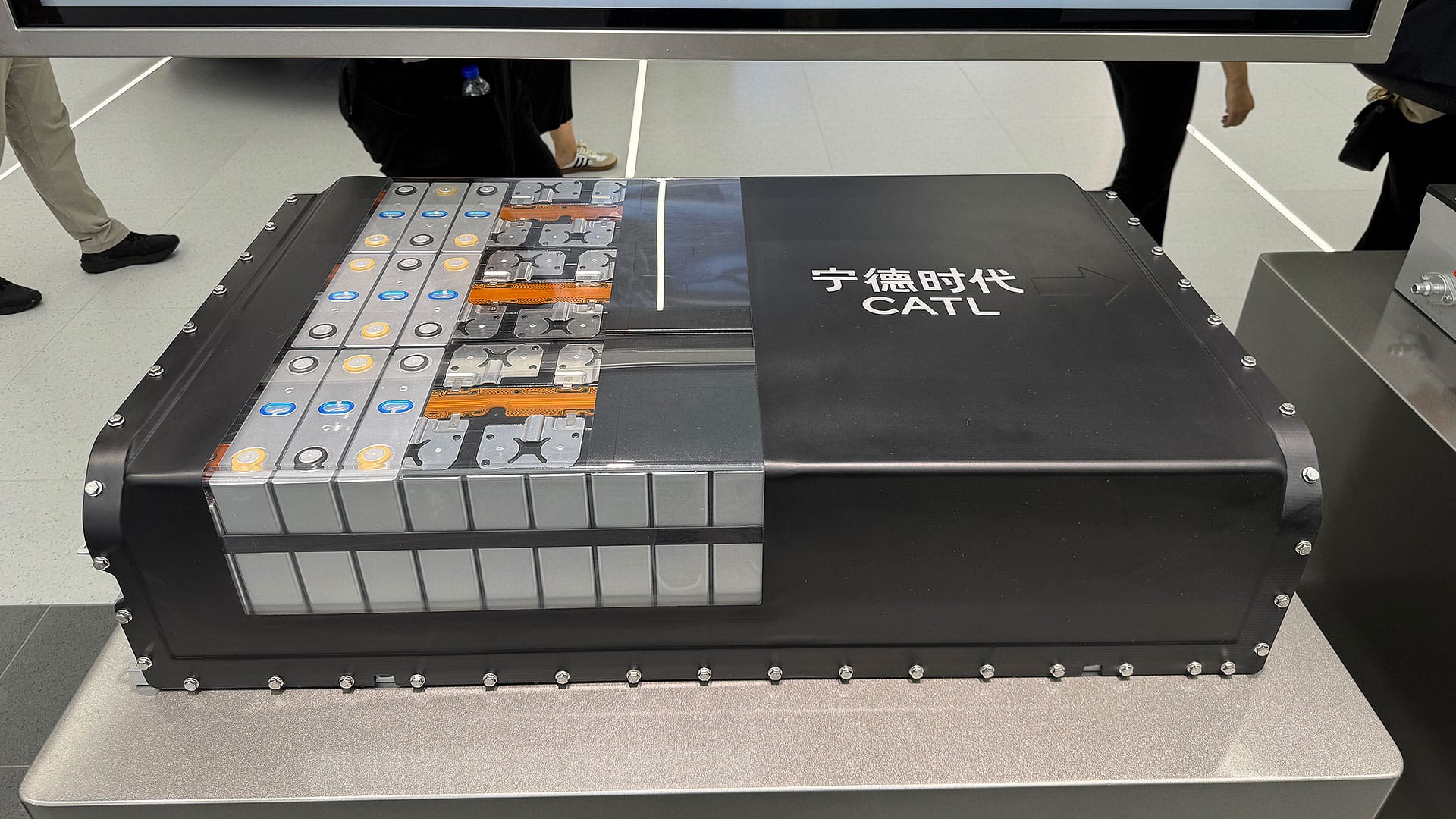
With China's new energy vehicle (NEV) purchase tax incentive set to decrease next year, automakers are scrambling for batteries to deliver more vehicles in the last quarter of this year.
Purchasing personnel from several Chinese automakers recently visited CATL's (HKG: 3750) headquarters sales office to secure battery capacity in the final quarter before the NEV purchase tax incentive drop, local media outlet LatePost reported yesterday.
Unlike the widespread battery shortages seen in 2021-2022, the current supply bottleneck is concentrated in CATL's high-end, high-nickel system products, the report noted.
These batteries primarily power mid-to-high-end models priced above RMB 300,000 ($42,130), such as Nio Inc's (NYSE: NIO) ES8 SUV, Li Auto's (NASDAQ: LI) Li i8 SUV, and Xiaomi's (HKG: 1810) YU7, SU7 Ultra, and SU7 Max.
"A fierce competition for batteries is underway now. Delivering one more vehicle means an additional revenue stream in the fourth quarter," LatePost quoted an insider from an automaker as saying.
CATL, headquartered in Ningde, Fujian in southeastern China, is the world's largest power battery manufacturer. Its market share in China by installed capacity were 42.81 percent in September, according to data compiled by CnEVPost.
CATL currently prioritizes guarantees and preferential terms for automakers that exclusively use its batteries and have high shipment volumes, the report said.
Premium battery production lines from some smaller second-tier battery manufacturers have also been fully booked, with certain facilities operating at over 110 percent capacity utilization -- running at full throttle -- according to the report.
Meanwhile, surging demand for energy storage batteries is squeezing the supply of power batteries.
Demand for energy storage batteries began exploding around mid-year, with major growth coming from South America and the Middle East. Orders from some overseas countries are already booked through the second quarter of 2026, the report cited sources close to CATL as saying.
CATL anticipated the surge in energy storage battery demand around mid-year and increased procurement of lithium iron phosphate (LFP) materials for energy storage applications. This has created short-term production constraints for popular models using LFP batteries, the report noted.
CATL is expanding capacity, but its medium-to-long-term plans cannot resolve immediate issues.
The report noted that after China's NEV penetration rate surpassed 50 percent, CATL also worries that expanding capacity to meet short-term demand could leave it facing idle capacity risks next year if the market weakens.

($1 = RMB 7.1217)