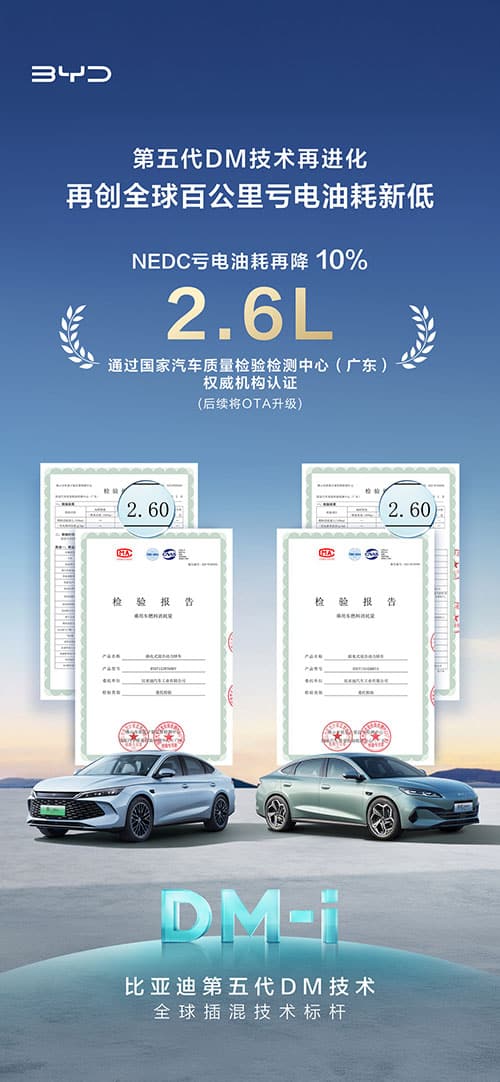
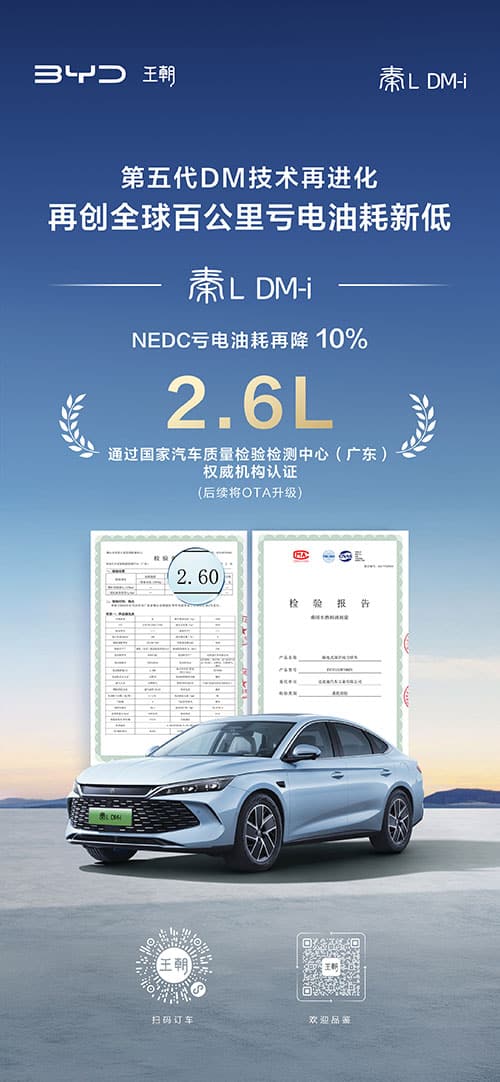
- BYD has reduced fuel consumption of its fifth-generation DM hybrid tech to just 2.6 liters per 100 km when the battery is depleted, down 10 percent from the previous 2.9 liters.
- The improvement to the DM 5.0 technology comes as BYD has seen sales of its hybrid models decline for several consecutive months.
BYD (HKG: 1211, OTCMKTS: BYDDY) has improved the fuel efficiency of its hybrid models amid growing sales pressure in this segment.
The new energy vehicle (NEV) maker announced today that its latest technology has further reduced the fuel consumption of its fifth-generation DM (Dual Mode) hybrid technology to just 2.6 liters per 100 kilometers when the battery is depleted, a 10 percent reduction from the previous 2.9 liters.
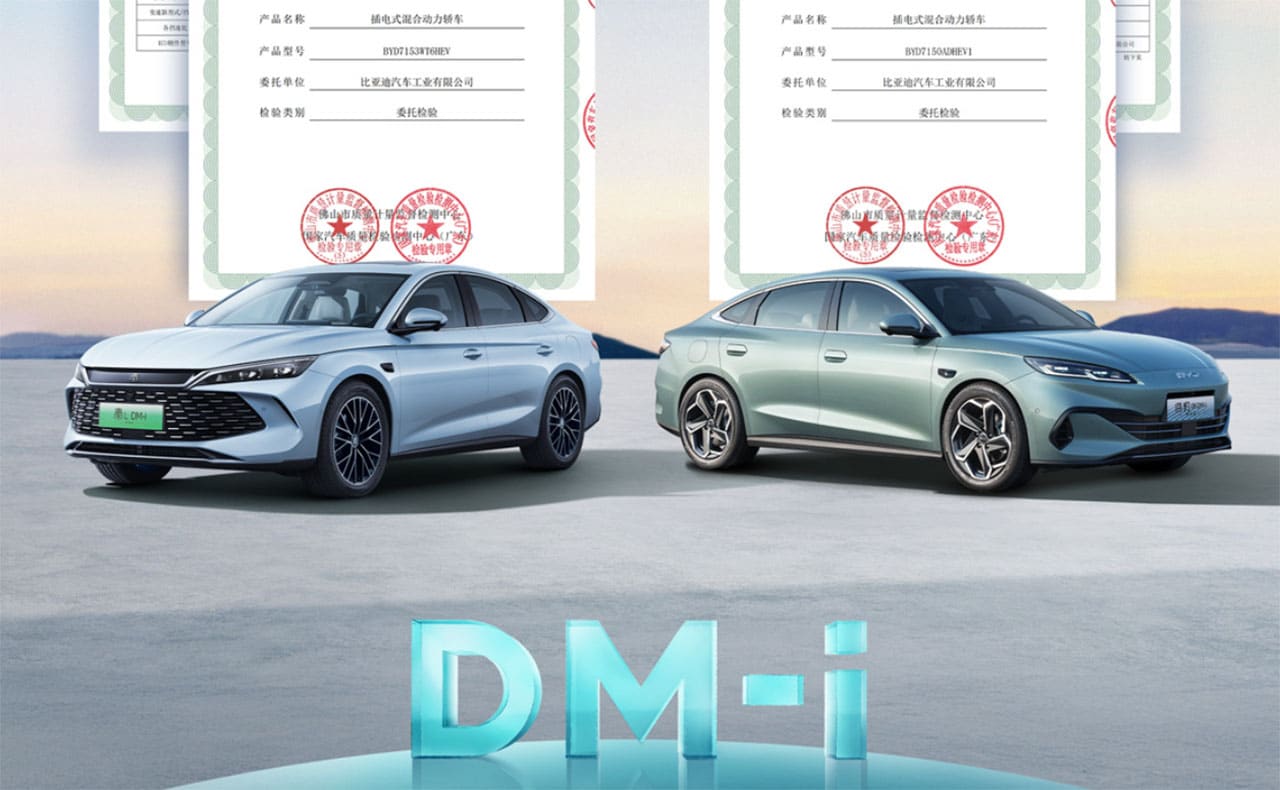
The measurement is based on the NEDC standard and has been certified by the National Motor Vehicle Quality Inspection and Testing Center (Guangdong).
The fuel efficiency optimization will be provided to all BYD vehicles equipped with the fifth-generation DM technology through over-the-air (OTA) upgrades, the company said.
BYD officially launched its fifth-generation DM technology, or DM 5.0, on May 28, 2024, bringing lower fuel consumption than its predecessor.
The fifth-generation DM technology achieves an engine thermal efficiency of 46.06 percent and a combined range of 2,100 kilometers, which is three times that of traditional fuel vehicles, the company said at the time.
The first models equipped with the fifth-generation DM technology were the BYD Qin L DM-i and Seal 06 DM-i, which were launched on May 28 last year, both with a combined range of up to 2,100 kilometers.
Since then, all of BYD's newly launched hybrid models have been based on the latest hybrid technology.
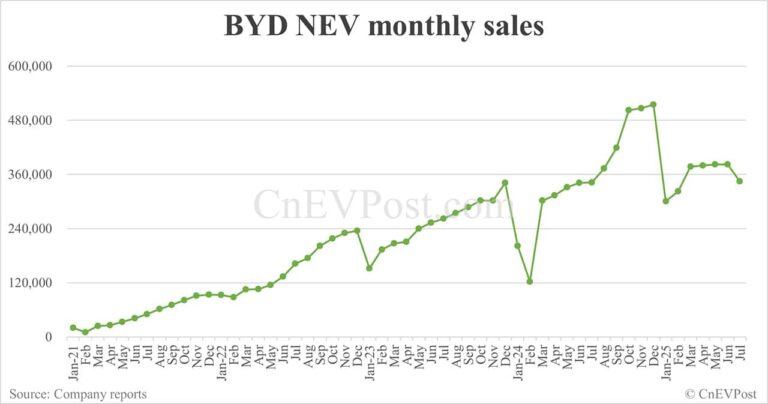
The improvements to the DM 5.0 technology came as BYD saw sales of its hybrid models decline for several consecutive months.
The company sold 344,296 NEVs in July, up 0.56 percent year-on-year but down 10.01 percent from June, according to data released on August 1.
Its passenger plug-in hybrid electric vehicle (PHEV) models sold 163,143 units in July, down 22.61 percent year-on-year and down 4.45 percent from June.
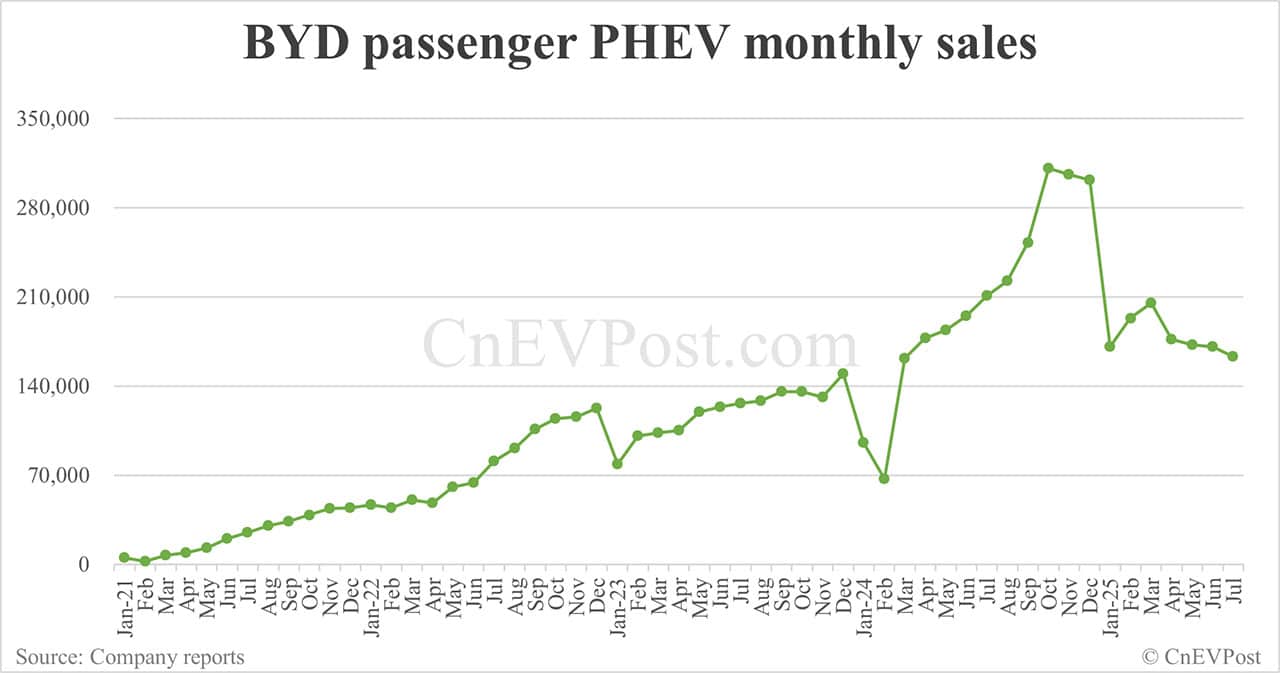
This marks the fourth consecutive month of year-on-year decline in BYD's passenger PHEV sales, with the decline widening from 12.45 percent in June.
BYD's passenger battery electric vehicle (BEV) sales remained strong, with 177,887 units sold in July, up 36.84 percent year-on-year, despite a 14.02 percent decline from June.